
Key Highlights
- Public Support:Nearly half of Germans favor banning private fireworks.
- Safety Concerns:Hospitals report injuries and emergency services face challenges.
- Environmental Impact:Fireworks contribute to pollution and distress for animals.
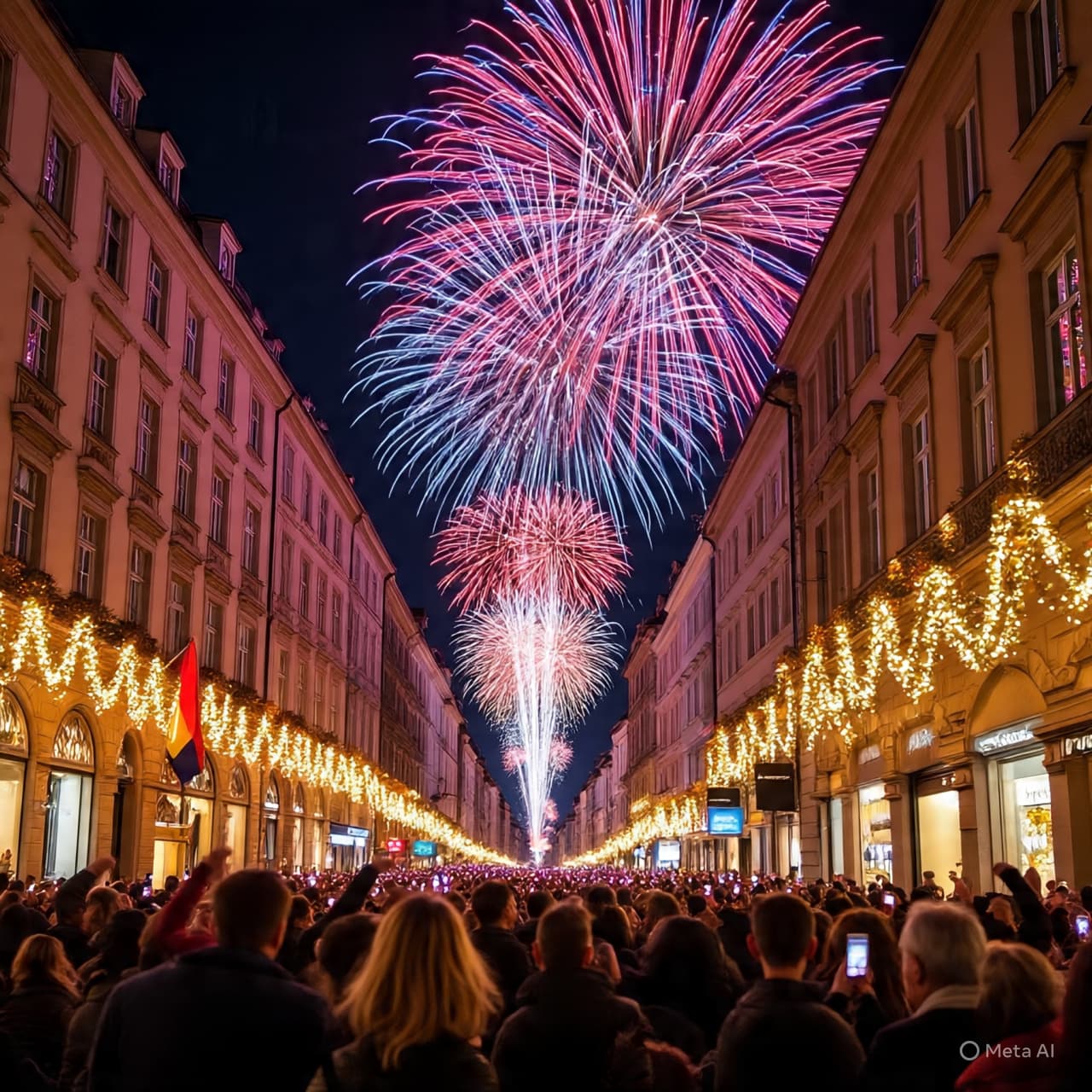
As the old year exhales and a new one draws near, Germany’s winter skies prepare for their familiar ritual of light and thunder. For generations, fireworks have punctuated Silvester, the country’s New Year’s Eve celebration — a moment when noise and color announce renewal. Yet beneath the sparkle, a quieter shift is taking place, one measured not in decibels but in public sentiment.
Recent surveys suggest that almost half of Germans now favor a ban on private fireworks, a remarkable change in a country where the tradition has long been woven into collective memory. What was once an unquestioned symbol of celebration is increasingly viewed through a lens shaped by caution, concern, and changing values.
The reasons behind this shift are layered. Hospitals report a steady flow of injuries each New Year’s Eve, many caused by powerful firecrackers or illegal fireworks brought in from abroad. Emergency services speak of long nights stretched thinner each year, while police describe a growing challenge in keeping crowded city centers safe amid unpredictable explosions. The toll on public safety is becoming a significant factor in the debate.
Beyond human safety, other considerations are shaping the discussion. Environmental groups point to fine-particle pollution that briefly rivals industrial smog, settling over cities just as the calendar turns. Animal welfare advocates describe pets trembling in apartments and wildlife startled into dangerous flight. For them, the spectacle comes at a cost that lingers after the smoke clears, raising questions about the environmental and ethical implications of such celebrations.
Yet the tradition still has its defenders. Many Germans see fireworks as an expression of personal freedom and communal joy, a shared release at the threshold of a new year. They argue that responsible use, rather than prohibition, should be the goal — a compromise that preserves celebration while reducing harm. This perspective highlights the cultural significance of fireworks and the desire to maintain festive traditions.
For now, the country stands somewhere between echoing booms and imagined silence. Some cities have expanded local bans in sensitive areas, while nationwide restrictions remain elusive. As Germany looks ahead, the debate over fireworks reflects something broader: a society re-examining its rituals, weighing continuity against care, and asking what celebration should look like in a changing world. The outcome of this discussion may redefine how Germans celebrate the New Year in the years to come.
Published by Banx Network. This article is part of the Banx decentralized media programme, powered by the BXE token on the XRP Ledger.



