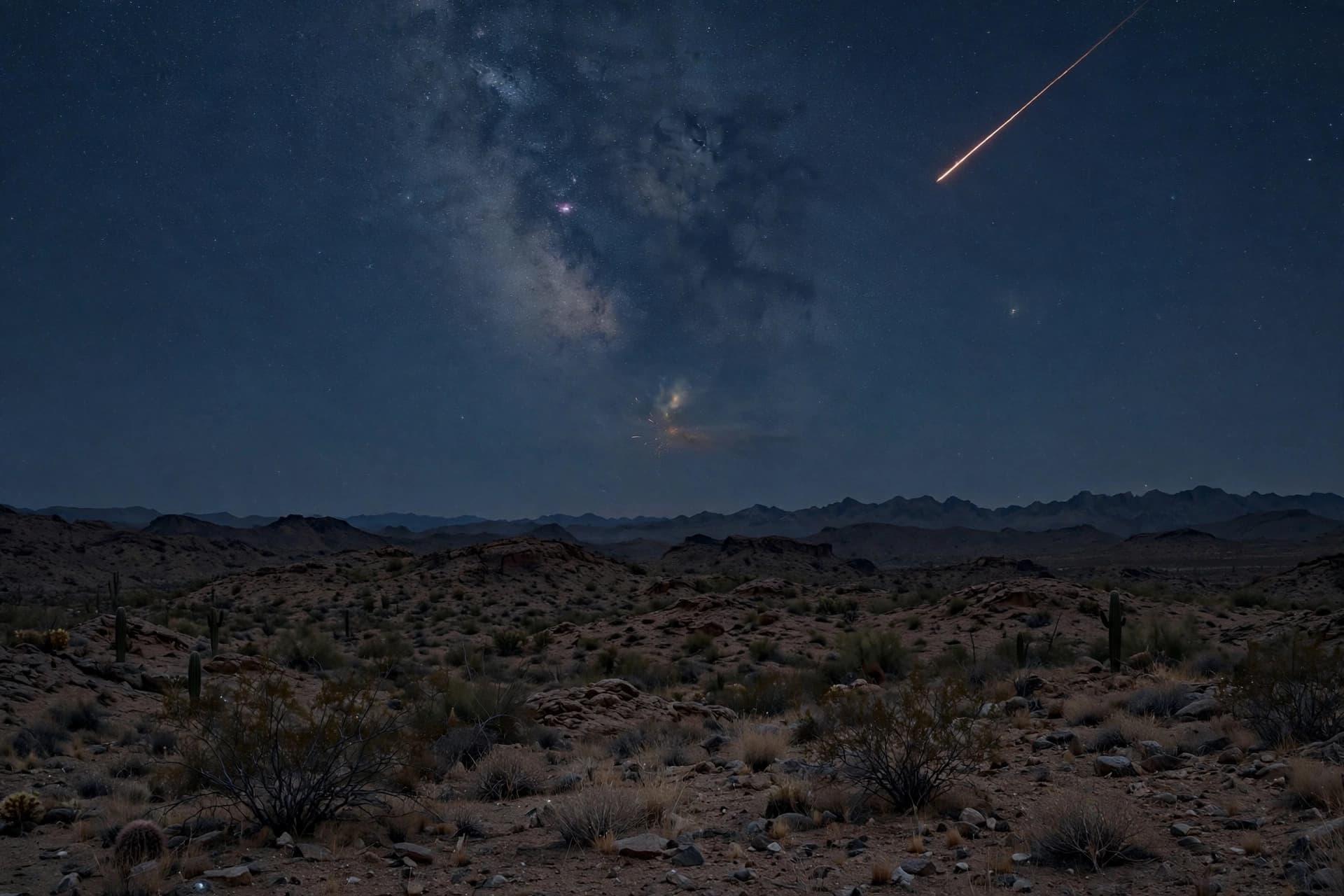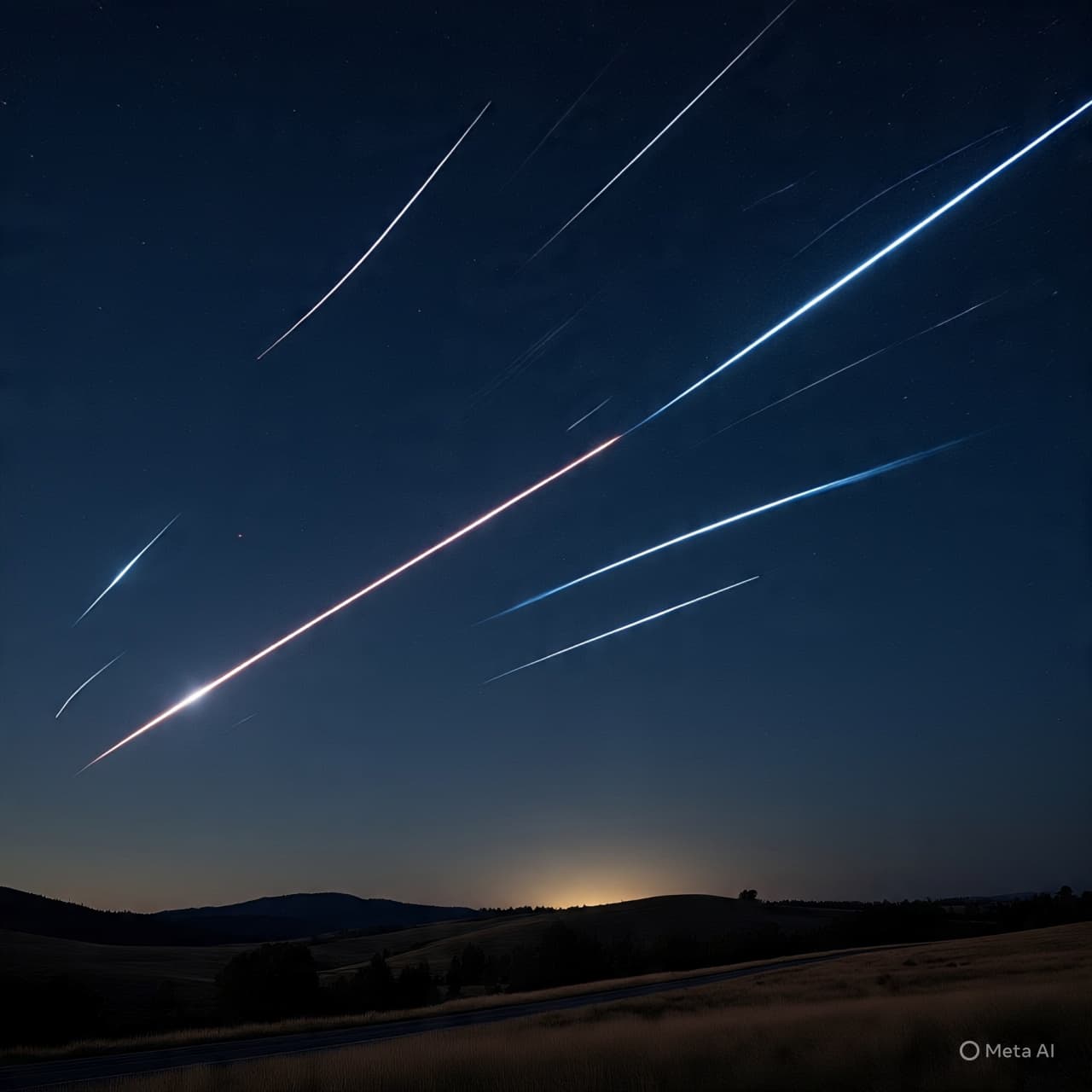
Some nights ask nothing of us but attention. They do not announce themselves loudly or demand preparation beyond stepping outside and looking up. Tonight is one of those nights, when the sky briefly loosens its stillness.
The Geminids meteor shower is reaching its peak, offering skywatchers one of the most reliable and vivid celestial displays of the year. Unlike fleeting or unpredictable events, the Geminids arrive with a steady confidence, returning each December with consistency that feels almost reassuring.
Under clear conditions, observers may see dozens of meteors an hour, cutting sharp white and yellow streaks across the sky. These fragments, remnants of an ancient asteroid, burn brightly as they enter Earth’s atmosphere, leaving momentary trails that vanish almost as soon as they appear.
What sets the Geminids apart is their intensity. The meteors tend to be brighter and slower than those from many other showers, making them easier to spot even for casual viewers. City lights can dull the display, but even suburban skies often reveal enough movement to reward patience.
Astronomers note that peak activity occurs overnight, when Earth’s rotation turns observers directly into the stream of debris. No telescopes or special equipment are required. A dark location, warm clothing, and time are enough.
There is something quietly grounding about meteor watching. The streaks arrive without pattern, interrupting thought and conversation alike. Each one is brief, unrepeatable, and indifferent to being noticed. Together, they create a shared experience that feels both intimate and expansive.
Cloud cover and moonlight can affect visibility, but experts say even imperfect conditions can still deliver moments of surprise. The advice is simple: look up often, and linger longer than you think necessary.
By morning, the peak will have passed, and the sky will return to its usual restraint. What remains is the memory of light moving quickly through darkness — a reminder that even familiar skies still hold the capacity to astonish.
Published by Banx Network. This article is part of the Banx decentralized media programme, powered by the BXE token on the XRP Ledger.