Airports are built for motion — for the steady choreography of departures and arrivals, for the quiet mathematics of routes drawn across the sky. This week, that motion faltered. Across the Middle East, vast stretches of airspace were closed or restricted as regional tensions escalated, leaving hundreds of thousands of travelers stranded, rerouted, or waiting beneath departure boards blinking with cancellations.
From major hubs in the Gulf to transit points in Europe and Asia, airlines scrambled to redraw flight paths. Aircraft already in the air were diverted; others remained grounded on tarmacs where engines cooled in the heat. Authorities cited security concerns following missile activity and aerial interceptions in parts of the region, prompting precautionary closures over key corridors.
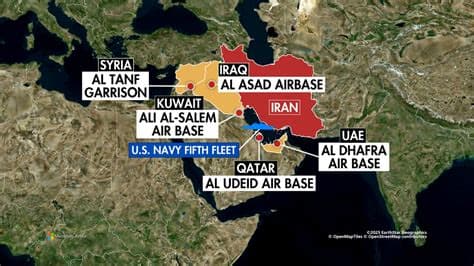
Airspace over portions of Iran, Iraq, and neighboring states was restricted, forcing carriers to reroute long-haul services that typically pass through these corridors. Major airports in Dubai and Doha adjusted schedules as authorities assessed evolving risks. Some regional carriers temporarily suspended flights to affected destinations, while international airlines revised timetables and warned of extended delays.
For passengers, the disruption unfolded in stages. Business travelers refreshed airline apps in crowded lounges; families unrolled blankets near charging stations. Flight crews worked to manage duty-hour limits as schedules shifted unpredictably. Hotels near major airports reported sudden surges in last-minute bookings as connections unraveled.
Air traffic control systems, designed with contingency planning in mind, redirected aircraft along longer arcs over the Arabian Sea or northward across alternative routes. These detours add fuel costs and travel time, but they are part of aviation’s layered safety protocols. Industry analysts noted that while closures of this scale are rare, airlines have experience adapting to geopolitical flashpoints, volcanic ash clouds, and sudden weather systems.
Governments urged calm, emphasizing that restrictions were precautionary and subject to review. Aviation authorities continue to monitor intelligence and security assessments, coordinating with international regulators. The closures, though temporary, underscore how quickly conflict on the ground can ripple upward into the airways — where invisible boundaries shape global movement.
As departure boards slowly update and some routes reopen, the episode leaves behind a reminder: air travel depends on more than engineering and timetables. It rests on stability across regions that serve as crossroads between continents. When those corridors close, the world feels slightly larger, distances stretching not only in miles but in hours and uncertainty.
For now, travelers wait — watching the sky that remains, above it all, vast and indifferent, even as the lines that traverse it are redrawn.
AI Image Disclaimer
Images are AI-generated conceptual visuals and not actual photographs.
Sources
International Air Transport Association Reuters Associated Press BBC News Al Jazeera
Published by Banx Network. This article is part of the Banx decentralized media programme, powered by the BXE token on the XRP Ledger.