

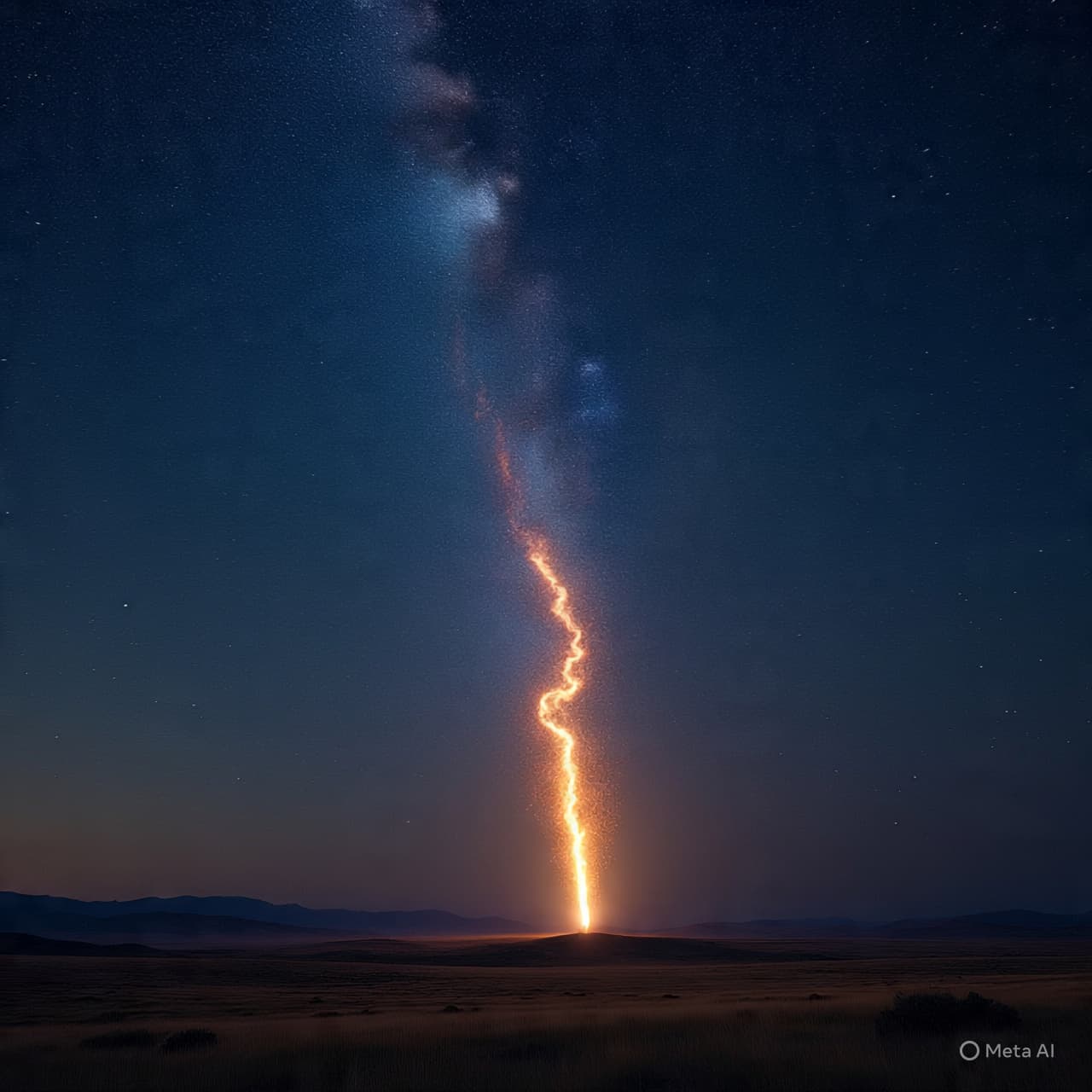
Key Highlights
- Fireball season peaks in early spring, offering stunning meteor displays.
- Fireballs are larger meteors that can create bright flashes and sonic booms.
- Observers can increase their chances of sightings by watching dark skies away from city lights.
[Understanding Fireball Season]
Every year, the night sky captivates stargazers during a period known as fireball season, when exceptionally bright meteors, or fireballs, become more frequent. Unlike scheduled meteor showers, fireballs appear sporadically, often dazzling observers with their brilliance that can outshine even the planet Venus. This phenomenon typically occurs from late winter into early spring in the Northern Hemisphere, marking a time when the Earth’s orientation in space enhances the likelihood of witnessing these celestial events.
The increase in fireball sightings is not due to a surge in cosmic debris but rather the Earth’s position as it travels through its orbit. During this season, the morning side of the planet faces the direction of its orbital motion, allowing it to encounter more incoming particles. These particles, which can be tiny fragments of rock or metal, enter the atmosphere at incredible speeds. As they collide with air molecules, they heat up and produce the bright flashes we recognize as meteors. Fireballs, however, are distinguished by their larger size and intensity, often resulting in spectacular light displays and, in some cases, sonic booms.
The allure of fireballs lies not only in their visual spectacle but also in their profound history. Each fireball may have traveled through space for millions or even billions of years before intersecting with Earth’s atmosphere. Their sudden appearance serves as a reminder of the dynamic nature of our universe, marking the end of a long journey rather than the beginning of one. This transient beauty invites observers to reflect on the vastness of space and the fleeting moments that connect us to it.
During fireball season, sightings are most common in the evening hours, providing ample opportunities for viewers to catch a glimpse of these luminous events. Clear, dark skies away from urban light pollution offer the best conditions for observation. However, the unpredictable nature of fireballs means they can appear at any time and in any location, making each sighting a unique experience.
Organizations such as the American Meteor Society play a crucial role in documenting fireball sightings. They collect reports from observers worldwide, creating a comprehensive archive that helps researchers analyze patterns in these celestial occurrences. NASA also monitors larger meteors and studies the remnants that survive their fiery descent, contributing valuable insights into the composition of our solar system.
As fireball season progresses, enthusiasts are encouraged to remain vigilant. While no specific timing guarantees a sighting, the season increases the likelihood of witnessing these brief, radiant crossings. Observers should seek out clear evenings in darker locations to maximize their chances of experiencing the wonder of fireballs lighting up the night sky.
In the coming weeks, fireball activity is expected to remain elevated before tapering off to typical levels. This gradual decline serves as a gentle reminder of the cyclical nature of celestial events, leaving behind memories of the stunning displays that have graced our skies.
Published by Banx Network. This article is part of the Banx decentralized media programme, powered by the BXE token on the XRP Ledger.




