There are instruments in science that do more than observe—they redefine the scale of what can be seen. The Nancy Grace Roman Space Telescope belongs to this category, carrying expectations that extend far beyond its technical design into the broader understanding of the universe.
The Roman Space Telescope, developed by NASA, is designed to study wide-field infrared observations of the cosmos. Unlike earlier telescopes that focus deeply on narrow regions of space, Roman aims to survey large portions of the sky with remarkable precision.
One of its most anticipated contributions is in the field of exoplanet discovery. Scientists estimate that its observational capacity could significantly expand the catalog of known planets outside our solar system, potentially identifying tens of thousands—or even more—new candidates.
This scale of discovery is made possible through gravitational microlensing, a method that detects distant planets by observing how their gravity affects the light of background stars. It is a technique that transforms subtle distortions into meaningful astronomical data.
Each new exoplanet adds to the growing understanding that planetary systems are not rare but widespread throughout the galaxy. This challenges earlier assumptions about the uniqueness of our solar system and opens broader questions about planetary formation.
Beyond planet detection, the telescope is also expected to contribute to studies of dark energy, galaxy formation, and cosmic structure evolution. Its wide-field capabilities allow scientists to collect large datasets that can be analyzed over time.
The mission reflects a shift in astronomy toward large-scale data-driven exploration, where discovery is not only about seeing farther, but about seeing more comprehensively.
As the Roman Space Telescope prepares for its scientific operations, it represents a step toward a more detailed map of the universe—one where countless unseen worlds gradually come into view.
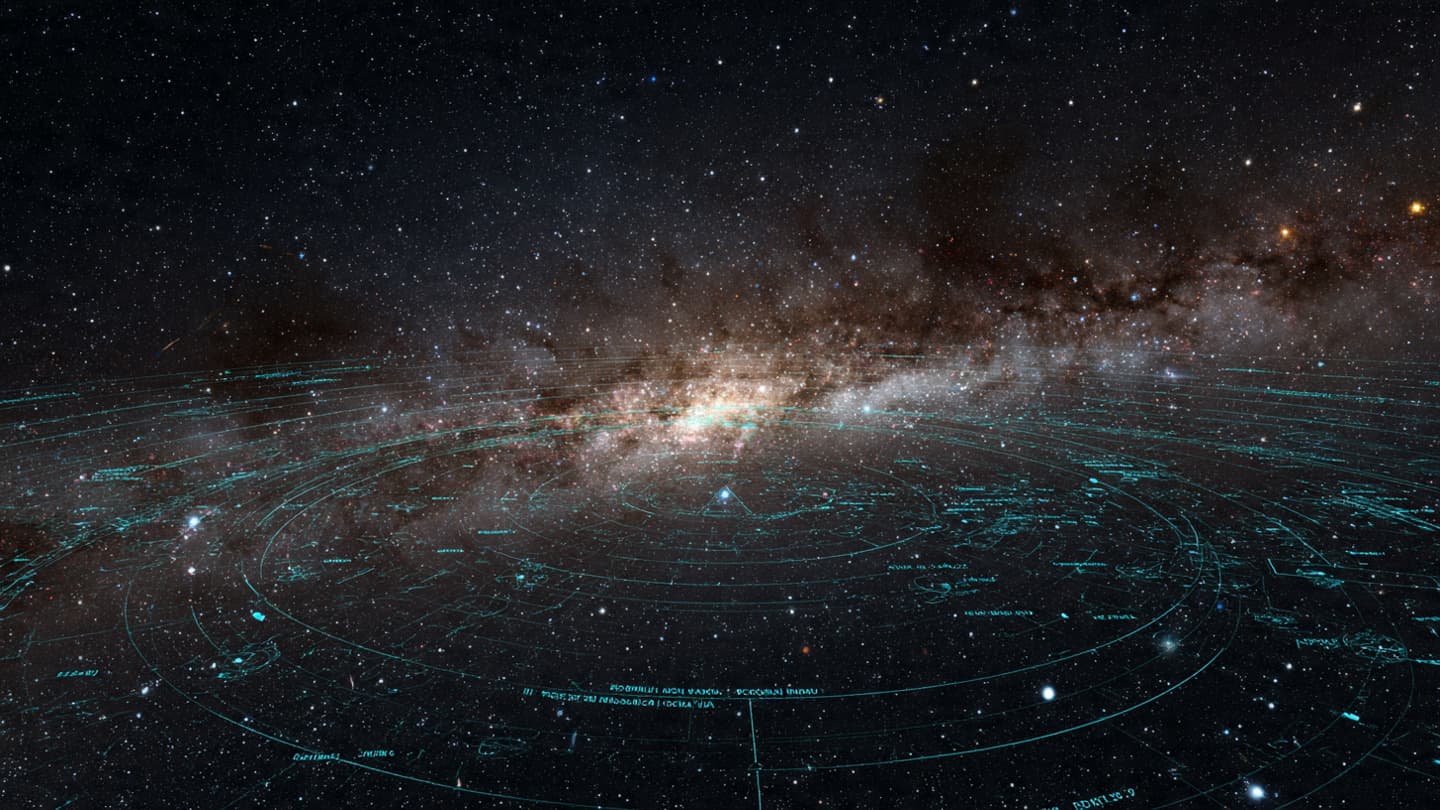
AI Image Disclaimer: All images are AI-generated conceptual illustrations and do not represent actual telescope captures.
Sources (media names only): NASA, Space.com, Nature Astronomy, Science Daily
Published by Banx Network. This article is part of the Banx decentralized media programme, powered by the BXE token on the XRP Ledger.