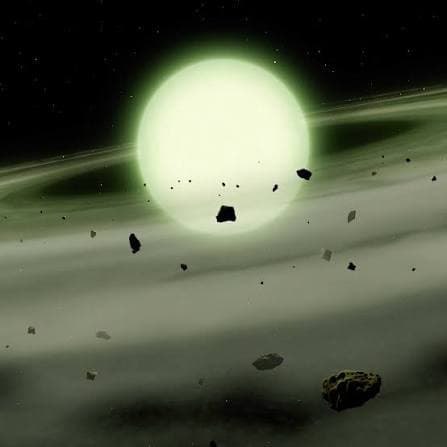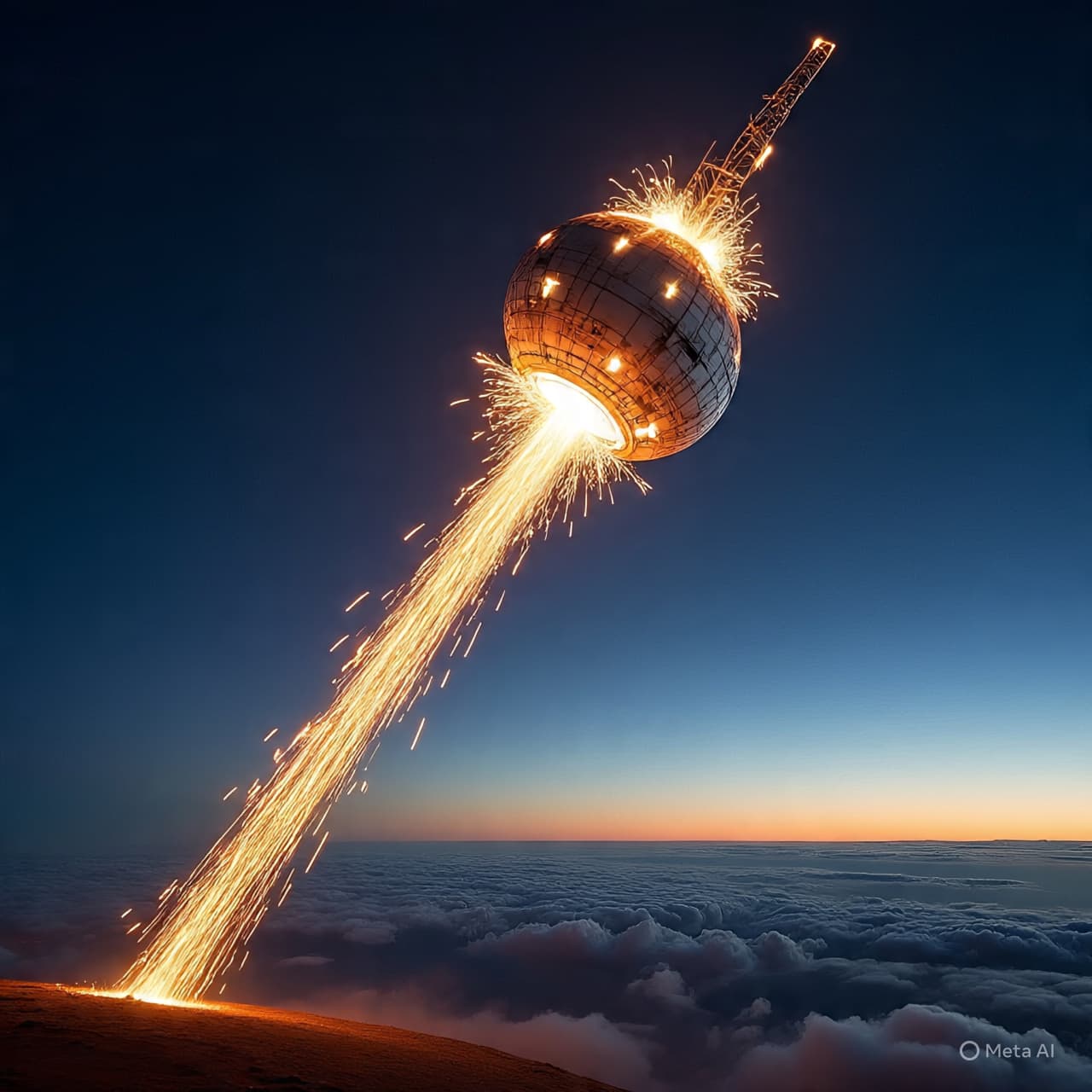
There was a time when the night sky felt eternal — a quiet cathedral of stars, undisturbed and indifferent to the rhythms of human ambition. We once looked upward with humility, tracing constellations and dreaming of distant worlds. Now, as rockets rise more frequently from Earth’s surface, the heavens are no longer simply a canvas for wonder. They are becoming a corridor of commerce, a highway of machines, and perhaps, if we are not careful, something more unsettling: a crematorium in the sky.
The modern space race is quieter than the one that once carried astronauts to the Moon, yet in many ways it is more relentless. Private companies and national agencies are launching satellites at unprecedented speed, building vast constellations to power global internet, Earth observation, defense systems, and scientific research. Thousands already orbit above us; tens of thousands more are planned. Each launch promises connection, data, and innovation. But every satellite, like all engineered things, has an end.
Most satellites are designed to burn up in Earth’s atmosphere when their operational life concludes. This fiery descent has long been considered a tidy solution — a way to prevent clutter in orbit and reduce the risk of dangerous debris collisions. Yet recent scientific analysis suggests the atmosphere itself may be absorbing the cost of this convenience. As satellites disintegrate, they release metals and chemical compounds into the upper atmosphere, including aluminum oxides and other particulates that do not simply vanish with the flames.
Researchers have begun to study what happens when the sky becomes a site of repeated incineration. The concern is not immediate catastrophe but gradual accumulation. Particles left behind by burning satellites can linger in the stratosphere and mesosphere, regions that play crucial roles in shielding life from harmful radiation and regulating planetary temperature. Aluminum oxide, for example, has properties that may influence atmospheric chemistry and ozone balance. While natural meteors also burn up daily, the composition and scale of artificial satellites introduce new variables into a system already strained by climate change.
The numbers tell a quiet but compelling story. If satellite launches continue to accelerate — particularly with mega-constellations planned by multiple companies — the mass of material reentering the atmosphere could grow dramatically over the coming decades. Unlike isolated events, this would represent a continuous cycle of manufacturing, launching, deorbiting, and atmospheric deposition. The sky would become not merely a passageway, but a furnace — one fed by human design.
Scientists are not arguing for an end to space activity. Satellites provide extraordinary benefits: disaster monitoring, navigation, climate tracking, global communication. In many ways, they form the invisible backbone of modern life. Instead, researchers are urging foresight. They call for deeper environmental modeling, alternative satellite materials, improved debris management, and international guidelines that consider atmospheric consequences alongside orbital safety.
The challenge is subtle but significant. Space has long been treated as separate from Earth’s environmental systems — a frontier beyond the jurisdiction of terrestrial concerns. Yet the boundary between planet and cosmos is not a wall; it is a gradient. What we send upward eventually returns, transformed by fire but not erased. The atmosphere is not an infinite sink. It is a delicate membrane.
In this unfolding chapter of the space age, progress and precaution must travel together. Policymakers, industry leaders, and scientists are increasingly discussing sustainability in orbit, but atmospheric sustainability may soon demand equal attention. The idea of the sky as a crematorium is not prophecy; it is a metaphor meant to invite reflection. It asks whether our ambition can remain aligned with stewardship.
The rockets will likely continue to rise. Innovation rarely pauses for long. But as they do, the conversation about what happens on the way back down grows more urgent. The atmosphere has always protected us quietly, absorbing cosmic radiation, moderating temperature, and sustaining life’s fragile chemistry. It deserves consideration not only as a backdrop to exploration, but as a participant in it.
For now, the warnings are measured, the data still evolving. No verdict has been delivered — only a question placed gently before us: In reaching for the stars, how carefully are we tending the sky that holds us?
AI Image Disclaimer Visuals are created with AI tools and are not real photographs.
Source Check
Credible coverage and expert commentary on this topic appear in:
The Conversation BBC News The Guardian Space.com Scientific American
Published by Banx Network. This article is part of the Banx decentralized media programme, powered by the BXE token on the XRP Ledger.