
Key Highlights
- U.S. military operations against Iran are intensifying, with fewer restrictions.
- Iran's Foreign Ministry condemns U.S. rhetoric as a 'Nazi mentality'.
- The conflict has already resulted in significant casualties and infrastructure damage.
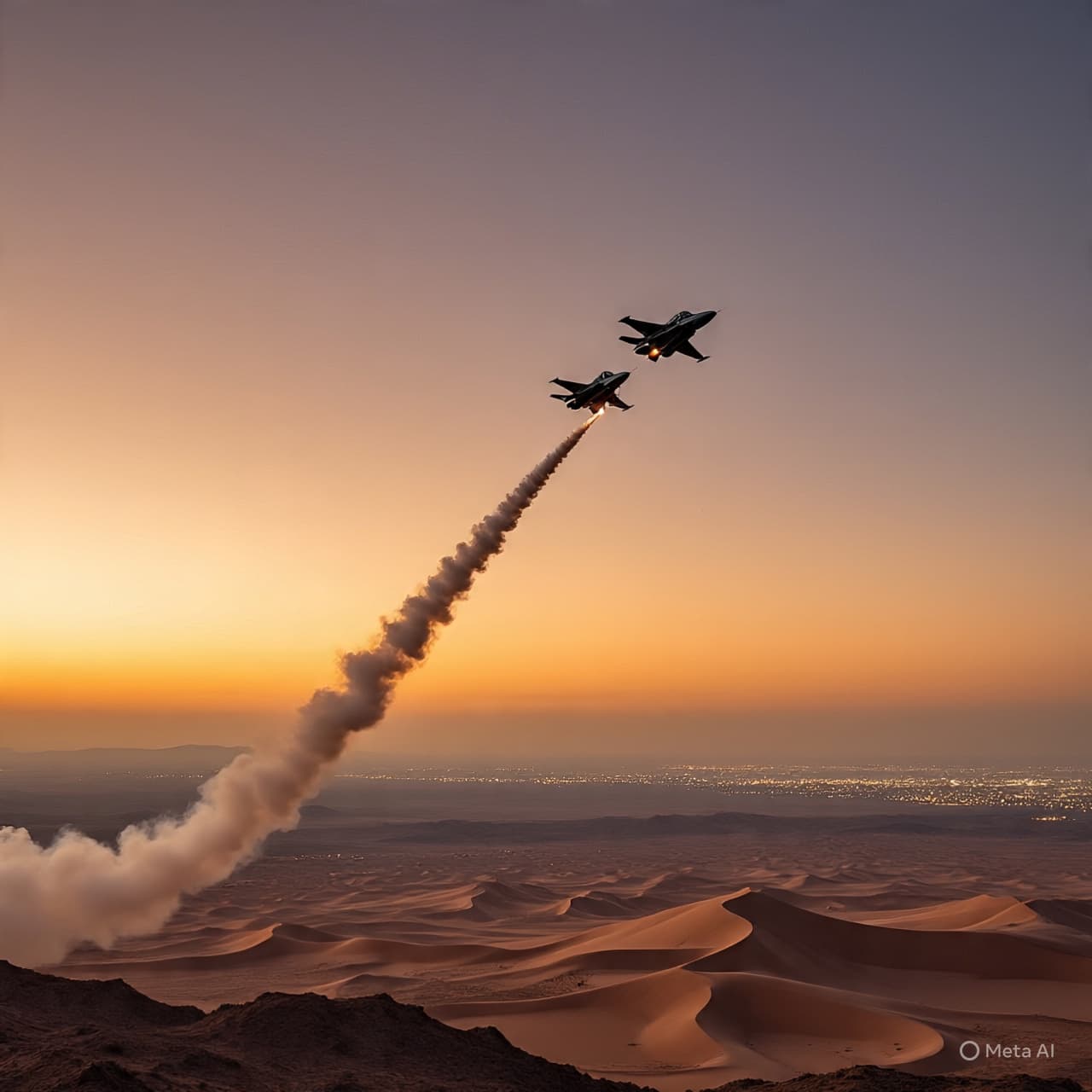
The ongoing confrontation between the United States and Iran has escalated, with military operations intensifying and rhetoric becoming increasingly aggressive. U.S. Defense Secretary Pete Hegseth recently indicated that American and allied air power is prepared to dominate the skies over Iran, suggesting that Iranian leaders will soon feel the weight of military aircraft overhead. This shift in strategy marks a significant change in the U.S. approach, with officials emphasizing air superiority and the targeting of strategic sites within Iran.
In a series of briefings, U.S. officials have communicated a clear message: the military campaign against Iran could soon escalate further. The language used by these officials has been striking, portraying the battlefield as a theater where control of the air is paramount. This rhetoric not only underscores the U.S. military's capabilities but also signals a willingness to engage in more aggressive operations.
However, the Iranian government has not remained silent in the face of these threats. Esmaeil Baghaei, spokesperson for Iran’s Foreign Ministry, responded sharply to the U.S. statements, labeling them as indicative of a “Nazi mentality.” Baghaei's comments reflect a broader sentiment within Iran that views U.S. military threats as a blatant disregard for human life and international norms. This exchange of words highlights the growing emotional and rhetorical divide between the two nations, with Washington emphasizing military might while Tehran frames the discourse as a moral indictment.
As the conflict unfolds, reports from the region indicate that military actions have already resulted in significant casualties and damage to infrastructure. The war, which was once discussed in terms of deterrence and diplomacy, is now increasingly characterized by escalation and aggression. This shift in language and strategy raises concerns about the potential for further violence and instability in the Middle East.
In the realm of international politics, rhetoric can often become a powerful force in its own right. Words can mobilize allies, strengthen domestic resolve, and shape global perceptions of a conflict. Yet, they can also exacerbate mistrust and push diplomatic solutions further out of reach. In this context, the language used by both Washington and Tehran will play a crucial role in determining the future trajectory of their relationship.
As tensions continue to rise, the skies above the Middle East remain fraught with uncertainty. Military operations are ongoing, statements are exchanged, and the gap between words and actions appears to be narrowing. The outcome of this conflict will depend not only on military capabilities but also on the willingness of both sides to engage in dialogue and temper their rhetoric.
History has shown that while wars may begin with the roar of engines, they can also be prevented or prolonged by the words spoken before the first strike. The future of U.S.-Iran relations hangs in the balance, with the potential for both escalation and resolution.
Published by Banx Network. This article is part of the Banx decentralized media programme, powered by the BXE token on the XRP Ledger.



