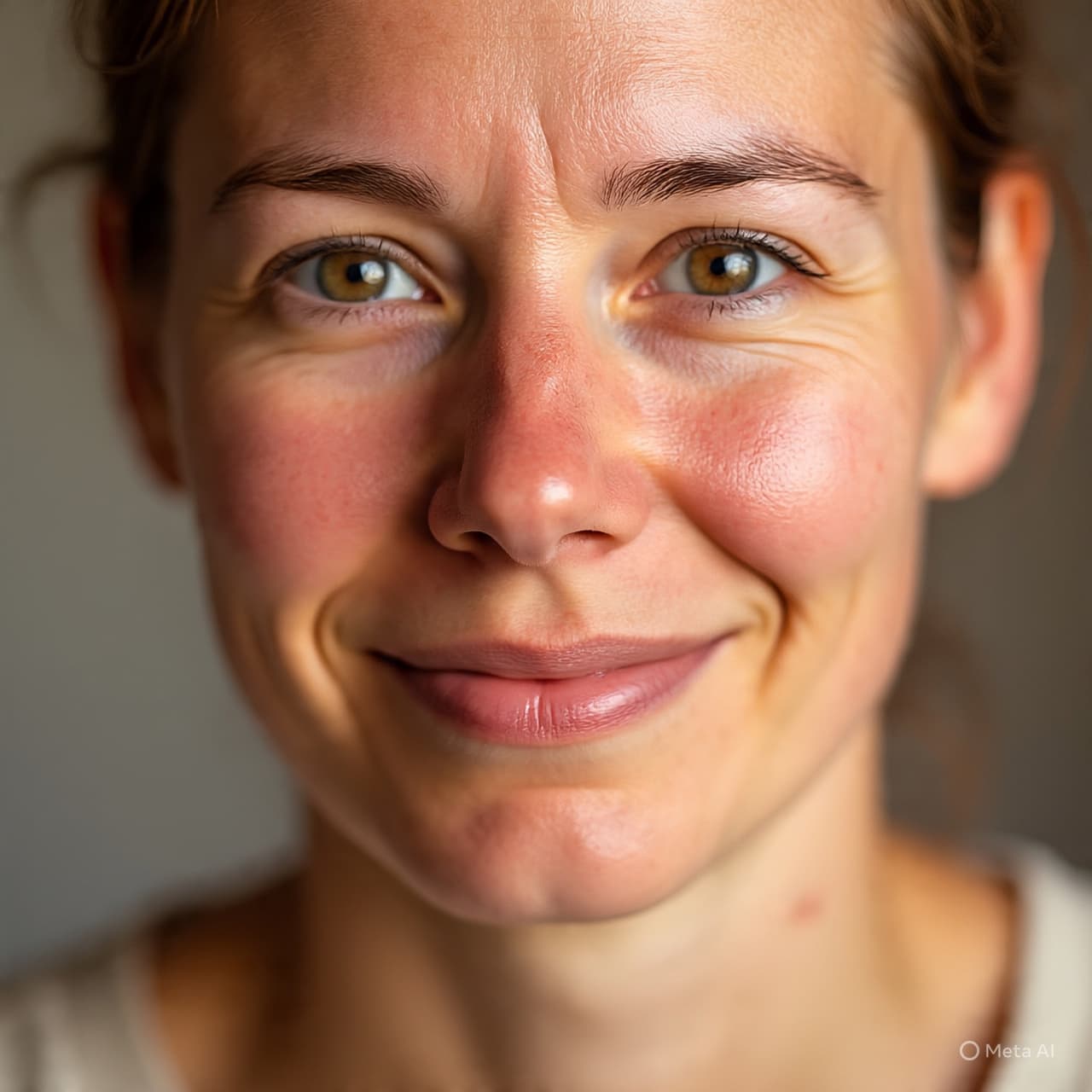
Skin is often treated as a boundary—a protective layer separating the body from the world. But for people with rosacea, the skin becomes something more communicative. It flushes, stings, warms, and reddens, responding not just to touch, but to stress, heat, food, light, and time itself. What appears on the surface reflects a deeper sensitivity beneath.
Triggers vary from person to person, but patterns emerge. Heat, sunlight, alcohol, spicy foods, emotional stress, and harsh skincare products commonly intensify symptoms. The skin reacts quickly and recovers slowly, if at all. What makes rosacea challenging is not just the inflammation itself, but its unpredictability.
Treatment focuses less on cure and more on control. Dermatologists now emphasize calming the skin rather than stripping or “correcting” it. Topical medications can reduce inflammation and visible blood vessels. Oral treatments may be used for more persistent cases. In certain situations, laser and light therapies help minimize redness and dilated capillaries.
Equally important is daily care. Gentle cleansers, fragrance-free moisturizers, and consistent sun protection form the foundation of management. Learning personal triggers—what inflames and what soothes—becomes part of the work. Over time, many people find that their skin responds not to force, but to restraint.
Rosacea also carries a quieter burden. Because it appears on the face, it can shape how people are perceived—and how they perceive themselves. Flare-ups arrive uninvited, often during moments of stress or visibility. Acknowledging this emotional weight has become an increasingly recognized part of treatment, reminding patients that rosacea is not simply cosmetic, but lived.
What science now understands is that rosacea is a condition of sensitivity, not failure. The skin is reacting strongly because it is wired to do so. Treatment, then, becomes an act of collaboration rather than correction—working with the skin’s signals instead of trying to silence them entirely.
For many, relief does not come all at once. It arrives gradually, through steadier routines, clearer knowledge, and the recognition that managing rosacea is not about erasing the skin’s response, but about helping it settle. The redness may still come and go. But it no longer has to define the conversation.
AI Image Disclaimer
Visuals are AI-generated and serve as conceptual representations.
Sources
American Academy of Dermatology National Rosacea Society Mayo Clinic The Lancet Dermatology Journal of the American Academy of Dermatology
Published by Banx Network. This article is part of the Banx decentralized media programme, powered by the BXE token on the XRP Ledger.


.jpg&w=3840&q=75 "Qantas Grounds Plane After Passengers Report Bedbug Bites")