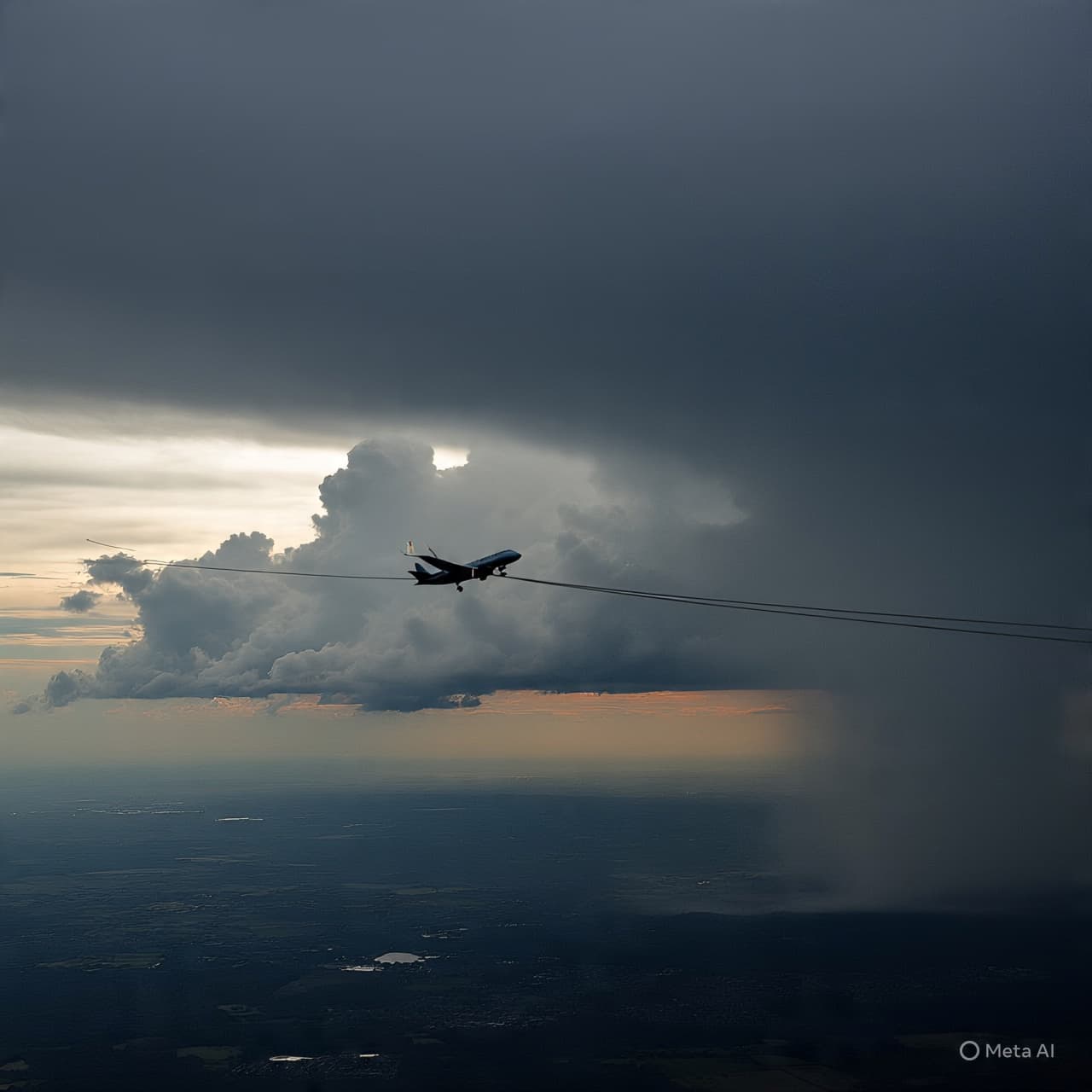
In the delicate dance of global connectivity, where flight paths crisscross like invisible threads stitching the world together, an unspoken tension has woven its way through the skies. A violent event, not seen but felt, ripples across continents, halting planes mid-air, shuffling them like pawns in an international chess game. The attack on Iranian soil has triggered tremors in the aviation world, grounding flights, diverting others, and casting a shadow of uncertainty over Middle Eastern travel routes. This is not merely an interruption in transit; it is a reminder of the fragile balance that underpins our interconnected world.
The Iranian attack has not only sent shockwaves through local infrastructure but also affected air traffic in a far-reaching manner. Airports, particularly those in the Middle East and North America, have reported widespread flight disruptions. New York's John F. Kennedy Airport (JFK), one of the busiest in the United States, was forced to cancel multiple flights in the wake of security alerts triggered by the situation.
While most of the cancellations were concentrated within the Middle Eastern corridor, where airlines struggled to navigate volatile airspaces, international travelers faced delays and rerouting that stretched far beyond the immediate region. The International Air Transport Association (IATA) confirmed that this event underscores the vulnerability of global air travel to geopolitical shifts, which are often unpredictable and swift.
Flight cancellations are typically a logistical headache for both passengers and airlines, but when tied to a heightened security threat, they take on a more solemn significance. For travelers making their way to or from conflict zones, the mere act of flying transforms from a routine part of life into a gamble with unpredictable risks. The situation calls into question the broader implications of international relations on everyday life, turning a day of travel into a delicate dance of diplomacy, security, and human lives.
Beyond the immediate inconvenience to travelers, there lies a deeper reflection about how the ripple effects of geopolitical instability reach us all. The modern world is inextricably linked, and when one part of the globe stumbles, the tremors are felt across borders, affecting the daily lives of millions.
As airlines and airports work to restore normalcy, it is clear that this disruption—while temporary—is a reminder of the interconnectedness of the world. While the clouds of uncertainty may part for now, the broader questions remain: how prepared are we for the unpredictable, and how resilient are the systems that bind us together? The skies will clear, but the lessons learned from this disruption will linger long after the planes have taken off again.
AI Image Disclaimer (Rewritten): “Images in this article are AI-generated illustrations, meant for concept only.” “Visuals are created with AI tools and are not real photographs.” “Illustrations were produced with AI and serve as conceptual depictions.” “Graphics are AI-generated and intended for representation, not reality.” Sources: The New York Times BBC News Reuters Al Jazeera The Guardian
Published by Banx Network. This article is part of the Banx decentralized media programme, powered by the BXE token on the XRP Ledger.