There are landscapes that breathe in long intervals. In places shaped by fire and water, silence is not absence but anticipation. Beneath the crust of the Earth, pressure gathers in darkness, composing its own patient rhythm. And when it finally exhales, the sound can travel farther than memory itself.
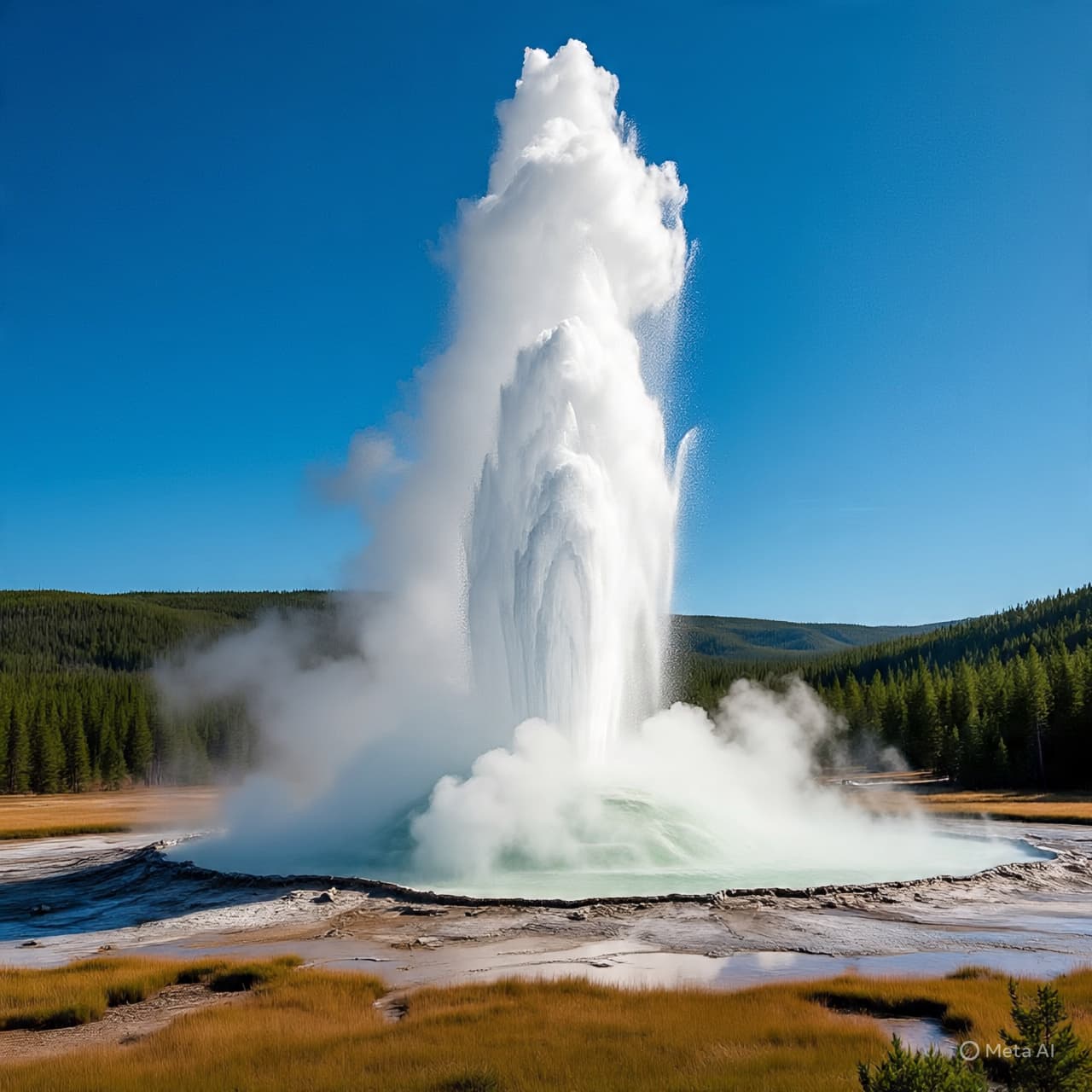
In , where steam rises like morning incense from a restless ground, the world’s largest acidic geyser has stirred again after years of quiet. , a hydrothermal force both magnificent and unpredictable, has erupted once more, sending towering columns of water and steam high into the sky. For scientists and visitors alike, the return feels less like spectacle and more like a reminder — that even the most silent giants beneath our feet are never entirely still.
Steamboat Geyser holds a distinct place in Yellowstone’s vast geothermal tapestry. Unlike the more regularly performing , whose dependable arcs draw daily admiration, Steamboat’s eruptions are erratic and rare. When it does awaken, however, it surpasses all others in height, with major eruptions capable of launching water more than 300 feet into the air. Its waters are also notably acidic, reflecting a chemical complexity shaped by deep subterranean systems where heated fluids mix with volcanic gases.
After an active phase between 2018 and 2020 — when it erupted dozens of times — the geyser entered another prolonged period of dormancy. That quiet stretch, stretching over years, led some observers to wonder whether its recent energetic chapter had closed. Yet geysers are not clocks; they are expressions of geological conversation, their timing governed by shifting subterranean plumbing, pressure balances, and mineral deposits that gradually alter the pathways of superheated water.
The recent eruption, confirmed by monitoring instruments and park observers, suggests that the underground system feeding Steamboat remains dynamic. According to scientists with the and Yellowstone Volcano Observatory, such episodic behavior does not necessarily signal broader volcanic unrest. Rather, it reflects the natural variability of one of the planet’s most complex hydrothermal systems. Yellowstone sits atop a vast volcanic caldera, but most geyser activity represents surface-level hydrothermal processes rather than impending eruptions of magma.
There is something quietly humbling in watching a geyser return after years of stillness. It challenges the human preference for steady patterns. It reminds researchers that Earth’s internal systems operate on timescales both shorter and longer than our own attention spans. Each eruption becomes a data point — pressure readings, seismic traces, temperature shifts — folded into a broader effort to understand how heat and water move beneath Yellowstone’s crust.
For visitors who happened to witness the recent outburst, the moment carried both awe and caution. The park’s geothermal features are fragile and dangerous; boiling water, acidic runoff, and unstable ground are constant realities. Park officials continue to emphasize safety guidelines and boardwalk adherence, particularly during periods of renewed activity.
In straightforward terms, Steamboat Geyser in Yellowstone National Park has erupted again after years of relative dormancy. Scientists confirm that the event aligns with past patterns of irregular activity and does not indicate increased volcanic threat. Monitoring continues as part of routine observation by federal agencies, and park operations remain normal.
AI Image Disclaimer Visuals are created with AI tools and are not real photographs.
Sources Associated Press CNN BBC News U.S. Geological Survey National Park Service
Published by Banx Network. This article is part of the Banx decentralized media programme, powered by the BXE token on the XRP Ledger.