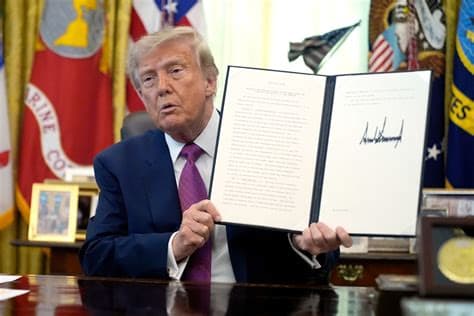
There are moments in geopolitics when silence speaks louder than speeches. The air grows heavy, not with declarations, but with movement — aircraft repositioned quietly, naval fleets drifting closer to distant shores, words chosen carefully at podiums. It is in these in-between spaces, between diplomacy and decision, that history often shifts its weight.
In recent days, conversations surrounding President and Iran have begun to carry that familiar gravity. Publicly, the language remains measured. Privately, reports suggest preparations are being discussed with increasing seriousness. The metaphor often used in Washington — “all options are on the table” — now feels less like ritual phrasing and more like a table being quietly set.
The United States has repositioned military assets across the Middle East, a movement described by officials as precautionary, strategic, defensive. Yet precaution, in international affairs, has a way of becoming prelude. Naval deployments and air force readiness do not announce war; they create possibility. And possibility, once created, alters calculations on all sides.
Iran, for its part, has signaled both defiance and openness — proposing diplomatic frameworks even as regional tensions continue to simmer. The paradox is not new. For decades, Washington and Tehran have existed in a state of suspended hostility: not at war, yet rarely at ease. What feels different now is the compression of time. Decisions appear to be moving faster than the rhetoric that surrounds them.
Some observers point to the political calendar. Others see the shifting alliances across the Middle East. Still others note that strategic patience, once touted as a virtue, is losing favor in an era that prizes decisiveness. None of these explanations alone captures the moment. Together, they suggest a leadership weighing legacy, leverage, and risk.
Military readiness does not guarantee military action. Yet history shows that once infrastructure for force is assembled, the threshold for using it lowers. Strategic signaling can deter — but it can also misfire. In such a climate, even a limited strike, framed as surgical or preventive, carries consequences that ripple far beyond its intended target.
The irony is difficult to ignore. Even as discussions of peace initiatives circulate in other theaters of global conflict, the possibility of confrontation with Iran lingers like a gathering storm beyond the horizon. Diplomacy and deterrence are unfolding simultaneously, each shaping the other in real time.
Whether this moment becomes a turning point or merely another chapter in a long standoff remains uncertain. The machinery of war often moves quietly before it moves loudly. What is clear is that the signals — military repositioning, strategic briefings, guarded public statements — are being interpreted around the world with growing attention.
In Washington, officials maintain that decisions have not been finalized. In Tehran, leaders watch carefully. In global markets and allied capitals, contingency plans are reviewed. The world has learned that conflicts rarely erupt without warning; they more often arrive after a series of warnings that were difficult to interpret in the moment.
For now, the line between posture and action remains intact. But it is thinner than it appears.
The coming days may determine whether these preparations serve as leverage for negotiation or as the first steps toward confrontation. Until then, the quiet movement of ships and aircraft may speak more clearly than any speech delivered under bright lights.
AI Image Disclaimer Illustrations were produced with AI and serve as conceptual depictions.
Sources The Guardian Reuters Al Jazeera Haaretz Financial Times
Published by Banx Network. This article is part of the Banx decentralized media programme, powered by the BXE token on the XRP Ledger.