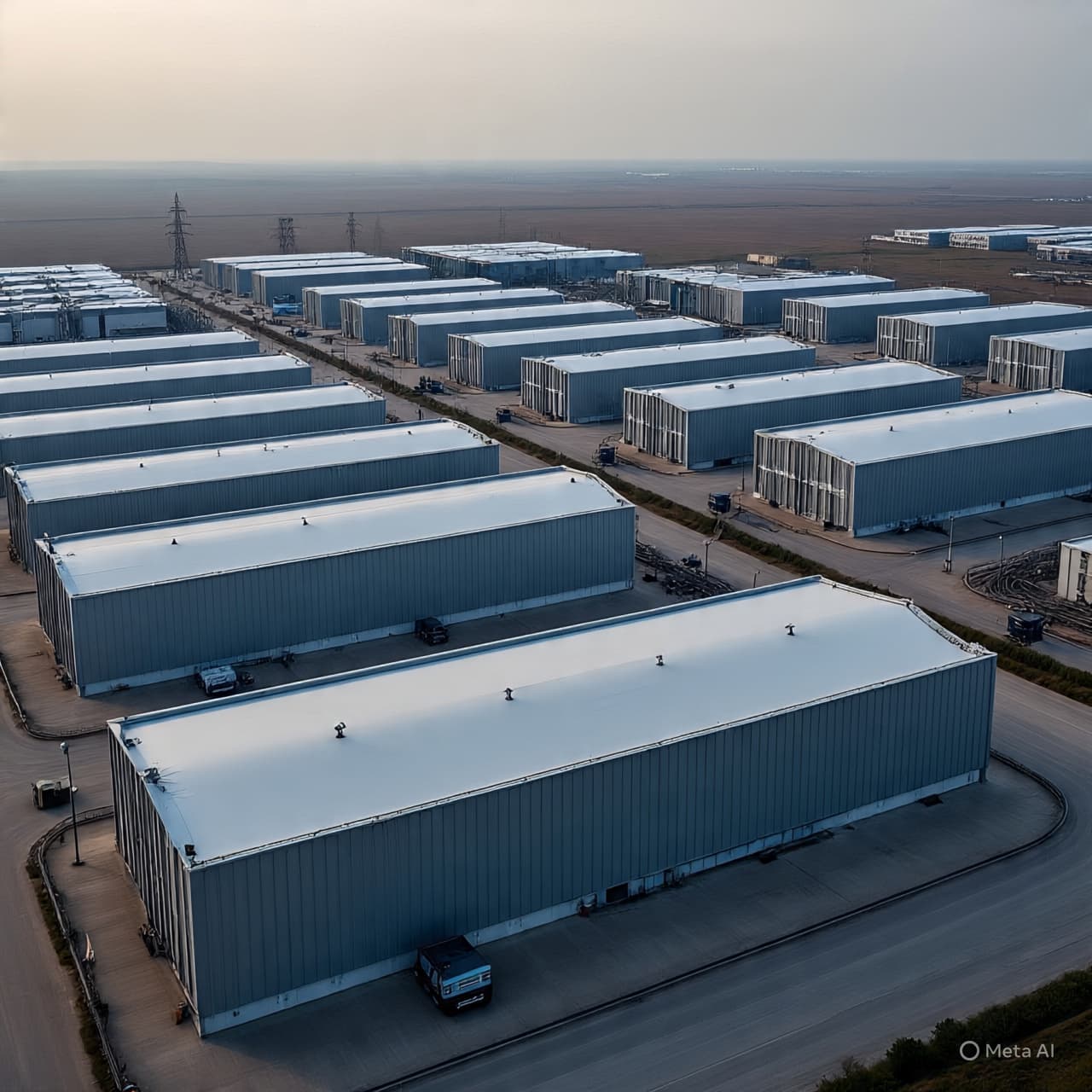
In every building boom, there comes a moment when steel rises faster than certainty. The hum of generators and the glow of server halls suggest inevitability, yet history has shown that momentum alone does not guarantee permanence. It is within this space — between confidence and caution — that one veteran real estate billionaire has chosen to raise a quiet but unmistakable warning.
The developer, long accustomed to reading cycles rather than headlines, has expressed concern that the rapid expansion of data centers may be outrunning its foundations. Capital has poured in at unprecedented scale, driven by enthusiasm around artificial intelligence, cloud computing, and digital infrastructure. But he argues that enthusiasm has a way of smoothing over uncomfortable questions, especially when returns appear predictable and demand seems endless.
At the center of his concern is ownership. Major technology firms, despite their vast resources, largely prefer to lease data center space rather than own it outright. To him, this distinction matters. Leasing shifts long-term risk to developers and investors, while allowing tenants flexibility should technology or strategy change. It is a structure that rewards growth assumptions but leaves little margin for error if those assumptions soften.
He also points to the nature of the buildings themselves. Data centers are highly specialized, capital-intensive assets tied closely to current technology standards. Unlike offices or warehouses, they cannot be easily repurposed. If computing needs evolve faster than expected, yesterday’s cutting-edge facility could become tomorrow’s stranded asset.
Power, too, looms as a constraint rather than a footnote. These facilities consume extraordinary amounts of electricity, placing pressure on grids not designed for such concentrated demand. Expansion plans often rely on projections years into the future, projections that assume continued exponential growth in usage. The developer cautions that infrastructure rarely scales as smoothly as spreadsheets suggest.
Debt amplifies these risks. Projects are often financed on the assumption of long leases, stable tenants, and uninterrupted demand. Should any of those pillars weaken, leverage turns from tool to burden. His warning is not that data centers will fail, but that the margin for miscalculation is narrowing.
As the market stands, construction continues and capital remains eager. Yet his message is measured rather than alarmist. Growth, he suggests, should be matched with restraint. In an industry shaped by cycles, durability is built not only on demand, but on humility before it.
Published by Banx Network. This article is part of the Banx decentralized media programme, powered by the BXE token on the XRP Ledger.