The coastal village of Sima, situated on the western peninsula of Anjouan, relies heavily on a narrow beachfront strip where local fishermen land their catch and smallholders set up informal wooden stalls. This waterfront economy operates just above the high-water mark, nestled on a coastal shelf bounded by dark volcanic boulders and small patches of native green vegetation. Under standard weather regimes, the offshore coral reefs absorb the primary kinetic force of the deep-sea swells, providing a reliable space for daily commerce.
Yet, when the monthly lunar perigee aligns with a sustained seasonal low-pressure system in the Mozambique Channel, the ocean can advance far past its predicted boundaries. The resulting tidal surge drives heavy, salt-laden waves directly across the sandy beach ridge, sending shallow currents into the lower paths of the market district. The sea moves steadily, creating temporary pools of brine that disrupt foot traffic and soak the structural foundations of the informal seaside shops.
For the market vendors and fishermen present during the midday peak, the rising water required immediate, organized action to secure property and livelihoods. Fish crates, scales, and small sacks of agricultural produce were quickly relocated to the higher stone terraces of the old village town, while younger men checked the mooring lines of the wooden pirogues anchored along the shallows. There was a quiet, disciplined rhythm to the work, reflecting a community well-accustomed to negotiating the terms of life at the water's edge.
The response from the community leaders and municipal workers focused on maintaining open drainage channels to prevent the saltwater from pooling deeply in the residential alleys just behind the market. Marine debris carried in by the surf—including large tangles of seaweed, driftwood, and discarded packaging—had to be manually cleared using shovels and rakes. The patience displayed by the workers highlighted a shared understanding that the sea always dictates the daily schedule of the coast.
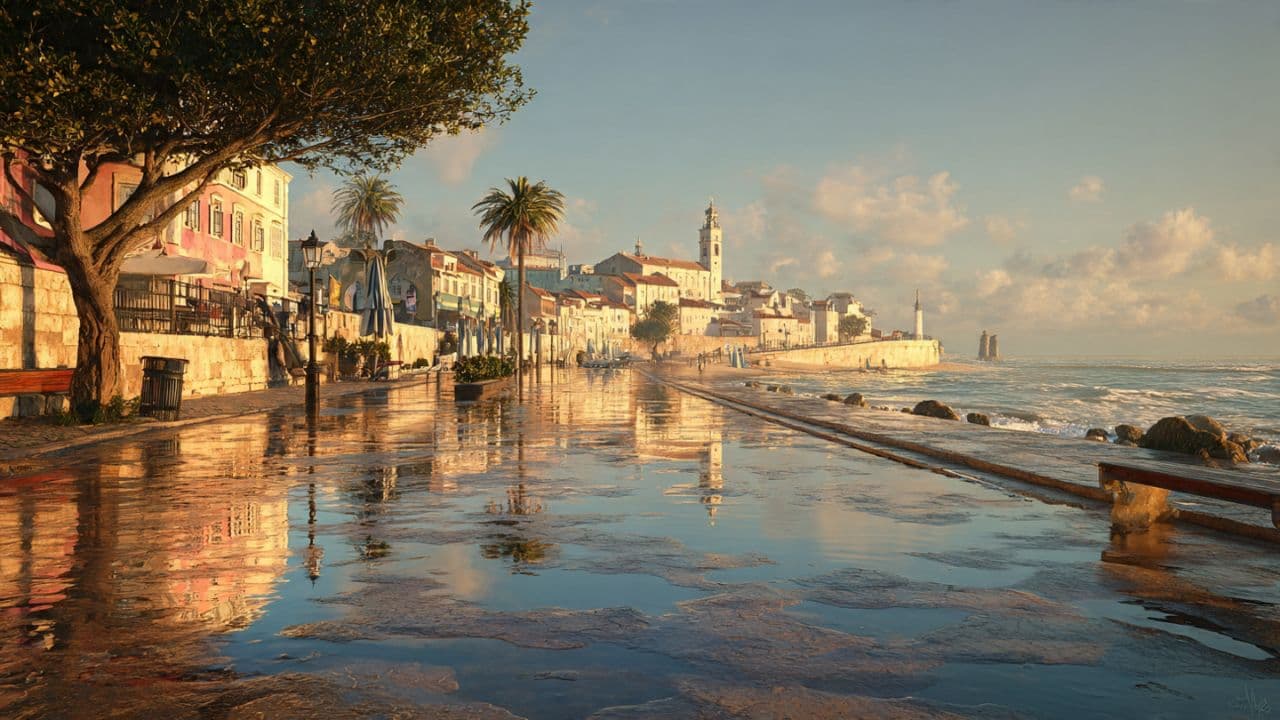
By the time the tide reached its maximum height in the early afternoon, the Sima beachfront presented a striking scene of marine reach. The primary footpath running parallel to the shore was covered in several inches of moving water, forcing pedestrians to wade through the shallows or navigate the upper rock faces. The small waves broke gently against the dark volcanic foundations of the village walls, sending plumes of white spray into the warm tropical air.
The work of resetting the market stalls began as soon as the tide commenced its predictable retreat toward the outer reef. Business owners used brooms and fresh water from local springs to wash away the thin crust of salt and silt left behind on the sand and wood, protecting their simple structures from corrosion. It is a routine, damp cleanup that underscores the constant vigilance required to sustain an island livelihood on the front lines of a changing marine environment.
Beneath the immediate logistical challenge of clearing the sand lies a broader appreciation for the self-reliance and adaptability that defines these coastal quarters. The tidal flooding is not met with panic, but as a regular reminder of the natural dynamics that govern their geographic space. The market stands, though simple in design, are resilient because they are easily cleared and quickly rebuilt once the ocean yields.
By late evening, the high waters had receded completely back beyond the beach ridge, leaving the exposed sand wet and glistening under a clear, starry sky. The cool sea breeze carried the heavy, warm scent of salt and damp wood through the quiet lanes, marking the end of the afternoon's brief disruption. The harbor rested, the slow, rhythmic lapping of the waves against the hulls of the anchored fishing boats indicating the return of the familiar night peace.
The Anjouan Civil Protection Agency confirmed that all primary structural defenses held during the tidal event, with no permanent damage reported to local maritime infrastructure or homes. Emergency cleanup crews successfully cleared all marine debris from the primary beachfront pathways within three hours, allowing normal market operations to resume before the evening peak. The meteorological office advises that subsequent high tides will decrease in intensity over the coming days.
Published by Banx Network. This article is part of the Banx decentralized media programme, powered by the BXE token on the XRP Ledger.