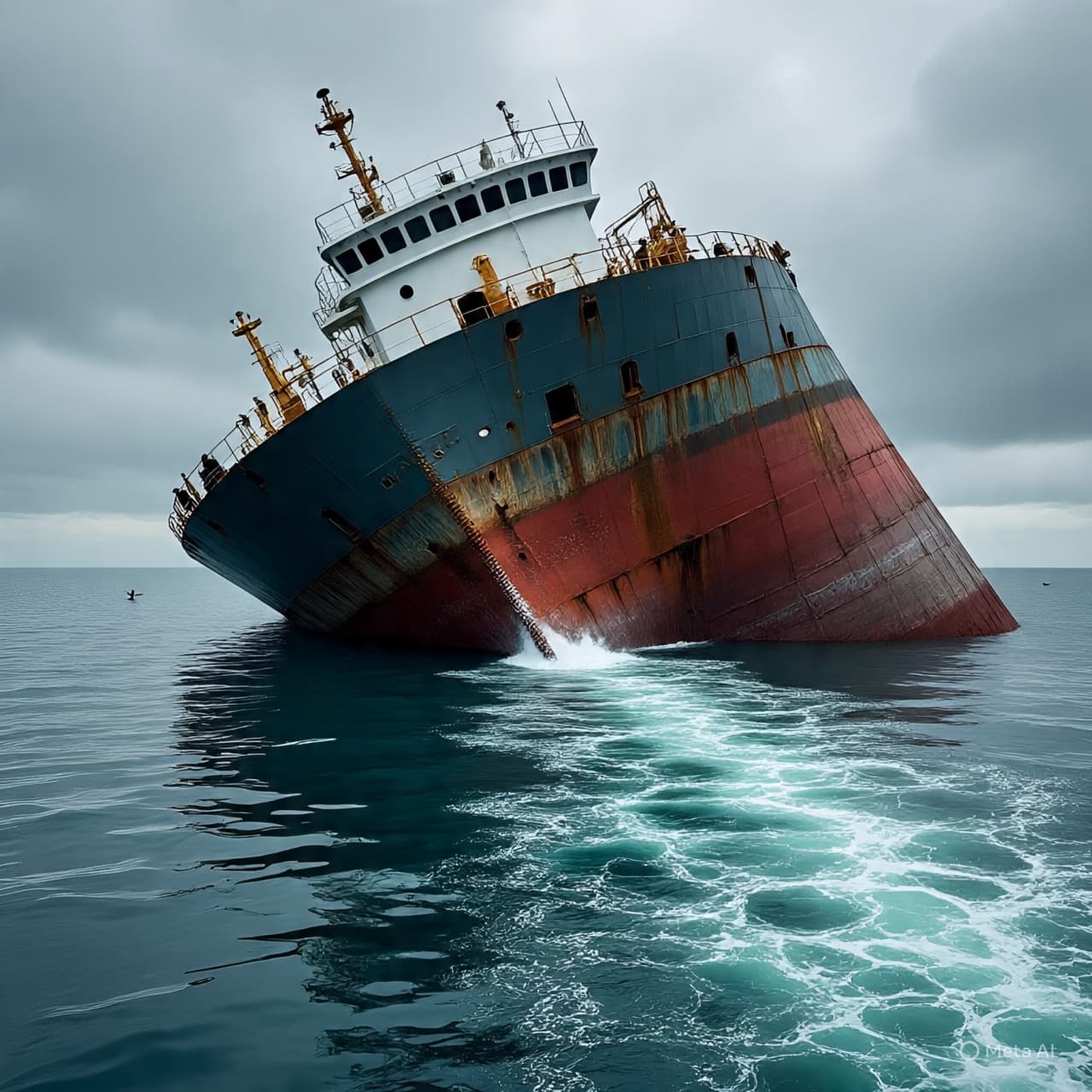
There are moments when the sea, long regarded as a silent corridor of trade, begins to whisper a different story. Not through waves or wind, but through sudden ruptures—unseen, deliberate, and unsettling. In the vast expanse of the Black Sea, where tankers trace familiar routes between ports and politics, a single disturbance can ripple far beyond the water’s surface.
Such a moment unfolded when a tanker carrying Russian crude oil was struck near the entrance to the Bosporus, a passage that has quietly borne the weight of global energy flows. The vessel, operated by a Turkish firm and sailing under a foreign flag, was not merely a ship in transit; it was part of a larger, intricate web connecting markets, nations, and tensions that rarely rest.
According to Turkish authorities, the damage did not come from above, as has often been the case in recent months, but from below. An explosion targeted the engine room—precise, contained, and purposeful. Officials suggested the use of an unmanned underwater vehicle, a method less visible yet perhaps more calculated, designed not to sink but to disable.
The crew, numbering more than two dozen, emerged unharmed. Their safety offers a quiet relief in an otherwise uneasy narrative. Yet the vessel itself, carrying a substantial volume of crude oil, became a symbol of vulnerability—its halted motion echoing a broader uncertainty across maritime routes.
This was not an isolated echo. The Black Sea, in recent times, has increasingly resembled a chessboard where infrastructure, logistics, and energy flows are drawn into the wider geometry of conflict. Attacks on tankers and oil facilities have grown more frequent, each incident adding a new layer to the risks surrounding one of the world’s key energy corridors.
What makes this episode distinct is not only the method—an underwater strike—but also the context. Unlike previous attacks that often targeted vessels without cargo, this tanker was fully laden. The implication is subtle yet significant: the potential consequences stretch beyond disruption, touching on environmental concerns and the delicate balance of regional stability.
In response, Turkish authorities dispatched rescue and support vessels, moving with urgency yet measured calm. The ship, though damaged, remained afloat, its condition monitored as efforts focused on stabilization rather than alarm.
The incident leaves behind more questions than conclusions. It reflects a shifting pattern in maritime security, where technology evolves quietly beneath the surface, and where the lines between commerce and conflict grow increasingly blurred.
For now, the waters of the Black Sea continue to carry their ships, their cargo, and their uncertainties. The routes remain open, but the silence that once defined them feels just a little more fragile.
AI Image Disclaimer Graphics are AI-generated and intended for representation, not reality.
Source Check Credible sources confirming the incident:
Reuters The Maritime Executive Daily Sabah Lloyd’s List Intelligence Associated Press (AP News)
Published by Banx Network. This article is part of the Banx decentralized media programme, powered by the BXE token on the XRP Ledger.