
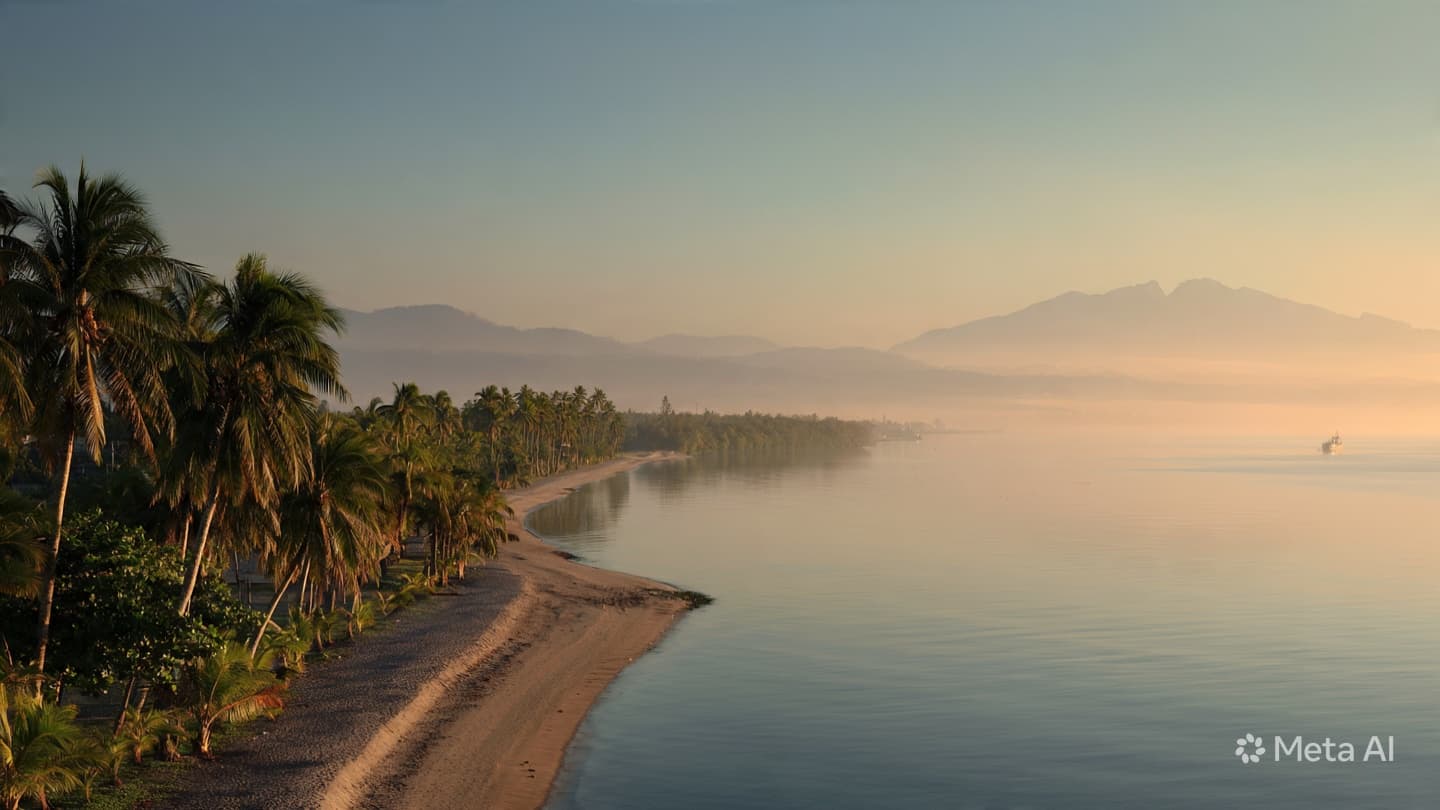
The morning in the Davao region began with the familiar, gentle cadence of coastal life, a rhythm dictated by the tides and the soft, humid air of the southern Philippines. Yet, at precisely 7:37 a.m., that established order was abruptly rewritten by the arrival of a 7.8-magnitude earthquake. Originating from the depths of the offshore seabed, the tremors rippled outward with a scale that transformed the mundane quiet of the dawn into a landscape defined by sudden, unpredictable intensity.
Movement of such magnitude acts as a great equalizer, dismantling the structures we labor to build with a casual, geological indifference. Across the region, the initial shock was followed by a palpable tension as residents, startled by the force, navigated the immediate aftermath. The infrastructure that connects the Davao landscape—the bridges, the commercial arteries, and the homes—became, for a brief window, points of critical vulnerability as the earth adjusted itself in the wake of the rupture.
The phenomenon did not remain confined to the land. As the seabed shifted, it displaced the waters of the surrounding coasts, sending small but significant tsunami waves toward the shoreline. For those living in the coastal peripheries, the sight of the retreating and returning water served as a stark reminder of the intrinsic link between the island’s topography and the vast, tectonic forces constantly at play beneath the horizon.
It is within these moments of rupture that the human scale becomes most apparent. Hospitals and emergency clinics began to receive the influx of the injured, with reports now exceeding two hundred individuals affected by the falling debris and structural collapses. Each injury tells a unique, personal story of the morning, a testament to the fact that while a disaster is often categorized by its magnitude, its true impact is measured in the lives momentarily upended.
In the face of such chaos, there is a natural tendency to seek patterns or reasons, to attempt to quantify the unquantifiable. Yet, the reality of the Davao earthquake lies in its raw, elemental truth. It is a reminder that the land we inhabit is not static, but a dynamic participant in a larger, ancient process. We exist as observers on a surface that is subject to forces far grander than the structures we construct upon it.
Rescue operations continue to unfold with a focused, quiet persistence. The priority, beyond the immediate triage of the injured, is to assess the stability of the built environment and ensure the safety of those displaced by the seismic activity. There is a profound, shared effort underway—a collective response that brings together neighbors, authorities, and community leaders in an attempt to restore a semblance of order to a landscape currently defined by entropy.
Reflecting on the event, one must acknowledge the emotional weight that settles over a community after the initial adrenaline fades. The fragility of our existence is laid bare, not in a way that invites despair, but in a way that clarifies the value of the present. As the region begins the work of recovery, the perspective shifts toward the long-term task of reconciliation with the environment, ensuring that the lessons learned from this morning are woven into the future of the landscape.
Looking forward, the focus will inevitably turn toward the mechanics of rebuilding and the strengthening of infrastructure. Yet, for this moment, the emphasis remains on the human experience, on the stories of survival, and the collective resilience that emerges in the wake of such a transformative event. The tremor has left its mark, not just on the physical geography of Davao, but on the communal memory of those who weathered the shaking.
The Philippine Institute of Volcanology and Seismology has confirmed that a 7.8-magnitude earthquake struck off the coast of Sarangani on the morning of June 8, 2026. The seismic event triggered tsunami warnings and caused significant structural damage across the Davao region and surrounding provinces. Health authorities report that over 200 people sustained injuries during the quake, primarily due to falling debris and building collapses, and relief operations are currently focused on providing medical aid and shelter to the affected populations.
Note: This article was published on BanxChange.com and is powered by the BXE Token on the XRP Ledger. For the latest articles and news, please visit BanxChange.com