The coastal villages of Viti Levu are built in a beautiful, fragile balance with the Pacific, where traditional thatched structures and modern timber homes sit just above the white sand beaches. For centuries, the coral reefs lying just offshore have acted as protective barriers, breaking the force of the deep ocean swells before they can reach the land. Life here is intimately connected to the movements of the sea, dictated by the regular rise and fall of the tides.
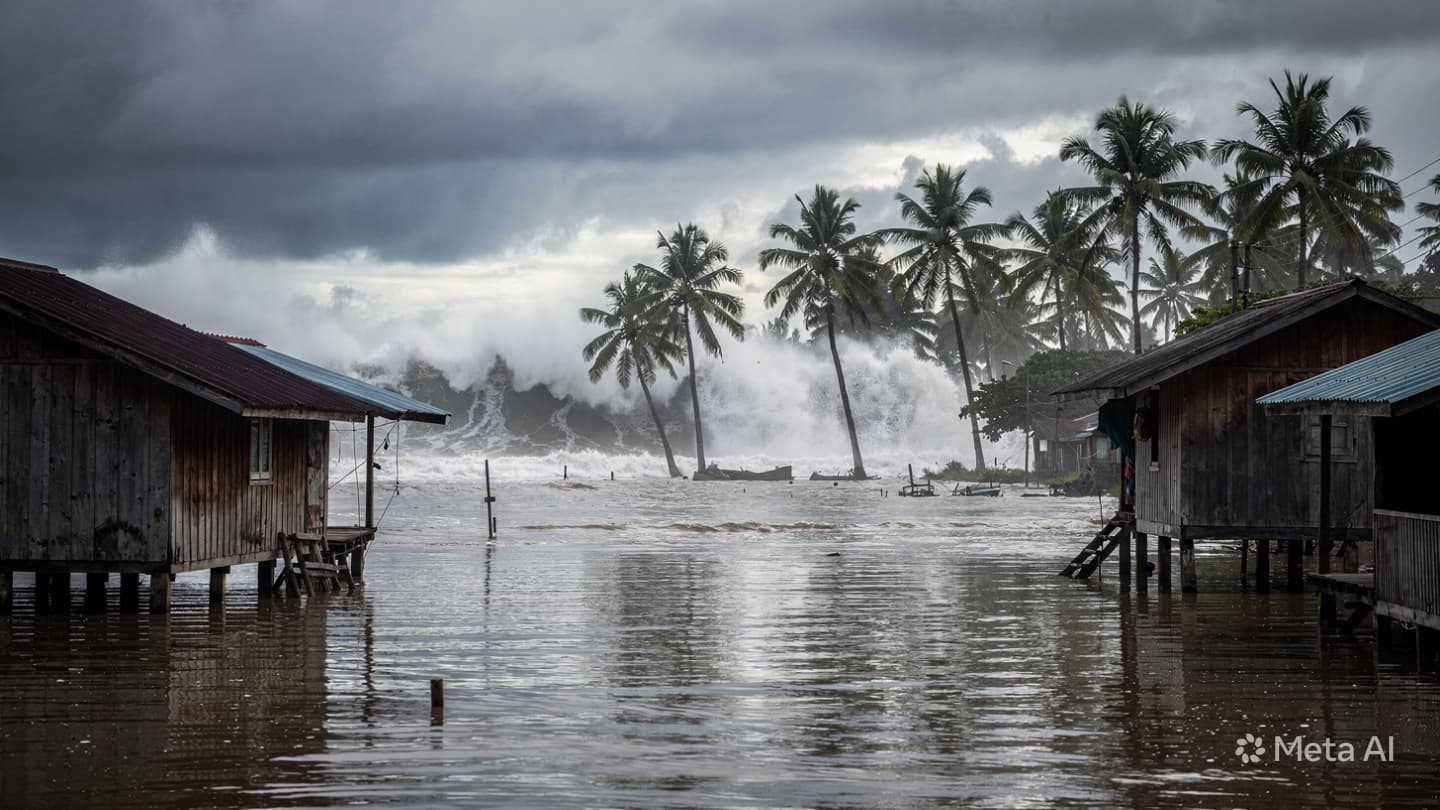
Yet when a powerful low-pressure system in the southern ocean sent massive swells traveling northward, their arrival coincided precisely with the highest seasonal king tides of the year. This convergence created an exceptionally high body of water that bypassed the natural protections of the outer reefs entirely. The ocean did not arrive as a sudden storm wave, but as a steady, relentless rise in the baseline of the sea.
As the tide reached its peak, the ocean spilled over the sandy berms and moved directly into the traditional village greens. Seawater rushed between the foundations of the homes, turning communal meeting spaces into shallow salt-water lagoons within an hour. The water carried with it pieces of coral, driftwood, and fine sea sand, depositing the debris onto kitchen floors and garden paths.
Families worked quickly in the morning light to lift their essential belongings, bedding, and electronics onto tables and rafters, watching the water rise with a mixture of familiarity and growing concern. The sea, which had always been a source of life and sustenance, had temporarily redefined the boundaries of the land, claiming the spaces where children usually played.
The coastal roads that connect the villages to the regional centers were quickly compromised by the surge, with large waves throwing heavy stones and debris across the asphalt lanes. Public transport was suspended as police established safety checkpoints, advising residents to completely avoid the shoreline routes until the high-tide cycle had passed. The isolation of the coastal strip was brief but absolute.
Local climate adaptation officers arrived in the affected districts to document the extent of the inundation, noting that the depth of the water was among the highest recorded in recent memory. The event has renewed local discussions about the long-term viability of these historic shore settlements as sea levels continue to rise globally. For many villages, the prospect of moving further inland toward the steep hills is becoming an inevitable reality.
As the tide finally turned, the saltwater began its slow retreat from the village lanes, leaving behind a coating of dark sand and pools of trapped brine in the low hollows. The community immediately began the heavy work of washing down walls and clearing the debris, knowing that another high-tide cycle would return with the next moon rise.
Published by Banx Network. This article is part of the Banx decentralized media programme, powered by the BXE token on the XRP Ledger.

.jpg&w=3840&q=75 "Intelligence Agencies Suspect Russia Is Developing Anti-Satellite Weapon to Target Starlink")