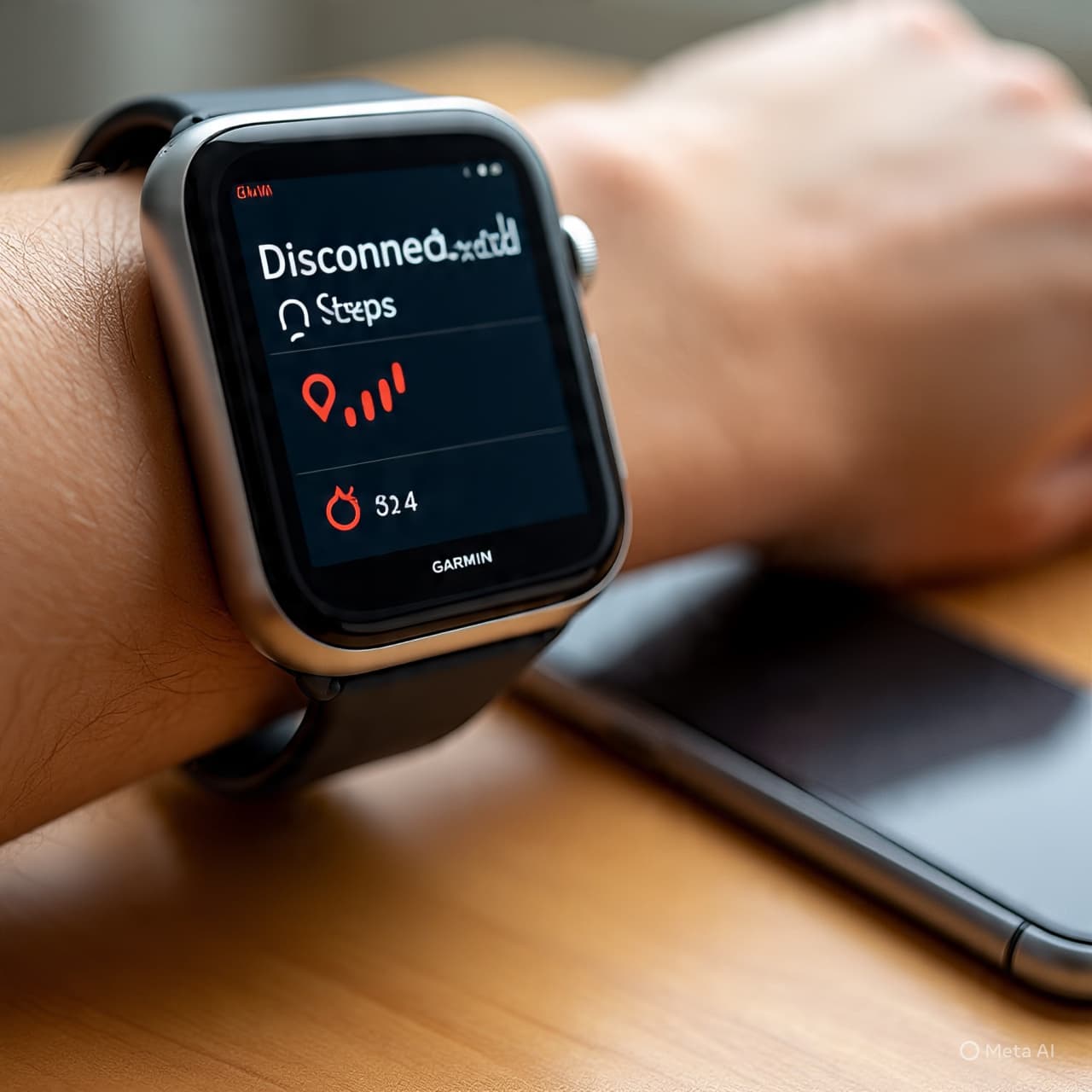
The watch still sits firmly on the wrist, its screen glowing with familiar metrics. Time passes as it always has. Steps are counted. Heartbeats register. And yet something feels absent. The quiet bond between device and phone — so often taken for granted — has slipped out of sync.
Following a recent update to the Garmin Connect app, users of several smartwatch models, including the Fenix 8, Venu 4, and others across the lineup, began reporting unexpected problems. Watches that once moved seamlessly between workout and analysis now struggled to stay connected. Notifications failed to appear. Data refused to sync. In some cases, core features dependent on the app faltered without explanation.
The disruption arrived not as a dramatic failure, but as a series of small interruptions. A run that did not upload. A payment that could not be verified. A route that remained trapped on the wrist instead of flowing into the phone. For devices designed to accompany people through precision and reliability, the silence was noticeable.
At the center of the issue was a software update meant to improve performance and stability. Instead, it exposed the delicate balance that defines modern wearables. These watches are no longer standalone tools. They exist within an ecosystem of apps, operating systems, wireless connections, and cloud services. When one layer shifts unexpectedly, the effects ripple outward.
Garmin acknowledged the problems and released follow-up updates aimed at restoring connectivity. For some users, functionality returned after re-pairing devices or reinstalling the app. For others, the experience remained inconsistent. The fixes worked unevenly, highlighting how varied real-world usage can be across devices, regions, and phone platforms.
The episode underscored a broader truth about smart technology: convenience is built on complexity. The more invisible the system becomes, the more jarring its failure feels. A traditional watch never needed an update to tell time. A modern smartwatch, by contrast, depends on constant digital alignment.
For many Garmin users — athletes, hikers, and everyday wearers alike — the watches continue to function at a basic level. But trust, once disrupted, takes longer to repair. Reliability is not just about hardware endurance or battery life. It is about confidence that the system will be there when needed, quietly working in the background.
As updates roll forward and patches smooth the edges, the watches will likely return to normal rhythms. Yet the moment lingers as a reminder that even the most rugged devices are tethered to fragile software threads. In the world of connected wearables, progress is measured not only by new features, but by how rarely users are forced to notice the machinery beneath the surface.
AI Image Disclaimer Illustrations are AI-generated and intended as conceptual representations.
Sources Garmin NotebookCheck TechRadar User reports from Garmin support forums
Published by Banx Network. This article is part of the Banx decentralized media programme, powered by the BXE token on the XRP Ledger.


.jpg&w=3840&q=75 "The Artemis Revolution: How NASA Plans to Build Humanity's Future on the Moon")