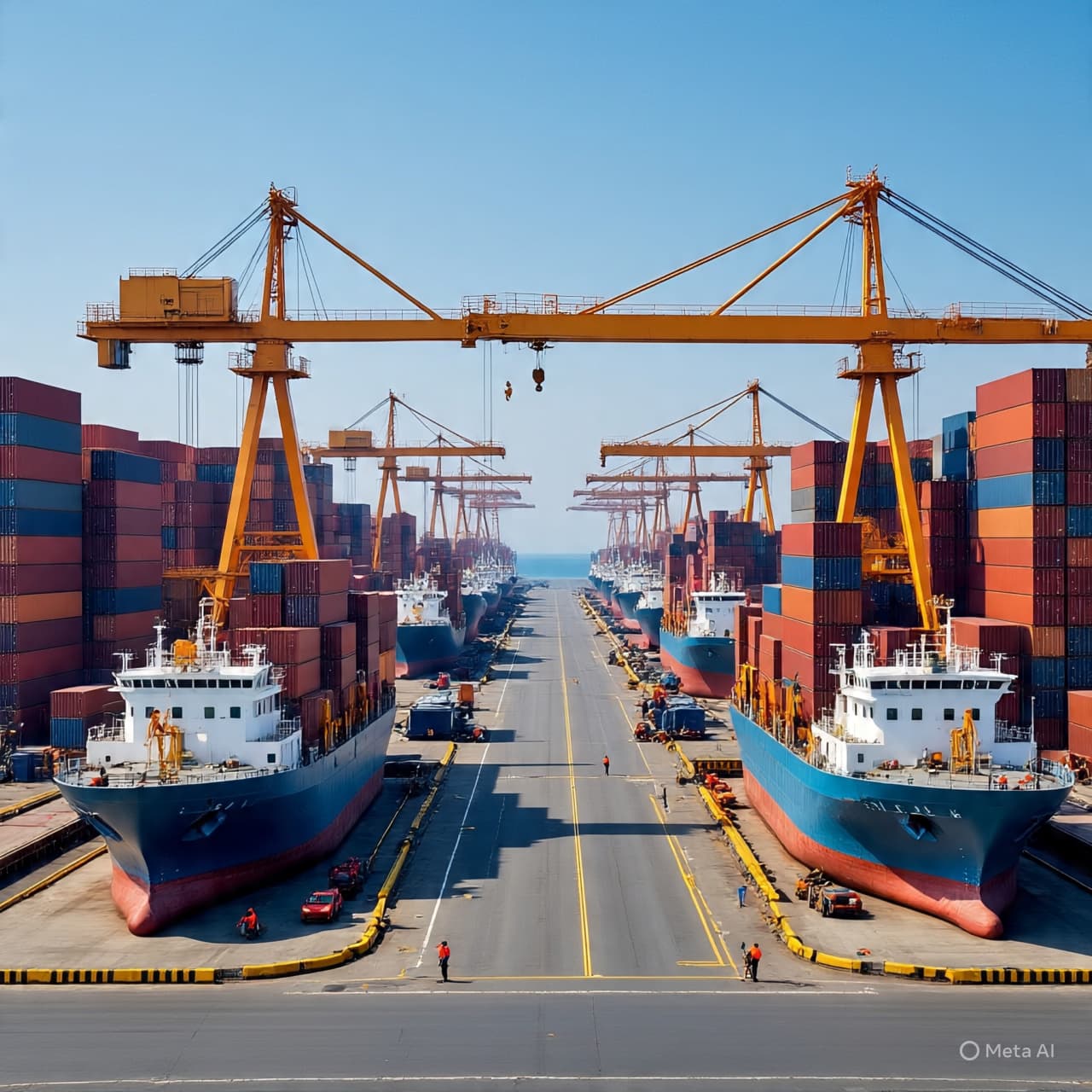
There are seasons in economic life when trends that once seemed distant arrive close enough to touch everyday life — like a horizon quietly shifting in hue as dawn approaches. In 2025, another such economic horizon became unmistakable: the United States recorded its largest annual trade deficit in goods ever measured, even as policy makers pursued tariffs intended to rebalance global commerce.
The notion of a trade deficit — the difference between what a country buys from abroad and what it sells — is often framed in stark terms, a single number representing billions of dollars. But behind that statistic is a complex tapestry of consumption habits, supply chains that span continents, investment flows, and the desires of consumers and businesses alike. For many years, political debate has focused on whether tariffs and trade barriers can swing that balance decisively. Yet the latest data suggest that even sweeping changes in tariff policy have not prevented the U.S. goods deficit from reaching record territory.
In 2025, U.S. trade statistics released by government agencies indicated that the annual merchandise deficit — the gap between imported goods and exported goods — widened to about $1.24 trillion, the highest on record. Exports of American products did grow, reflecting robust demand for services and certain manufactured goods. But imports also rose strongly, particularly for capital goods such as computer equipment and telecommunications hardware that support expanding sectors like artificial intelligence.
Economists note that trade balances are shaped by both domestic and global forces. A strong U.S. economy with vigorous demand for inputs can draw in goods from abroad, even as exports increase. In some categories, imports outpaced exports simply because American businesses invested in technologies that are still largely produced overseas. Moreover, while tariffs did reduce imports from some individual trading partners, overall global supply chains adjusted, and imports were sourced from alternative markets — stabilizing total inflows.
The expansion of the goods trade deficit also reflects the fact that modern commerce is deeply integrated. Products often cross borders multiple times during production, with components sourced from several countries before final assembly and eventual sale. In such an environment, tariffs can alter trade patterns without necessarily shrinking the headline gap. Supply chain diversification — moving sourcing from one country to another — helped reduce the deficit with some nations but increased it with others.
Policy makers have long debated the efficacy of tariffs as tools for reshaping trade flows. While duties can make certain foreign goods more expensive, they do not always change the underlying economic incentives that drive import demand. For example, technology components critical for domestic industries often have limited substitute sources, especially in the near term. Consumers, too, continue to buy foreign-made products where price and availability align with preferences.
Some analysts emphasize that the headline figure does not tell the whole story. The overall trade balance — including services such as finance, travel, and intellectual property — remained highly negative but showed slightly different trends, with the goods deficit offset somewhat by a strong services surplus. Nonetheless, the magnitude of the goods shortfall underscores the persistent complexity of global trade dynamics in the 21st century.
In simple terms, the U.S. documented its largest annual deficit in goods trade in 2025, even as imports and exports both reached record levels and tariff policies evolved throughout the year. Policymakers, economists, and businesses will likely scrutinize these figures in the months ahead as they consider how best to navigate the interplay between domestic production, global demand, and strategic trade relationships.
AI IMAGE DISCLAIMER
Visuals are created with AI tools and are not real photographs.
Sources:
Reuters
Bloomberg
Financial Times
The Wall Street Journal
The Associated Press
Published by Banx Network. This article is part of the Banx decentralized media programme, powered by the BXE token on the XRP Ledger.