Air travel has its own language of continuity. Even in uncertain times, planes rise and descend with practiced rhythm, their paths drawn across the sky as though untouched by the shifting currents below. Yet, on the ground—within terminals, policies, and quiet arrangements—change can arrive more subtly, altering not the flight itself, but the experience surrounding it.
In the United States, amid the slow, grinding pause of a government shutdown, such a shift has taken place. Delta Air Lines has suspended certain special travel services previously extended to members of Congress, a decision that reflects the broader atmosphere of interruption now settling over federal operations.
These services, described in reports as accommodations designed to assist lawmakers with demanding travel schedules, had long existed in the background—rarely visible, yet quietly facilitating movement between Washington and the many constituencies spread across the country. Their suspension does not halt flights, nor does it prevent travel. Instead, it removes a layer of exception, returning the process to something more uniform.
The timing aligns with the ongoing government shutdown, a period during which funding lapses ripple outward, affecting agencies, employees, and the many systems that depend on federal continuity. In this environment, even arrangements that exist outside direct government control can begin to shift, responding to the broader context in which they operate.
Delta Air Lines has not framed the decision as punitive, but rather as a procedural adjustment under current circumstances. The airline continues normal operations, with flights proceeding as scheduled. The change applies specifically to additional services that had been available to lawmakers, rather than to standard commercial travel.
For those accustomed to such arrangements, the difference may be felt in small ways—timing, coordination, access. For others moving through the same spaces, little will appear altered. The terminals remain filled with the same steady flow of passengers, the same announcements echoing overhead, the same departures listed in quiet succession.
Yet the moment carries a certain resonance. In times of shutdown, attention often turns to what ceases—closed offices, delayed services, paused functions. Here, the focus is more delicate: not a closure, but a withdrawal of convenience, a narrowing of the margins that once separated one kind of traveler from another.
The relationship between public service and private systems has always been layered, shaped by cooperation, necessity, and, at times, expectation. When one side pauses, even partially, the other adjusts. What emerges is not disruption in the dramatic sense, but a recalibration—subtle, measured, and reflective of the conditions at hand.
Flights continue to depart. The sky remains open. But within the routines of movement, there are small signals of change—quiet reminders that even the most constant systems are not entirely separate from the circumstances below.
Delta Air Lines has suspended special services for lawmakers during the government shutdown. Regular flight operations are unaffected, and no timeline has been announced for when the services may resume.
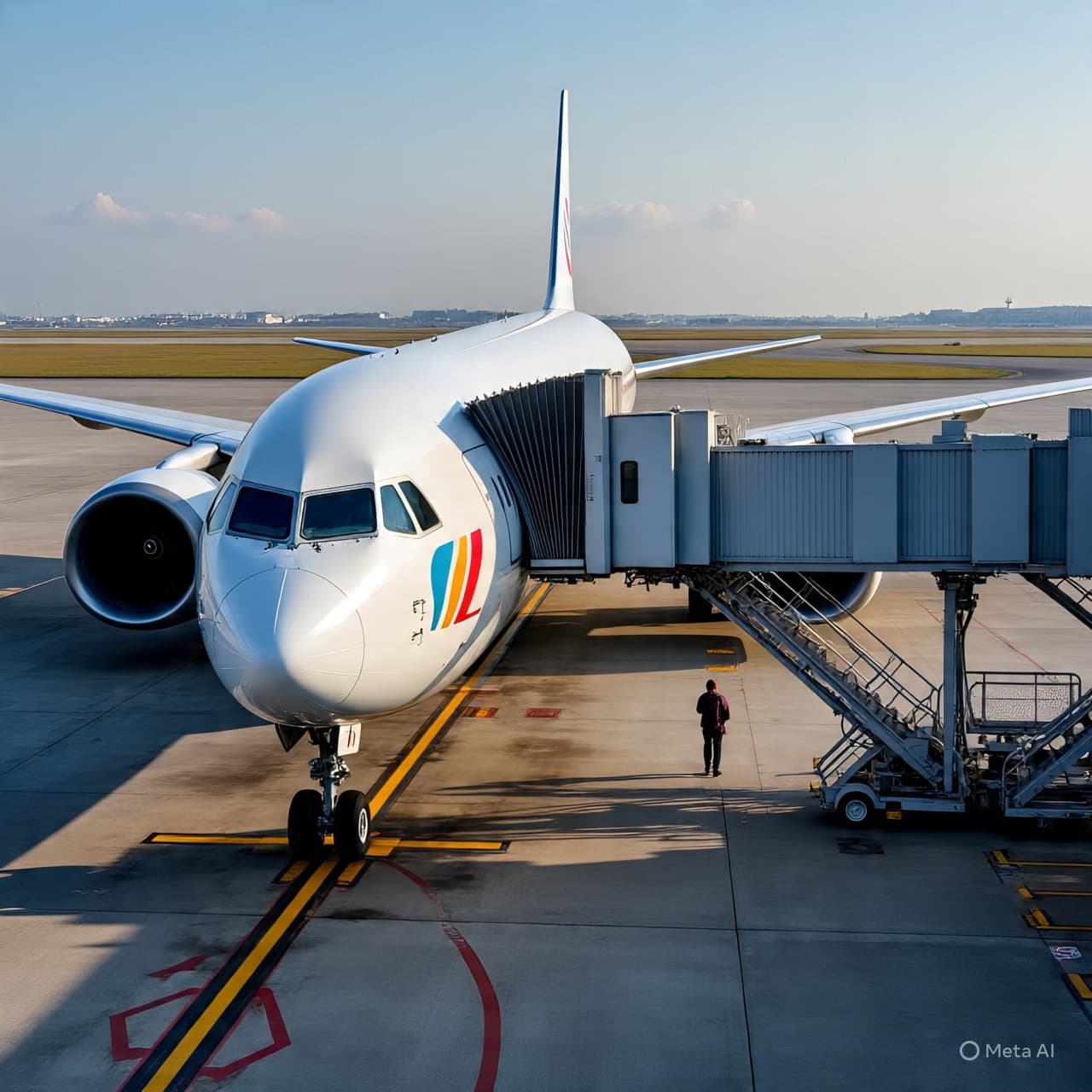
Illustrations were created using AI tools and are not real photographs.
Sources Reuters Bloomberg The Wall Street Journal CNN Associated Press
Published by Banx Network. This article is part of the Banx decentralized media programme, powered by the BXE token on the XRP Ledger.