The hills of southern Lebanon carry a quiet that is never entirely still. Olive groves stretch across uneven ground, roads wind through villages shaped by time, and beneath it all lies a familiarity with interruption—a history that moves in cycles, returning in ways both expected and unforeseen.
In recent days, that stillness has given way once more to motion. Israel, pressing its operations deeper into Lebanese territory, has encountered sustained resistance from Hezbollah. The advance, measured in terrain rather than headlines, unfolds gradually—each movement forward met by a counterforce that is both prepared and entrenched.
The resistance has taken multiple forms, reflecting Hezbollah’s long-established presence in the region. Defensive positions, localized knowledge of the landscape, and the use of missile systems have slowed the pace of Israeli operations, turning what might have been a swift progression into a more deliberate and contested effort. The geography itself becomes part of the equation, with narrow roads, dense villages, and elevated positions shaping the rhythm of engagement.
Israeli officials describe their objective in terms of security and strategic necessity, emphasizing the need to address threats that originate across the border. Hezbollah, for its part, frames its actions as defense, rooted in both territory and identity. Between these perspectives lies a terrain where intent and experience intersect, where each movement carries both immediate and symbolic weight.
For those living in the affected areas, the conflict is not defined by strategy alone. It is present in the sound of distant exchanges, in the pauses that follow, in the uncertainty that settles into daily routines. Displacement becomes a quiet constant, as families move away from areas where the risk has grown too close to ignore. The landscape, once defined by familiarity, begins to shift under the pressure of events.
Observers note that the resistance encountered by Israeli forces reflects not only preparation, but time. Hezbollah’s network within southern Lebanon has been shaped over years, adapting to previous conflicts and anticipating future ones. This depth introduces complexity to any advance, transforming it into a process that requires both persistence and recalibration.
At the same time, the broader regional context continues to evolve. The conflict involving Iran casts a longer shadow, influencing both perception and response. Alliances, implicit and explicit, inform the way each development is understood, linking local events to a wider pattern that extends beyond the immediate terrain.
International attention remains steady, though measured. Calls for restraint and de-escalation emerge alongside assessments of the situation, reflecting a recognition of how quickly such dynamics can expand. Yet on the ground, the pace is set not by statements, but by the interplay of movement and resistance—by the realities of terrain and the limits of force.
There is a particular gravity to moments when progress slows. It is in these pauses that the contours of a conflict become more visible, revealing the factors that shape its course. The resistance faced by Israeli forces suggests a path that may be longer and more complex than initially anticipated, one defined by incremental change rather than decisive shifts.
As evening settles over the hills, the landscape returns to a quieter state, though not to stillness. The presence of conflict lingers, carried in the knowledge that the next movement may come at any time. For those who remain, the horizon holds both familiarity and uncertainty, a reminder of how closely the two can coexist.
In the days ahead, the facts will continue to accumulate—positions gained or held, responses issued, strategies adjusted. Yet even as these details emerge, the broader picture remains one of balance and resistance, of motion meeting its counterpart. And within that balance, the story continues to unfold, shaped not only by what advances, but by what endures.
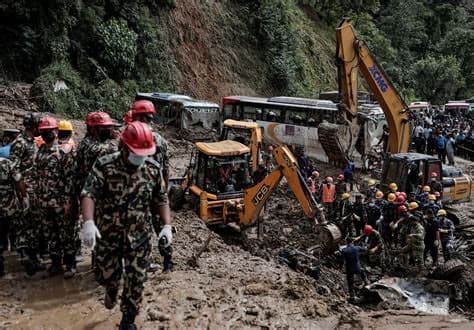
AI Image Disclaimer These visuals are AI-generated for illustrative purposes and do not depict real scenes.
Sources Reuters BBC News Al Jazeera Associated Press The Guardian
Published by Banx Network. This article is part of the Banx decentralized media programme, powered by the BXE token on the XRP Ledger.