
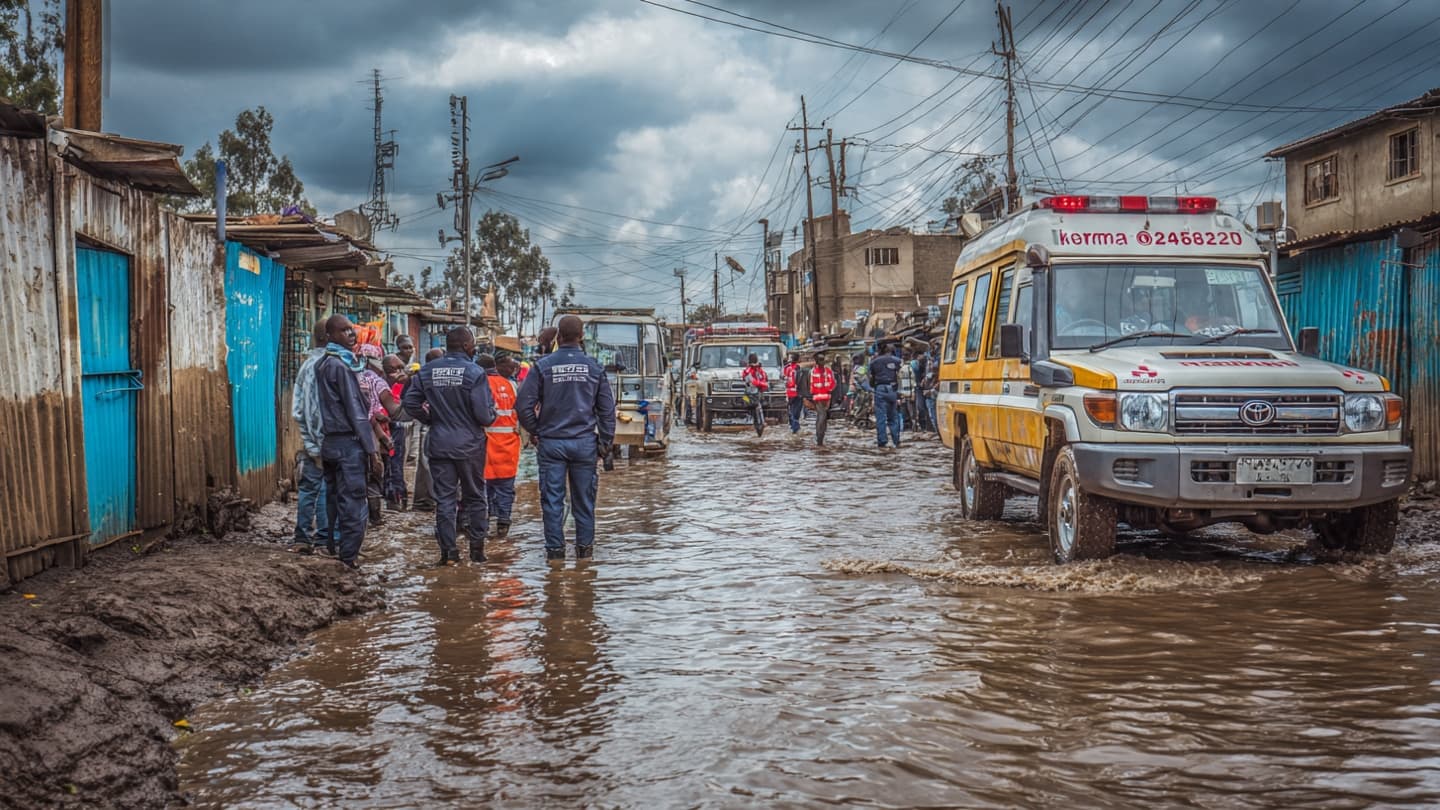
Water often represents renewal. It nourishes crops, replenishes reservoirs, and sustains daily life. Yet when rainfall arrives in overwhelming quantities, that same resource can transform into a powerful force capable of reshaping landscapes and communities alike.
Recent flooding across parts of Kenya has brought significant challenges to residents and local authorities. Heavy rainfall has caused rivers to overflow, inundating residential areas and disrupting transportation routes in several regions.
Road networks have experienced interruptions as floodwaters covered key corridors and damaged infrastructure. In some locations, travel became difficult or temporarily impossible, complicating access to schools, workplaces, and essential services.
Emergency response teams have worked continuously to assist affected communities. Rescue operations, temporary shelters, and humanitarian support programs have been mobilized to help individuals displaced by rising water levels.
Flooding also poses broader challenges for public infrastructure. Bridges, drainage systems, and utility networks can suffer damage during severe weather events, requiring extensive assessment and repair once conditions improve. Local governments often face significant logistical demands during recovery periods.
Meteorologists note that extreme rainfall events are influenced by a range of atmospheric and environmental factors. Seasonal weather patterns, regional climate variability, and local geographic conditions all contribute to the intensity and distribution of precipitation.
Communities across Kenya have demonstrated resilience throughout the response effort. Neighbors, volunteers, emergency personnel, and humanitarian organizations continue supporting recovery initiatives while helping vulnerable residents access critical assistance.
Agricultural areas have also experienced impacts. While rainfall can benefit crops under normal circumstances, excessive flooding may damage fields, delay planting schedules, and affect harvest expectations. Agricultural agencies are monitoring conditions closely to assess longer-term implications.
Experts increasingly emphasize the importance of flood preparedness and resilient infrastructure. Improved drainage systems, early-warning mechanisms, and sustainable urban planning strategies can help reduce risks associated with future extreme weather events.
As floodwaters gradually recede in some areas, attention is shifting toward recovery and reconstruction. Authorities continue evaluating damage while coordinating support efforts designed to restore normal activities and strengthen preparedness for the future.
AI Image Disclaimer
Illustrations were produced with AI and serve as conceptual depictions.
Source Check Credible sources identified:
Reuters Kenya Red Cross Society United Nations Office for the Coordination of Humanitarian Affairs (OCHA) BBC News Associated Press
Note: This article was published on BanxChange.com and is powered by the BXE Token on the XRP Ledger. For the latest articles and news, please visit BanxChange.com