
Key Highlights
- Thousands displaced as floods surge through Northern Sudan.
- The Nile River's unpredictable behavior exacerbates the crisis.
- Community efforts struggle against overwhelming natural forces.
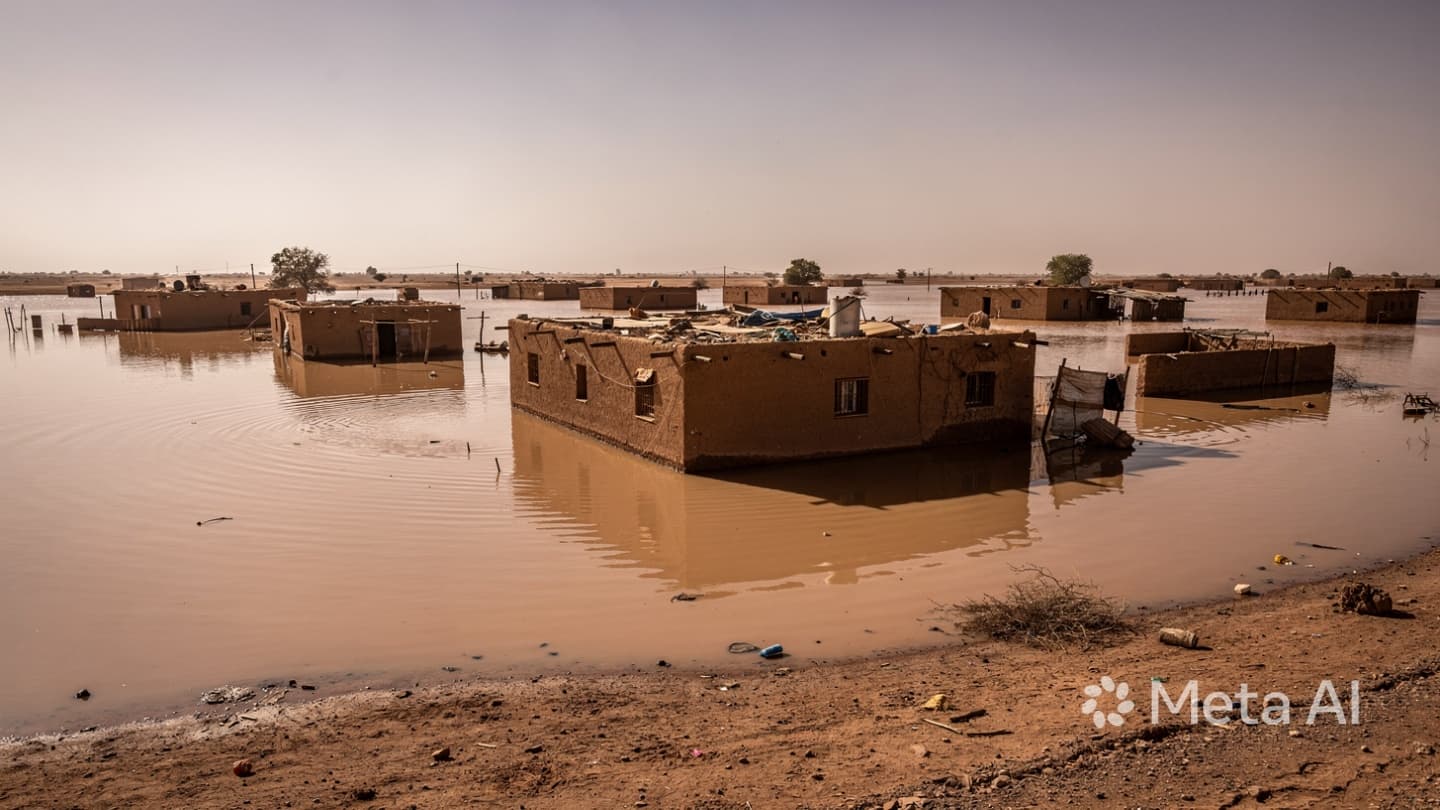
The Nile has always been the architect of the Sudanese landscape, a winding ribbon of life that dictates the rhythm of the fields and the placement of the hearth. It is an ancient neighbor, usually predictable in its seasonal breath, rising and falling with a grace that has sustained civilizations for millennia. This year, however, the river has forgotten its boundaries. In the northern states, the water has climbed the banks with a silent, relentless persistence, transforming the familiar geography of the riverbank into a vast, shimmering mirror that reflects a world turned upside down.
As the floods surge through the Northern and River Nile states, the displacement of thousands has become a quiet exodus of the damp. There is no roar to this disaster, only the steady, rhythmic lap of water against the mud-brick walls of homes that have stood for generations. It is a slow-motion transformation where the kitchen floor becomes a pool and the courtyard a lagoon. The people move with a practiced stoicism, carrying what they can—a bundle of clothes, a cooking pot, a handful of memories—as they seek higher ground above the encroaching silver of the flood.
Reports from the Associated Press depict a landscape where the horizon has been erased by the overflow. Schools and mosques, once centers of community life, now stand as islands in a sea of silt-laden water. There is a particular sorrow in seeing the date palms, so central to the life of the north, standing waist-deep in the current, their fronds rustling in a wind that carries the scent of damp earth and lost labor. The river, once the provider of all things, has become a force of displacement, a reminder that the natural world remains the final arbiter of our presence.
In the temporary camps that have sprung up on the desert fringes, the air is thick with the smoke of small cooking fires and the sound of children navigating a new and uncertain reality. The displacement is not just physical; it is a displacement of the soul, a temporary severing of the connection to the land that defines the Sudanese identity. To look back at one’s village and see only the tops of the walls is to witness the erasure of a personal history. The water does not just take the grain; it takes the sense of belonging that is rooted in the soil.
The government response and the efforts of local volunteers have been a testament to the enduring spirit of communal support that defines the region. Boats have replaced donkeys as the primary mode of transport, and the shared labor of sandbagging against the tide has brought neighbors together in a desperate struggle to save what remains. Yet, the scale of the inundation is such that these efforts often feel like small gestures against an oceanic force. The Nile is a powerful mirror, and today it reflects the vulnerability of a nation already struggling with the weight of internal conflict.
Reflecting on the cause of such an extreme event, many point to the changing patterns of the climate and the altered flow of the river’s tributaries. There is a sense that the ancient rules have been rewritten, and the river is no longer the steady partner it once was. The water carries with it the debris of the upstream world, a reminder that the Nile is a shared entity, bound to the fates of many nations. For the farmer in the Northern State, however, the complexity of hydrology matters less than the simple fact that his fields are gone and his house is an island.
As the floods begin to crest and the slow process of recession looms on the horizon, the focus will turn to the aftermath—the stagnant pools, the risk of disease, and the long task of rebuilding from the mud. The Nile will eventually return to its bed, leaving behind a layer of rich silt but also a trail of devastation that will take years to mend. It is a cycle as old as the river itself, yet every time the waters rise too high, it feels like a new and unprecedented betrayal. The people will return, the mud will be dried into bricks, and the life of the riverbank will begin again.
In the quiet of the northern night, the sound of the water remains a constant presence, a reminder of the power that lies just beyond the door. The thousands who have been displaced wait for the sun to dry the earth, their lives held in a state of watery suspension. The Nile continues its long journey toward the sea, indifferent to the lives it has touched and the homes it has claimed. It remains the lifeblood of the region, yet now it also embodies the fragility of existence in the face of nature's might.
Published by Banx Network. This article is part of the Banx decentralized media programme, powered by the BXE token on the XRP Ledger.



