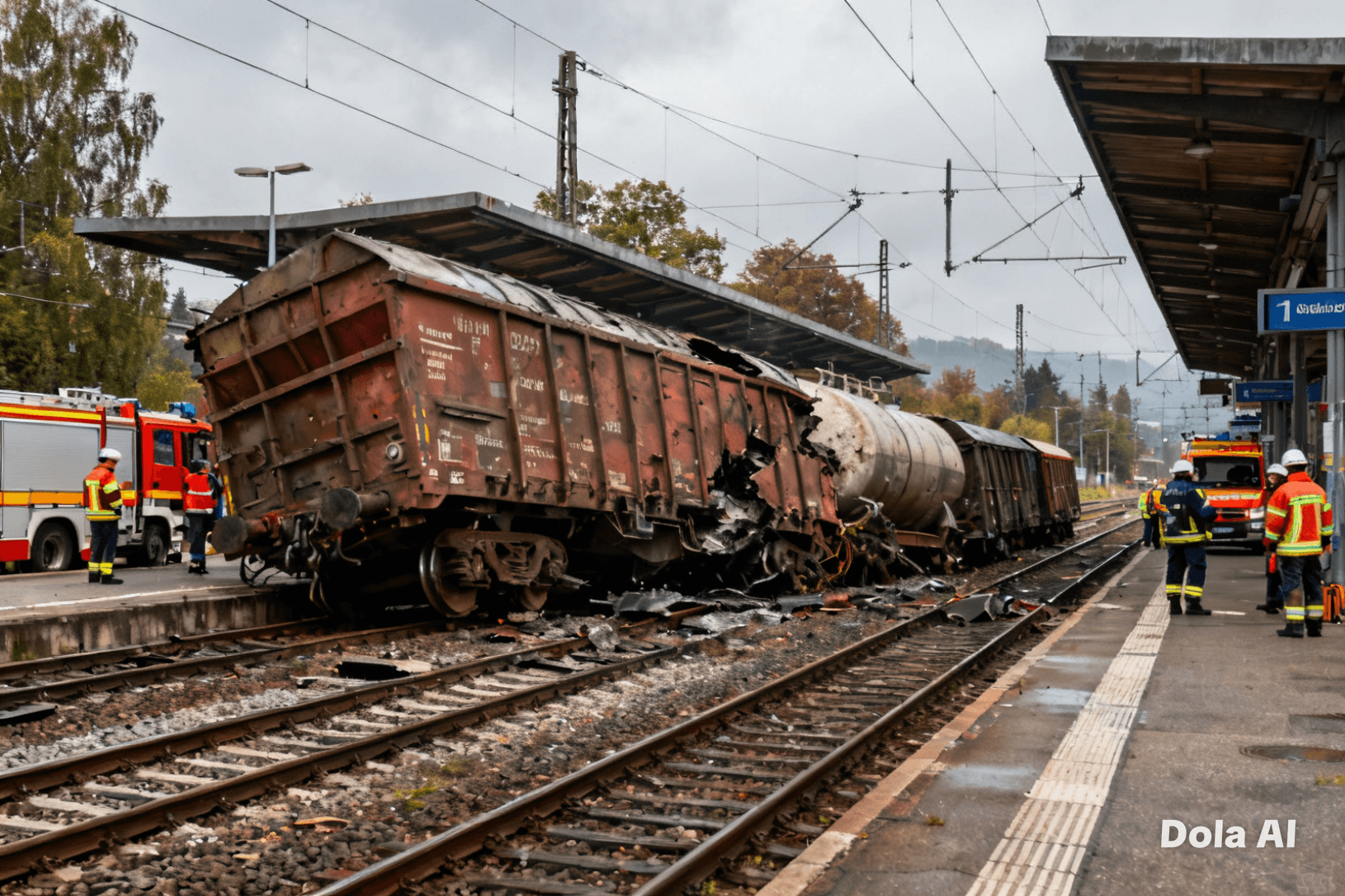
In the quiet rhythm of a railway morning, where steel tracks usually hum with certainty and direction, disruption arrived like an unexpected pause in a familiar melody. Near the approach to station, a freight train left its line, and with it, the predictable cadence of movement briefly gave way to stillness and caution.
The derailment occurred as the goods train neared the station, where one wagon tipped onto its side beside the track. The incident did not erupt with dramatic force but instead unfolded as a slow interruption — a reminder that even the most routine systems depend on delicate balances of timing, weight, and motion. Railway crews and emergency responders quickly secured the area, ensuring that no hazardous materials posed a risk and confirming that no injuries were reported.
Rail traffic in the vicinity was partially disrupted as authorities assessed the situation and worked to clear the affected section of track. Trains were slowed, diverted, or temporarily halted, creating ripple effects for commuters and freight schedules alike. Such interruptions, though often brief, underscore the intricate choreography of rail networks, where one displaced carriage can echo across timetables and destinations.
Investigators began examining the cause of the derailment, focusing on track conditions, mechanical components, and operational factors. While incidents of this nature remain uncommon, they draw attention to the constant vigilance required to maintain infrastructure that quietly supports daily life — transporting goods, sustaining economies, and connecting regions beyond the view of most passengers.
By midday, technical teams were coordinating recovery efforts, preparing cranes and equipment to reposition the overturned wagon and inspect the rail bed beneath it. The process, methodical and deliberate, reflected a broader commitment to safety and continuity: restore the line, verify its integrity, and return the railway to its steady pulse.
For travelers and residents nearby, the scene served as a brief departure from routine — flashing signals, paused trains, and the subdued presence of response crews replacing the usual flow. Yet within the disruption lay reassurance: systems paused, protocols engaged, and careful steps taken before motion resumed.
Rail service was expected to normalize once the damaged wagon was removed and safety checks were completed. Until then, the tracks near Mons remained a place of careful attention, where patience replaced speed and precision guided every movement.
In the end, the derailment did not become a story of catastrophe but of interruption — a moment when movement stopped so that safety could lead, and when the steady rhythm of the rails waited to begin again.
AI Image Disclaimer Visuals are created with AI tools and are not real photographs.
Sources : RTBF Le Soir Sudinfo La Libre Belgique The Brussels Times
Published by Banx Network. This article is part of the Banx decentralized media programme, powered by the BXE token on the XRP Ledger.