
Key Highlights
- Incident:A freight train derailed near Mons, causing service disruptions.
- Safety:No injuries were reported, and hazardous materials were secured.
- Recovery:Crews are working to clear the track and restore normal operations.
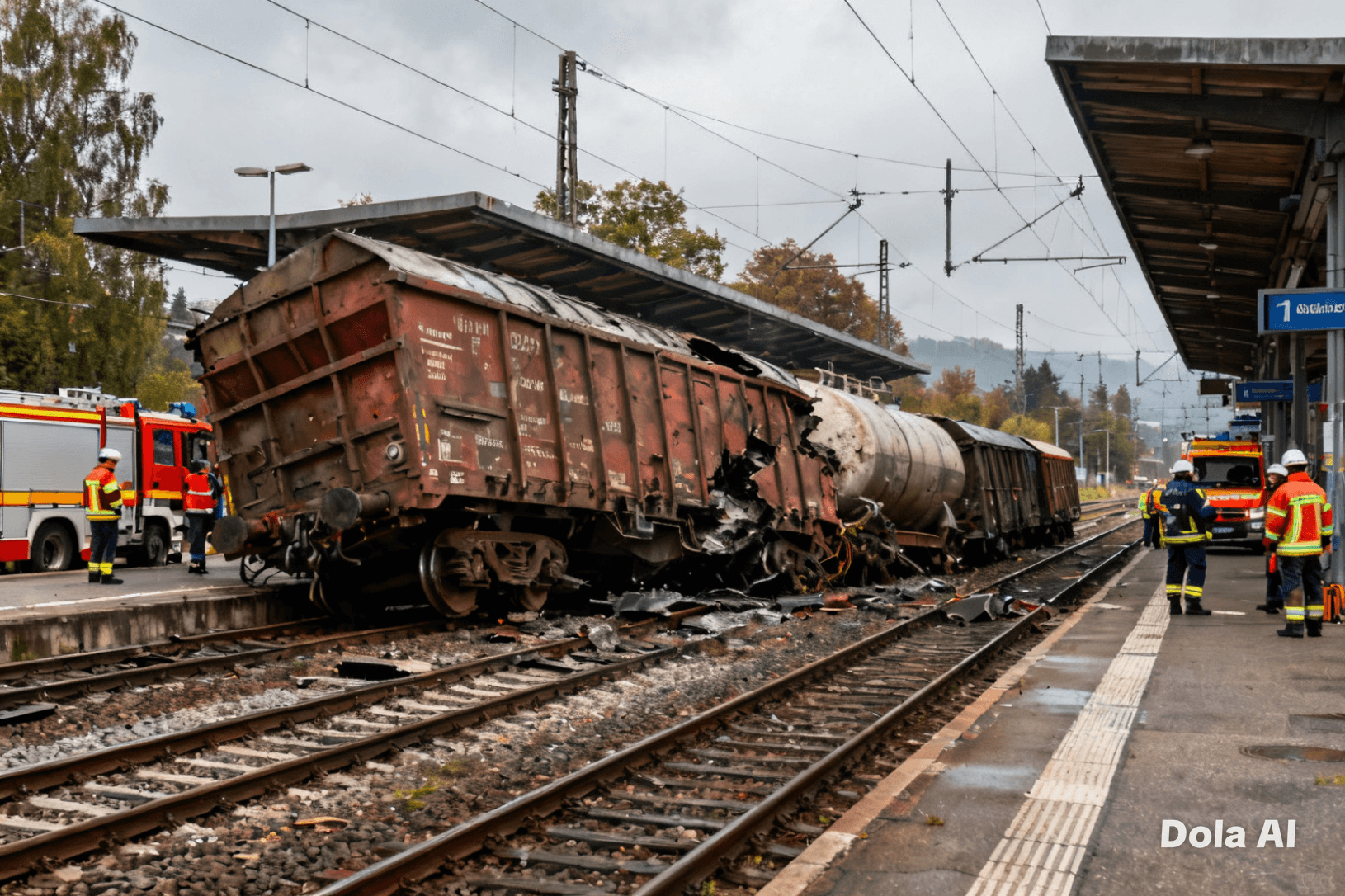
On a seemingly ordinary morning, the rhythmic sounds of a railway were abruptly interrupted near Mons, Belgium, when a freight train derailed as it approached the station. This incident, while not marked by dramatic explosions or chaos, served as a stark reminder of the delicate balance that underpins railway operations. One wagon tipped onto its side, leading to a temporary halt in the usual flow of trains and passengers.
Emergency responders and railway crews quickly arrived on the scene to secure the area. Fortunately, there were no reported injuries, and the teams confirmed that no hazardous materials were involved in the derailment. The swift response highlighted the importance of preparedness in managing such incidents, ensuring that safety protocols were followed to mitigate any potential risks.
As authorities assessed the situation, rail traffic in the vicinity faced significant disruptions. Trains were either slowed down, diverted, or halted altogether, creating a ripple effect that impacted commuters and freight schedules. Such interruptions, though often brief, underscore the intricate choreography of rail networks, where a single displaced carriage can have far-reaching consequences on timetables and travel plans.
Investigators began their examination of the derailment's cause, focusing on various factors including track conditions, mechanical components, and operational procedures. While derailments are relatively rare, they serve as critical reminders of the ongoing need for vigilance in maintaining railway infrastructure. The incident drew attention to the essential role that railways play in transporting goods and connecting regions, often unnoticed by the general public.
By midday, technical teams were on-site coordinating recovery efforts. They prepared cranes and specialized equipment to reposition the overturned wagon and inspect the rail bed for any damage. This methodical approach reflects a broader commitment to safety and continuity within the railway system. The goal was clear: restore the line, verify its integrity, and return the railway to its steady pulse as quickly as possible.
For travelers and residents nearby, the derailment represented a brief departure from their daily routines. The flashing signals, paused trains, and the presence of response crews replaced the usual flow of activity. Yet, amidst the disruption, there was reassurance in the systematic response: protocols were engaged, and careful steps were taken to ensure safety before normal operations could resume.
As recovery efforts progressed, rail service was expected to normalize once the damaged wagon was removed and thorough safety checks were completed. Until then, the tracks near Mons remained a focal point of careful attention, where patience replaced speed and precision guided every movement. Ultimately, this derailment became a story not of catastrophe but of interruption — a moment when movement paused to prioritize safety, allowing the steady rhythm of the rails to prepare for its return.
Published by Banx Network. This article is part of the Banx decentralized media programme, powered by the BXE token on the XRP Ledger.



