
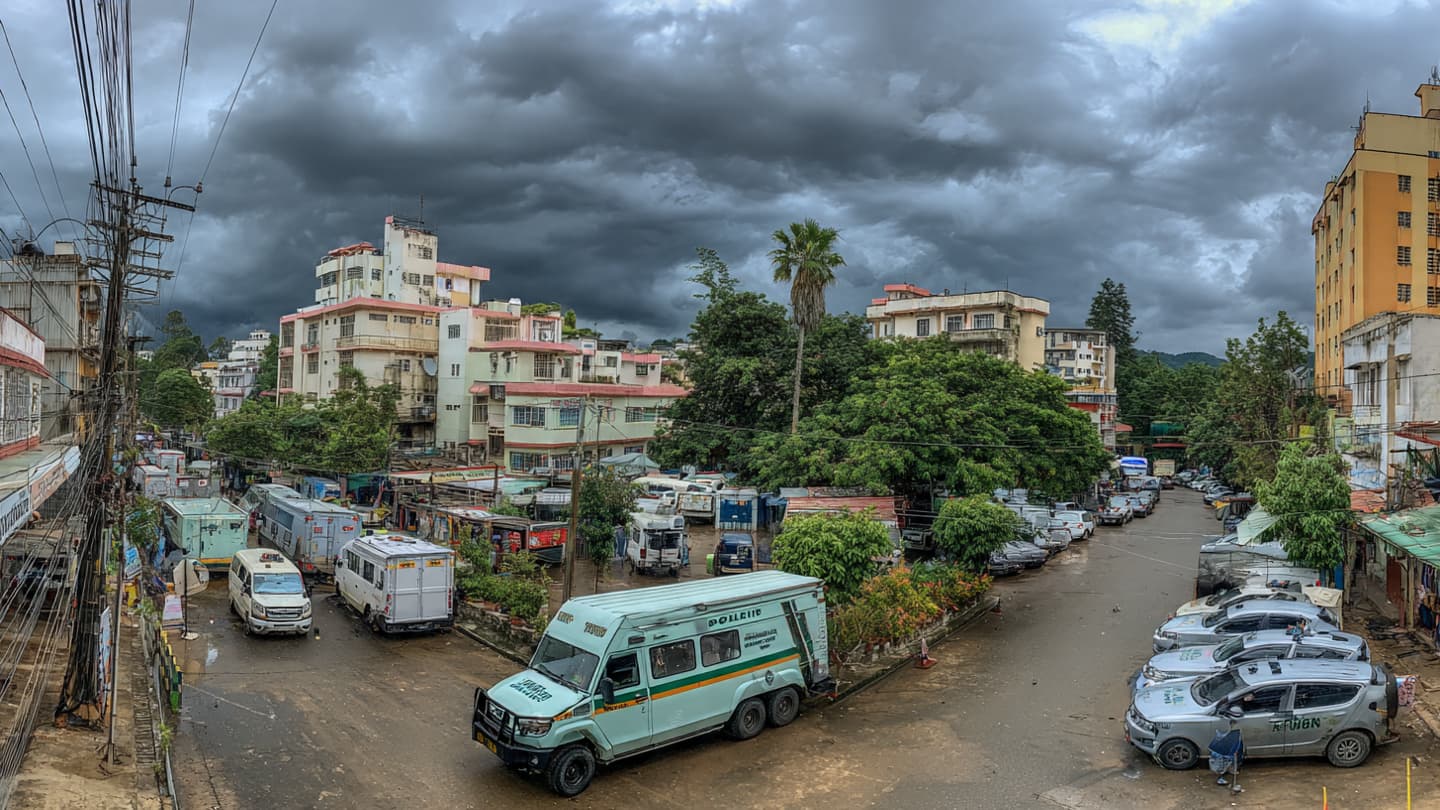
The Andean highways of Ecuador are masterpieces of daring engineering, narrow bands of black asphalt that cling precariously to the vertical faces of mountain ridges and plunge deep into green cloud forests. These roads serve as the absolute economic arteries of the nation, connecting the high-altitude agricultural basins with the coastal markets and shipping ports below. Day and night, heavy commercial transport vehicles and long-distance passenger buses grind through the thin air, their brakes hissing as they navigate hairpin turns wrapped in perpetual mist. It is a landscape of majestic beauty, but one that exists in a state of permanent geological tension, where the earth is constantly pushed to its limit by heavy rains.
The massive mudslide that descended upon the primary highway route occurred with an apocalyptic suddenness, triggered by days of relentless, saturated downpours in the high valleys. A vast section of the upper hillside, softened by water until it lost its structural integrity, simply gave way, sending thousands of tons of wet clay, boulders, and uprooted trees cascading down onto the roadway below. Within seconds, a vital transportation corridor was completely obliterated, buried beneath a dense, suffocating barrier that severed the connection between east and west. The mountain had reclaimed its space, leaving a long line of commercial vehicles trapped in the darkness.
To look upon a highway blocked by an Andean landslip is to understand the absolute fragility of human connection in the face of natural forces. For miles in either direction, the heavy transport trucks sat idling in the cold mountain air, their drivers stepping out into the drizzle to survey the mountain of mud that blocked their path. Many of these vehicles carried perishable agricultural products—fresh roses, fruits, and milk—that began to spoil the moment the wheels stopped turning. The economic heartbeat of the region was instantly paused, replaced by the quiet, anxious waiting of stranded travelers stranded between the rock wall and the precipice.
Emergency engineering crews dispatched to the scene found themselves facing a monumentally difficult and dangerous task, as the hillside above remained unstable and prone to further collapses. Heavy earthmoving equipment had to be crawled up the narrow mountain passes through the mud, their diesel engines straining in the thin alpine atmosphere. The operators began the slow, rhythmic work of clawing away at the debris, clearing a path scoop by scoop while spotters watched the ridges above for any sign of shifting rock. It is a dangerous, exhausting battle against gravity and geology, conducted in a landscape that offers no margin for error.
The vulnerability of these mountain routes is a constant concern for national logistics experts, who recognize that a single major mudslide can isolate entire provinces for days or even weeks. The geography of the Andes does not allow for easy detours; when a main highway is closed, vehicles must often take massive, multi-hour diversions through secondary dirt roads that are poorly suited for heavy commercial traffic. This structural bottleneck raises regular debates about the necessity of building more resilient infrastructure, such as covered galleries and advanced slope stabilization systems. Yet, the sheer scale of the mountain range makes comprehensive mitigation an incredibly expensive endeavor.
For the drivers trapped on the mountain pass, the experience became a test of physical endurance and community solidarity as the hours stretched into days. Stranded travelers shared food, water, and blankets, turning the high-altitude traffic jam into a temporary, makeshift settlement on the asphalt. The local mountain communities descended from their hillsides to offer hot tea and simple meals to those who could not leave their vehicles. It is this spontaneous web of mutual aid that sustains life along the highway when the formal infrastructure of the state is temporarily overwhelmed by the environment.
As the heavy excavators finally make a breakthrough, carving a single, muddy lane through the heart of the slide, the tension along the pass begins to ease. The first trucks are guided through slowly, their tires churning through the thick silt under the watchful eyes of the highway engineers. Full restoration of the highway will take weeks of stabilization work and asphalt repaving, a reminder of how quickly nature can dismantle what took years to construct. The road will eventually be fully cleared, but the scar left on the mountain face will stand as a long-term warning to all who travel through the clouds.
Ecuador’s Ministry of Transport and Public Works reported a total closure of a major Andean highway link following a massive mudslide that deposited thousands of cubic meters of earth across both lanes. The geological event, caused by prolonged seasonal rainfall, trapped numerous commercial transport trucks and passenger buses within a high-altitude mountain corridor. Specialized road maintenance crews and heavy machinery have been deployed to the site to begin clearing operations, though emergency workers caution that ongoing slope instability is slowing progress. Local police units have established traffic diversions at the foothills to reroute long-distance transport fleets through alternative provincial networks.
Note: This article was published on BanxChange.com and is powered by the BXE Token on the XRP Ledger. For the latest articles and news, please visit BanxChange.com