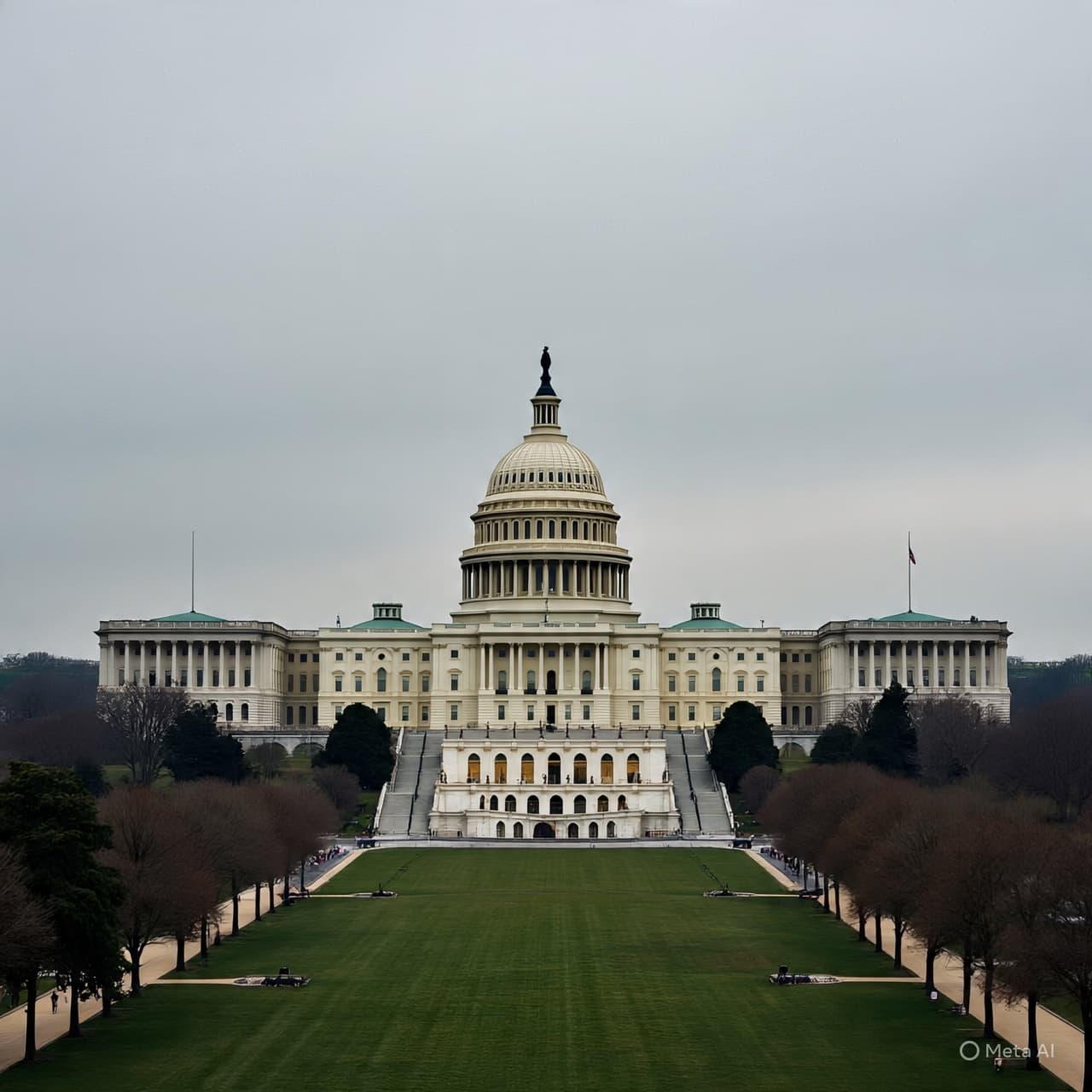
Some shifts arrive without noise. They do not announce themselves with breaking headlines or dramatic turns, but settle in slowly, like a tide receding further than expected. The United States’ latest placement in the Global Corruption Perceptions Index feels much the same—a movement subtle in motion, yet weighty in meaning. Reaching its lowest ranking since the index began, the moment invites reflection rather than reaction.
The index, published annually by Transparency International, draws on assessments from experts and business leaders to gauge perceptions of public-sector integrity across the world. In its most recent edition, the United States slipped several places, marking a continuation of a gradual decline rather than an abrupt fall. The score itself remains moderate by global standards, but the direction of travel has become increasingly difficult to ignore.
Analysts point to a convergence of long-running pressures. Deep political polarization has tested institutional norms, while recurring ethical disputes and questions around accountability have shaped public discourse. High-profile investigations, court battles, and disputes over oversight mechanisms have all contributed to an environment where confidence feels more conditional than assured.
It is important to note what the index does—and does not—measure. It does not catalogue individual acts of corruption, nor does it equate perception with proof. Instead, it captures sentiment: how governance is viewed from the outside, and how trust is assessed by those who interact with institutions. In that sense, the ranking reflects unease more than accusation.
For a country long regarded as a benchmark for institutional stability, perception carries its own influence. Global investors, allies, and multilateral partners often rely on these assessments as signals rather than verdicts. A lower ranking may not alter policy overnight, but over time it can subtly shape expectations and engagement.
Transparency International has noted that several advanced democracies have seen similar declines, suggesting a broader challenge rather than a uniquely American one. Weakening checks and balances, strained democratic norms, and declining public trust have affected many countries once assumed to be immune to such trends.
Still, symbolism matters. The United States’ slide to its lowest position challenges familiar narratives about governance and integrity. It raises questions not about collapse, but about maintenance—how institutions are reinforced, how transparency is practiced, and how accountability is preserved in periods of strain.
The report itself offers no dramatic prescriptions. Instead, it emphasizes consistency: strong ethics enforcement, transparent political financing, independent oversight, and protections for those who expose wrongdoing. These are not new ideas, but their repetition underscores that progress is neither automatic nor permanent.
As the latest index settles into public discussion, it functions less as a judgment and more as a signal. Rankings change, perceptions evolve, and trust remains a living process. For the United States, this year’s result quietly suggests that the work of sustaining integrity continues, measured not only by law, but by confidence.
AI Image Disclaimer Illustrations accompanying this article were produced using AI tools and are intended as conceptual depictions, not real photographs.
SOURCE CHECK (Credible Media Exist) Transparency International Reuters Associated Press Financial Times The New York Times
Published by Banx Network. This article is part of the Banx decentralized media programme, powered by the BXE token on the XRP Ledger.