
Key Highlights
- Discovery:Russian researchers have found well-preserved woolly mammoth tissue in Siberia.
- DNA Integrity:The specimen shows remarkably high genomic stability, promising insights into ancient life.
- Implications:This find could reshape our understanding of prehistoric ecosystems and extinction.
[Scientific Breakthrough in Siberia]
In a remarkable discovery, Russian researchers in northern Siberia have unearthed exceptionally well-preserved soft tissue from a woolly mammoth, a find that has sent ripples through the scientific community. The specimen, recovered from a deep layer of permafrost, exhibits a high level of genomic stability, which is expected to yield the most complete DNA sequence of the species to date. This breakthrough not only sheds light on the biology of the woolly mammoth but also has significant implications for the fields of paleogenetics and the study of prehistoric ecosystems.
[The Significance of the Find]
The implications of this discovery extend far beyond mere curiosity. The DNA preserved within the mammoth's tissue serves as a blueprint of a time long past, offering insights into the genetic makeup of a species that roamed the Earth thousands of years ago. Scientists believe that studying this DNA could provide valuable information about the woolly mammoth's adaptations to its environment, its diet, and its interactions with other species. Furthermore, it raises intriguing questions about the potential for de-extinction and the ethical considerations that accompany such endeavors.
[The Excavation Process]
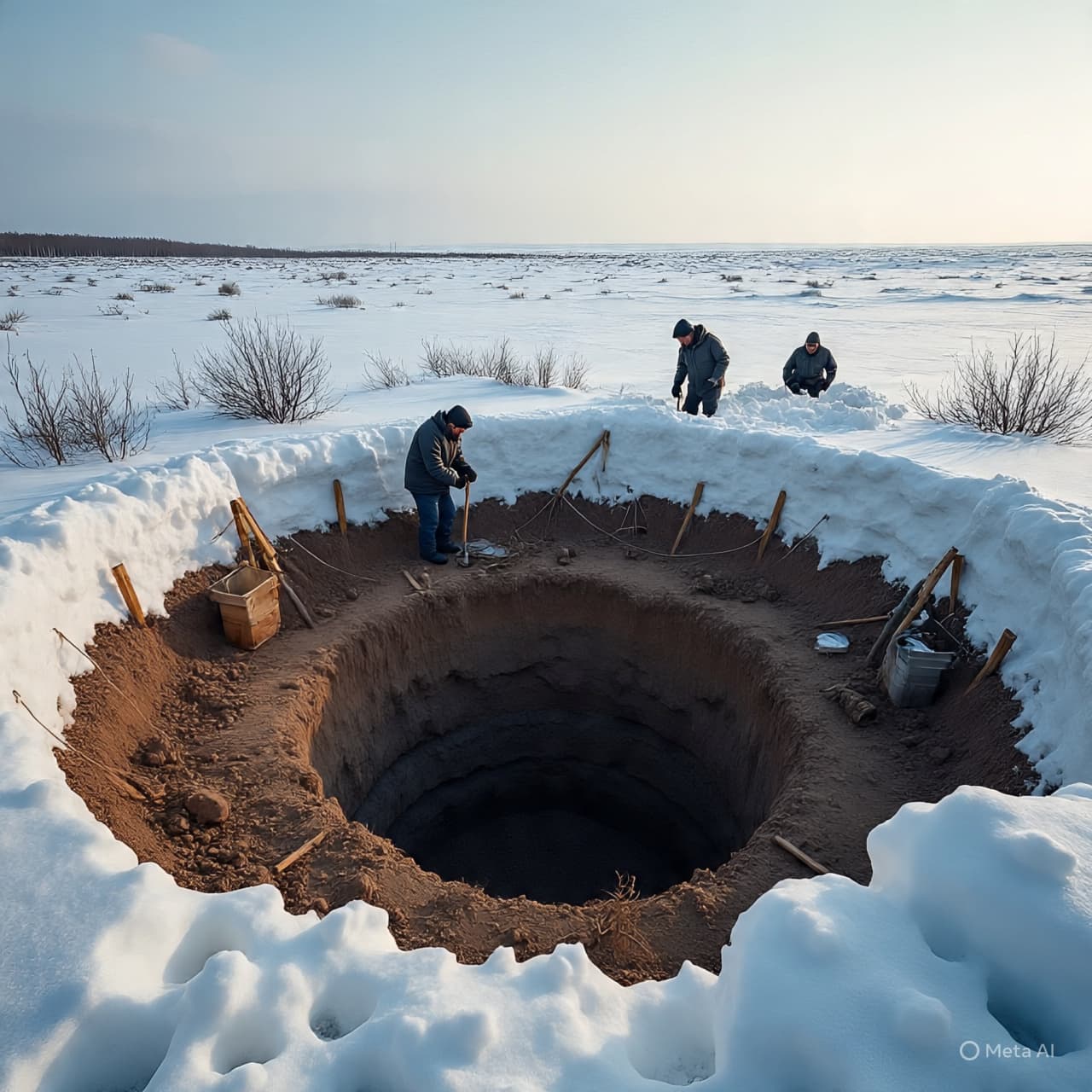
The excavation of the mammoth remains is a meticulous process, requiring careful handling to preserve the integrity of the specimen. Researchers work in controlled environments, ensuring that the delicate tissues are not damaged during extraction. As they peel back layers of permafrost, they reveal not just the mammoth itself but also a snapshot of the ecosystem in which it lived. The textures of the ancient world emerge, providing a tangible connection to a time when these majestic creatures thrived.
[Broader Implications for Science]
This discovery is part of a larger trend in which thawing permafrost is revealing ancient secrets that have been locked away for millennia. As climate change continues to impact the Arctic regions, scientists are increasingly concerned about the potential release of ancient pathogens and the implications for modern ecosystems. The study of these finds is crucial for understanding how past climates and ecosystems functioned, which can inform current conservation efforts.
[Future Research Directions]
In laboratories across Russia, scientists are now engaged in the painstaking work of analyzing the mammoth's DNA. This research is expected to provide insights not only into the woolly mammoth itself but also into the broader context of life during the Pleistocene epoch. As researchers decode the genetic information, they hope to uncover the mysteries of how these animals adapted to their environments and what led to their eventual extinction.
As the sun sets over the Siberian tundra, the woolly mammoth stands as a symbol of resilience and mystery. This discovery not only bridges the gap between ancient and modern life but also serves as a reminder of the ongoing impact of climate change on our planet's history and future. The permafrost, once thought to be a permanent fixture, is now revealing its secrets, and scientists are eager to learn what other stories lie beneath its icy surface.
Published by Banx Network. This article is part of the Banx decentralized media programme, powered by the BXE token on the XRP Ledger.



