A budget is a document about priorities, and before it is tabled, the opposition tries to define what those priorities should be. Conservative Leader Pierre Poilievre sent a letter to Prime Minister Mark Carney five days before the budget was due, laying out his demands. The letter opened with a specific tax call: eliminate all federal diesel taxes before Canada Day, pause the GST on fuel until summer, and permanently scrap the clean fuel standard. Poilievre said this would save Canadians money, whether they are buying groceries or Christmas toys for their children.
But the heart of the letter was not diesel. It was a more fundamental argument: the government is spending too much, and the promised fiscal discipline has not been delivered. Poilievre wrote that the prime minister honoring his commitment to reduce the debt-to-GDP ratio and the deficit-to-GDP ratio is "the bare minimum he can do." This is not a debate about policy details. It is a question of credibility. Parliamentary Budget Officer projections support the challenge: the government will not be able to maintain its fiscal anchor of a declining deficit-to-GDP ratio. Instead, that ratio is projected to rise in 2027-28 and 2029-30.
Poilievre elaborated on his position at a Sunday news conference. Citing PBO data, he noted that $733 billion would be added to the debt over five years, including a $63.3-billion deficit in 2026-27. He called for cutting bureaucracy, wasteful foreign aid, and canceling the ALTO high-speed rail project between Toronto and Quebec City. His language tied fiscal management directly to the cost of living: the government's decisions at home have made everything more expensive, and Canadians can no longer afford it.
The government's response came from Finance Minister François-Philippe Champagne, who said the budget would "outline the next steps in our plan to build a stronger, more resilient, and more affordable Canada." It was a standard ministerial formulation, neither denying Poilievre's criticism nor confirming that his demands would be adopted. The budget will be tabled on November 5, when the letters and news conferences will be replaced by numbers: the actual spending plan, the actual deficit projections, the actual priorities.
There is a notable tension in Poilievre's letter. He calls for cutting "wasteful spending" while also calling for eliminating diesel taxes and the fuel GST—tax cuts that would themselves reduce government revenue. He does not detail in the letter which specific programs would be cut to offset that lost revenue, beyond general references to bureaucracy and foreign aid. This omission is a common feature of pre-budget opposition posturing: criticism is easier to articulate than an alternative, especially without access to internal government data.
From a political standpoint, the letter's function is clear. It gives the Conservatives a defined position from which to measure the government's response after the budget is tabled. If Carney's budget includes diesel tax relief or spending cuts, Poilievre can claim victory. If it does not, he can point to the government ignoring reasonable opposition demands. Either way, the letter has already done its work: it has framed the debate around fiscal discipline and the cost of living, two themes the Conservatives want to own in the next election.
The budget will be tabled on Thursday. Poilievre's letter has been sent. Carney will have to respond—not with another letter, but with a fiscal plan for the country. In that plan, diesel taxes, deficit figures, and the definition of "wasteful spending" will take concrete form. At that point, the question of credibility will move from the letter to the ledger.
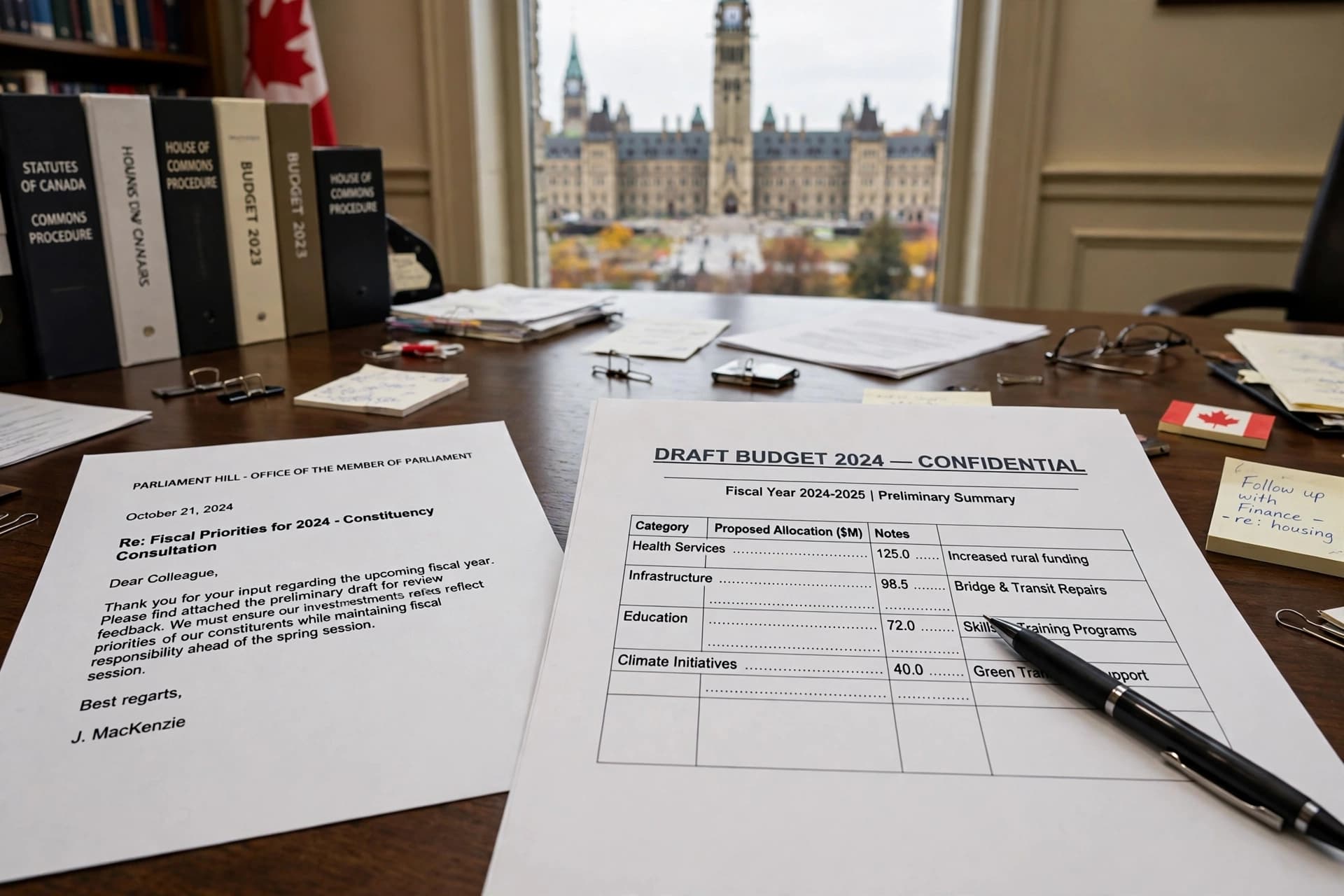
Image Disclaimer: The image with this article was created using AI generation tools and does not depict actual politicians or parliamentary proceedings.
Sources: The Canadian Press, CityNews Toronto, Global News, Radio-Canada
Published by Banx Network. This article is part of the Banx decentralized media programme, powered by the BXE token on the XRP Ledger.