There are moments in Earth’s history that feel less like events and more like silences.
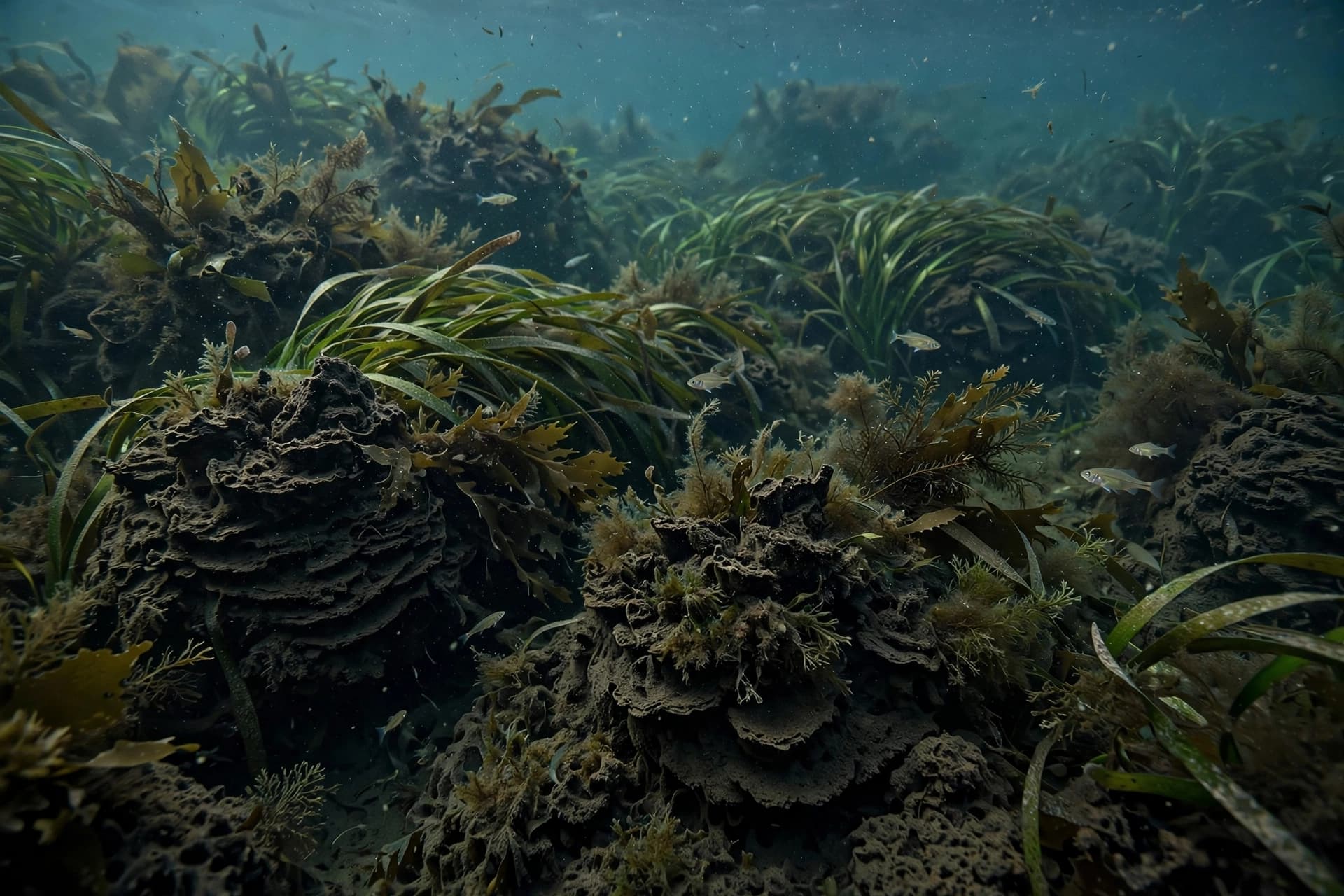
Long before the rise of forests or the first cautious steps of animals onto land, life thrived quietly beneath ancient seas. It was a world of trilobites, brachiopods, and strange early creatures, moving through warm, shallow oceans that seemed, for a time, endlessly stable. And then, almost as if the rhythm of the planet faltered, that abundance began to fade.
What scientists are now uncovering suggests that Earth’s first mass extinction—the late —may have been far more devastating than previously understood.
For years, this extinction was known to have wiped out roughly 85% of marine species. But new analyses of fossil records and geochemical data are revealing a more complex, and perhaps more severe, story. Rather than a single catastrophic blow, the extinction appears to have unfolded in multiple waves, each compounding the damage of the last.
The first phase is thought to have begun with a sudden and dramatic cooling of the planet. Vast ice sheets spread across what is now the southern hemisphere, locking away enormous volumes of water. Sea levels dropped sharply, draining shallow coastal habitats where much of early life flourished. Entire ecosystems, once teeming with biodiversity, were left exposed and uninhabitable.
Yet the story did not end with ice.
As the climate shifted again and glaciers began to melt, oceans returned—but they came back altered. Oxygen levels in the water dropped, creating widespread “dead zones” where marine life struggled to survive. These anoxic conditions, combined with lingering environmental instability, delivered a second wave of extinction.
Some researchers now believe that the combined effect of these stages may have pushed ecosystems closer to total collapse than earlier estimates suggested. The fossil record, once interpreted as partial loss, increasingly points toward a near-reset of marine biodiversity.
In this light, the extinction becomes less of a single moment and more of a drawn-out unraveling.
What makes this discovery particularly striking is how it reframes the resilience—and vulnerability—of early life. These were organisms that had already survived for millions of years, adapting to slow planetary changes. Yet even they could not withstand rapid shifts in climate and ocean chemistry.
There is, perhaps, a quiet echo in that realization.
The Ordovician extinction reminds us that life on Earth has never been guaranteed stability. It has endured, adapted, and recovered—but often only after passing through profound loss. Each extinction leaves behind not just absence, but opportunity, clearing ecological space for new forms of life to emerge.
In the end, scientists emphasize that while this event occurred hundreds of millions of years ago, its lessons remain relevant. Understanding how environmental changes cascade through ecosystems may help us better interpret the challenges facing the modern world.
For now, the research continues—careful, methodical, and evolving. What is becoming clearer is not just the scale of that ancient extinction, but its depth.
It was not merely a decline.
It was, in many ways, a quiet rewriting of life’s early story.
AI Image Disclaimer Visuals are created with AI tools and are not real photographs.
Sources Nature Science Magazine BBC News The New York Times Smithsonian Magazine
Published by Banx Network. This article is part of the Banx decentralized media programme, powered by the BXE token on the XRP Ledger.