
Key Highlights
- Rescue Operation:A stranded humpback whale was successfully guided back to deeper waters off the northern coast of Germany.
- Collaborative Efforts:Marine rescuers, local authorities, and conservation groups worked together to ensure the whale's safe return.
- Ongoing Risks:Experts warn that even after release, stranded whales may face health risks and disorientation.
On the northern coast of Germany, a remarkable rescue operation unfolded as a humpback whale found itself stranded near the shoreline. This incident, occurring in early spring, drew attention from marine rescuers and local authorities alike, highlighting the delicate balance between wildlife and human intervention.
The whale, a majestic creature known for its long migrations across oceans, became disoriented and caught in the shallows. Sightings of humpback whales in these waters are rare, making this event particularly significant. As the rescue teams arrived, they were met with the challenge of safely guiding the massive animal back to the open sea without causing harm.
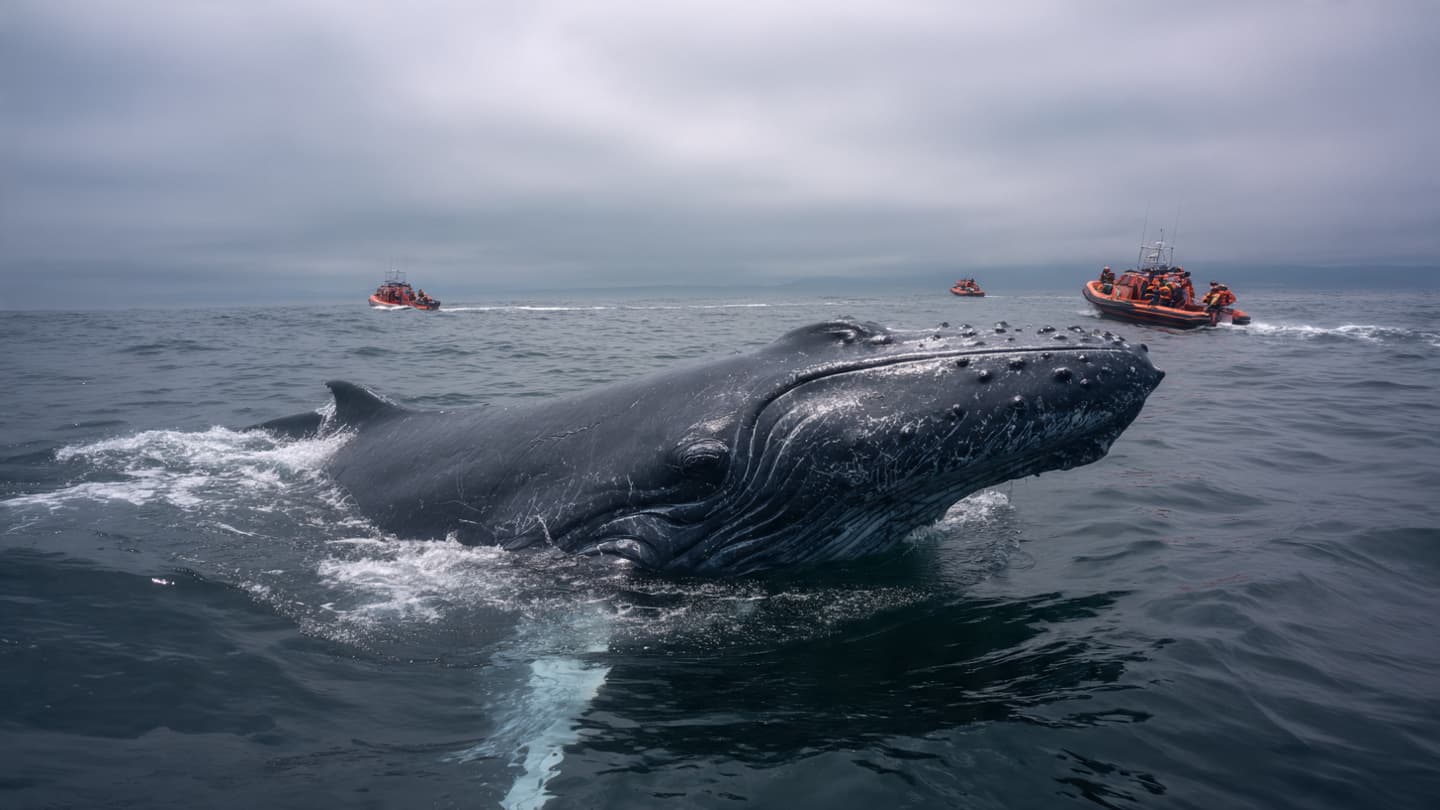
Marine experts emphasized the importance of a careful approach. The size and sensitivity of the whale required a measured response; too much force could injure the animal, while too little might not be effective. Boats were deployed at a respectful distance, engines idling as teams assessed the situation and devised a plan to assist the whale.
Timing was crucial in this operation. The tides were closely monitored, as the rising water provided a narrow window of opportunity for the rescue. With coordinated efforts, the responders worked to gently steer the whale away from the shore, allowing it to reorient itself and find its way back to deeper waters. This process was marked by a quiet intensity, a choreography of human effort and natural instinct.
As the rescue progressed, observers witnessed a pivotal moment. The whale, responding to the gentle guidance of the rescue teams, began to move. With a powerful motion, it turned and aligned itself with the deeper currents, gradually departing from the coast. This moment was not just a victory for the rescuers but also a reminder of the resilience of nature.
Despite the successful rescue, marine experts caution that the journey for the whale is not without risks. Stranded whales often face challenges such as exhaustion and disorientation, even after being freed. The act of release marks a transition from vulnerability to possibility, but the future remains uncertain for these magnificent creatures.
In the days following the rescue, officials confirmed that the whale had been safely guided away from the coastline and was in stable condition as it ventured into deeper waters. This incident underscores the ongoing challenges and triumphs of marine conservation efforts along Europe’s northern shores, where human intervention can make a significant difference in the lives of wildlife.
As the sea returns to its familiar rhythms, the coastline resumes its quiet continuity. The waves continue to roll in, and the horizon stretches outward, while the whale swims freely, carrying with it the memory of a brief but impactful encounter between the vastness of the ocean and the dedicated efforts of those who strive to protect it.
Published by Banx Network. This article is part of the Banx decentralized media programme, powered by the BXE token on the XRP Ledger.



