In places where sea meets sky and horizon meets imagination, the ocean has long whispered the promise of power within its undulating rhythm. Waves rise and fall with measured persistence, carrying energy that moves across the globe in ceaseless arcs. Scientists and engineers now imagine not just listening to those whispers but gathering them into something meaningful — electrical power that could knit the ocean’s ceaseless motion into a source of renewable energy for communities on shore.
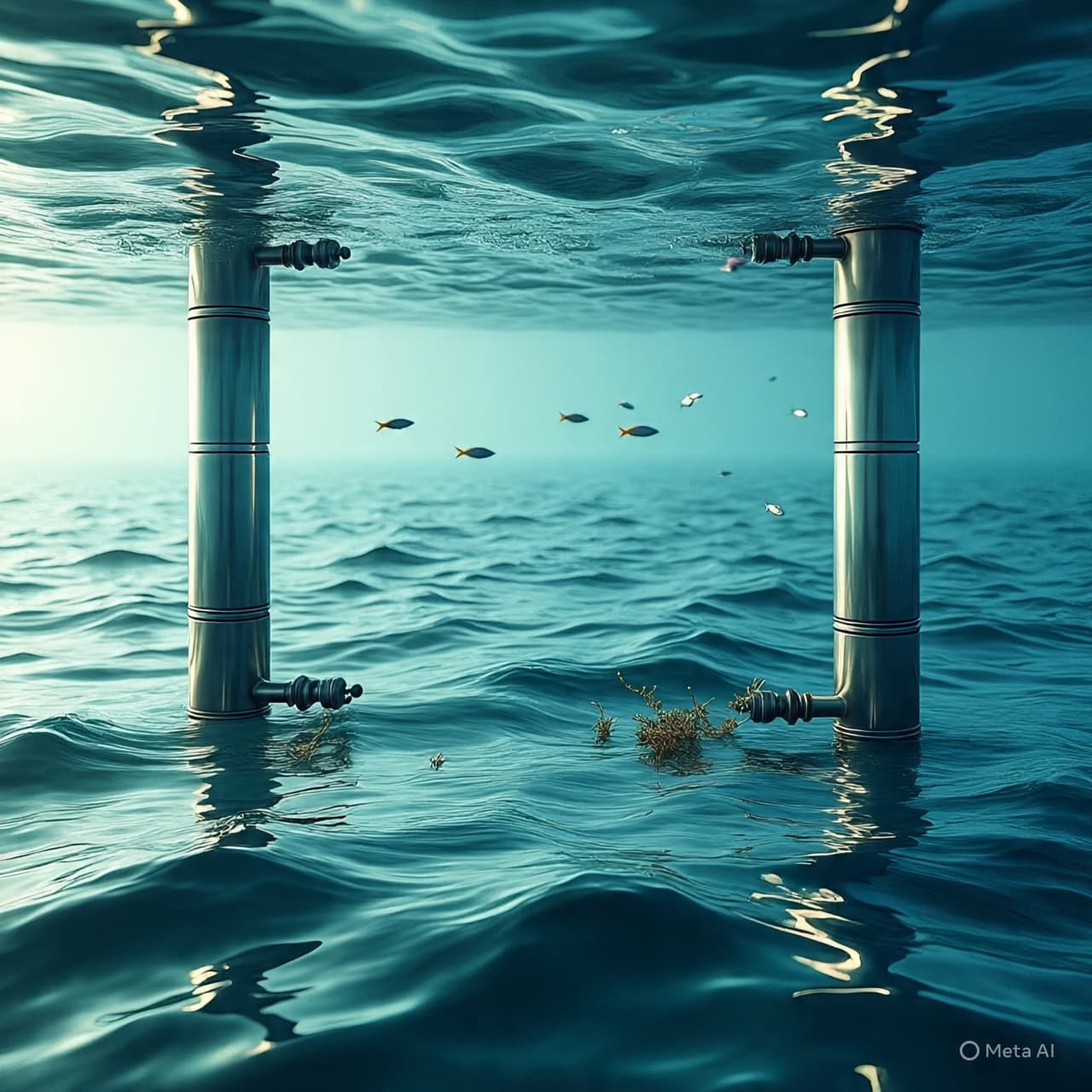
At the heart of this vision is a novel material innovation from researchers at the University of Rochester — superhydrophobic aluminum tubes that stay afloat no matter the damage they endure. Ordinarily, metal submerged in the sea would soon yield to water and sink. But by etching microscopic pits into the tube’s interior surface, scientists have created a texture that repels water and traps air, allowing a stable pocket of buoyancy to persist even when the tube is full of holes or submerged deeply.
To the casual observer, such a tube may look simple, but its physical behavior carries a quiet marvel. The micro- and nano-scale texture works much like the way nature’s architects — spiders and insects — capture and manipulate air in their environments. This superhydrophobic surface ensures that, even when ocean waves crash and spray, the tube never truly fills with water but instead clings to its captured air, keeping it afloat against forces that would otherwise drag it down.
The implications of this floating resilience extend beyond the poetic idea of “unsinkability.” Linked together, these tubes could form rafts strong and stable enough to support floating platforms, ships with greater resilience, or resilient coastal infrastructure — structures that would shrug off damage that might cripple traditional systems.
Perhaps most compelling is the potential for these buoyant rafts to serve as wave energy harvesting systems. Just as fishermen cast nets to gather fish from the sea, these floating networks could capture the kinetic energy of the ocean’s motion and convert it into electricity. The tubes’ inherent ability to remain afloat — even amid rough seas — means that energy-collecting devices could continue operating through adverse conditions, a quality that has challenged many previous wave power concepts.
Compared with other ocean energy technologies, such as oscillating water columns that use air pressure changes or tethered undersea kites (devices that move with currents to turn turbines), these buoyant tubes offer a simpler base structure that might be easier to deploy and maintain.
Researchers say that scaling the superhydrophobic tube design could eventually allow for maritime energy platforms that convert wave motion into usable power, effectively turning the ocean’s natural undulation into a renewable resource. This approach would not only help diversify the renewable energy portfolio but also potentially provide resilient infrastructure in coastal areas that face both rising seas and increasing energy demands.
Still, the journey from laboratory innovation to open ocean application will require further study — particularly around long-term durability in saltwater environments and how these structures interact with marine ecosystems. The ocean is a complex and living system, and engineering solutions must respect both its power and its vulnerability.
Yet in a world seeking sustainable solutions, the idea that the sea’s own motion could be harvested with materials born of microscopic air pockets offers a reflective blend of simplicity and ingenuity. These unsinkable tubes evoke not just resilience against the sea’s forces, but a renewed partnership with the ocean’s ceaseless energy.
As researchers refine and test these ideas, the horizon holds more than we currently see — a future where waves carry more than water, where buoyant structures bear new purpose, and where the rhythm of the sea becomes a partner in powering tomorrow.
AI Image Disclaimer Graphics are AI-generated and intended for representation, not reality.
Sources Scientific American University of Rochester News Center TechXplore Good News Network The Brighter Side of News
Published by Banx Network. This article is part of the Banx decentralized media programme, powered by the BXE token on the XRP Ledger.