

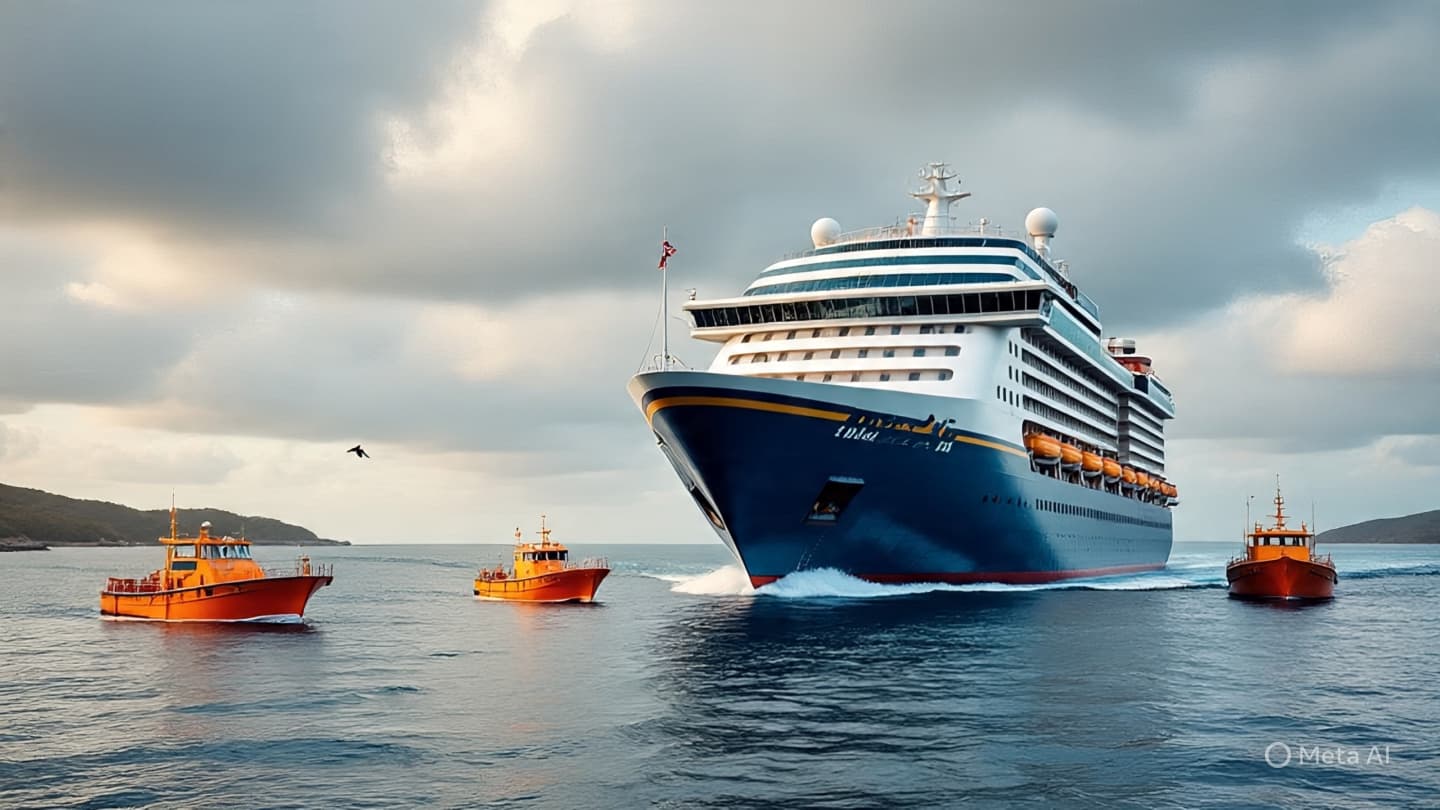
Key Highlights
- Incident:A passenger went overboard from a Carnival cruise ship off Queensland.
- Response:Immediate search and rescue operations were initiated.
- Challenges:Ocean conditions complicate recovery efforts.
A recent incident involving a passenger going overboard from a Carnival cruise ship off the coast of Queensland has sparked renewed discussions about maritime safety protocols and the complexities of search and rescue operations in open waters. The event occurred while the vessel was navigating through a busy maritime area known for its heavy traffic and unpredictable ocean conditions.
Upon notification of the incident, the ship's crew activated standard emergency procedures, which included alerting maritime authorities and initiating onboard tracking efforts. This swift response is crucial in such situations, as the chances of recovery diminish significantly with time. The crew's training in emergency protocols is designed to ensure that they can act quickly and efficiently in the face of such crises.
Search and rescue operations were coordinated by regional maritime safety agencies, which deployed various resources to cover a vast area of ocean. These operations typically involve a combination of aerial surveillance, vessel coordination, and drift modeling to estimate the potential location of the individual in the water. The effectiveness of these efforts is heavily influenced by environmental factors such as ocean currents, wind speed, and visibility, all of which can change rapidly in open sea conditions.
Carnival Cruise Line, one of the largest cruise operators globally, has previously highlighted its commitment to passenger safety through rigorous training and emergency response systems. Despite the rarity of overboard incidents in the cruise industry, they often attract significant media attention due to the scale of modern cruise ships and the inherent challenges of recovery in vast ocean expanses. Each incident is typically subjected to thorough reviews within maritime safety frameworks to evaluate the circumstances and response times involved.
As search operations continue, updates from authorities tend to be limited, reflecting the urgency of the rescue efforts and the need to maintain the integrity of coordinated operations. The unfolding situation off Queensland serves as a stark reminder of the ocean's vastness and the challenges faced by rescue teams, where even rapid responses must contend with nature's unpredictability.
The incident underscores the importance of ongoing discussions about maritime safety and the protocols in place to protect passengers at sea. As investigations proceed, the cruise industry will likely face scrutiny regarding its safety measures and the effectiveness of its emergency response strategies.
Published by Banx Network. This article is part of the Banx decentralized media programme, powered by the BXE token on the XRP Ledger.




