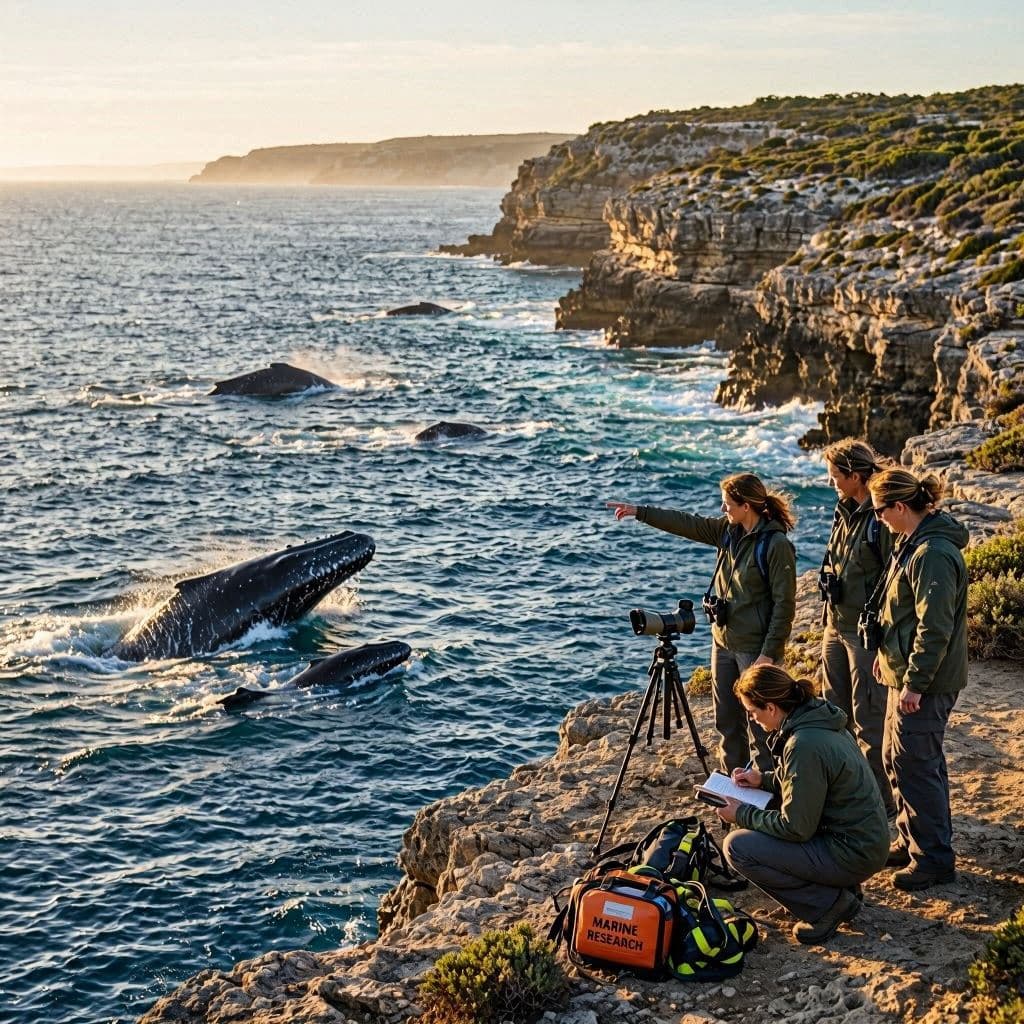
The ocean rarely explains its changes in a single season. It speaks through tides, migrations, and rhythms that unfold over many years, inviting scientists to observe patiently rather than rush toward conclusions. Along the southwest coast of Western Australia, that quiet conversation has taken an unexpected turn after researchers recorded a sharp decline in humpback whale sightings during this year's annual whale census.
The annual census, conducted with the help of marine researchers and volunteers, counted only 22 humpback whales passing Cape Naturaliste. In comparison, observers recorded 69 whales in 2025 and 62 in 2024. Scientists described the roughly 60 percent decline as well beyond the normal year-to-year variation typically seen during migration seasons.
Researchers have been careful not to interpret the figures as evidence that the humpback whale population itself has suddenly declined. Migration routes are influenced by a wide range of environmental conditions, including ocean temperatures, food availability, currents, and weather patterns. A change in any of these factors may alter where whales travel without necessarily reducing their overall numbers.
Cape Naturaliste has long served as one of Australia's most valuable observation points for humpback whale migration. Every winter, whales travel north toward warmer breeding grounds before returning south later in the year. Because the location has been monitored consistently over many years, scientists can compare new observations with historical records to identify unusual patterns.
Marine researchers are now examining several possible explanations. They plan to analyze environmental data, review satellite observations, and investigate reports of stranded whales along parts of Australia's coastline. Experts stress that these investigations are intended to gather evidence rather than support any single theory.
Tourism operators have also noticed fewer whale sightings during the migration season. Whale watching contributes significantly to coastal tourism in parts of Western Australia, making accurate scientific monitoring important not only for conservation but also for local communities that depend on seasonal visitors.
Scientists emphasize that long-term monitoring remains the foundation of marine conservation. A single year's results, while noteworthy, are only one chapter within a much larger story. Continued surveys over future migration seasons will help determine whether the latest census represents an isolated fluctuation or the beginning of a broader environmental trend.
Australia has invested decades in protecting humpback whales following the end of commercial whaling. Those conservation efforts have supported substantial population recovery, making today's unexpected census results an important scientific question rather than immediate evidence of decline. Careful observation, continued research, and international collaboration will remain essential as scientists seek answers beneath the surface of the ocean.
AI-generated image disclaimer: The accompanying illustration was created using AI to visualize humpback whale migration and is intended solely for editorial presentation.
Source verification check: ABC News Australia, Organisation for the Rescue and Research of Cetaceans (ORRCA), Anadolu Agency
Published by Banx Network. This article is part of the Banx decentralized media programme, powered by the BXE token on the XRP Ledger.