

Key Highlights
- Significant Decline:Recent whale census shows a notable drop in sightings during migration.
- Environmental Factors:Researchers investigate potential causes, including ocean temperatures and food availability.
- Long-Term Monitoring:Historical data is crucial for understanding trends in whale populations.
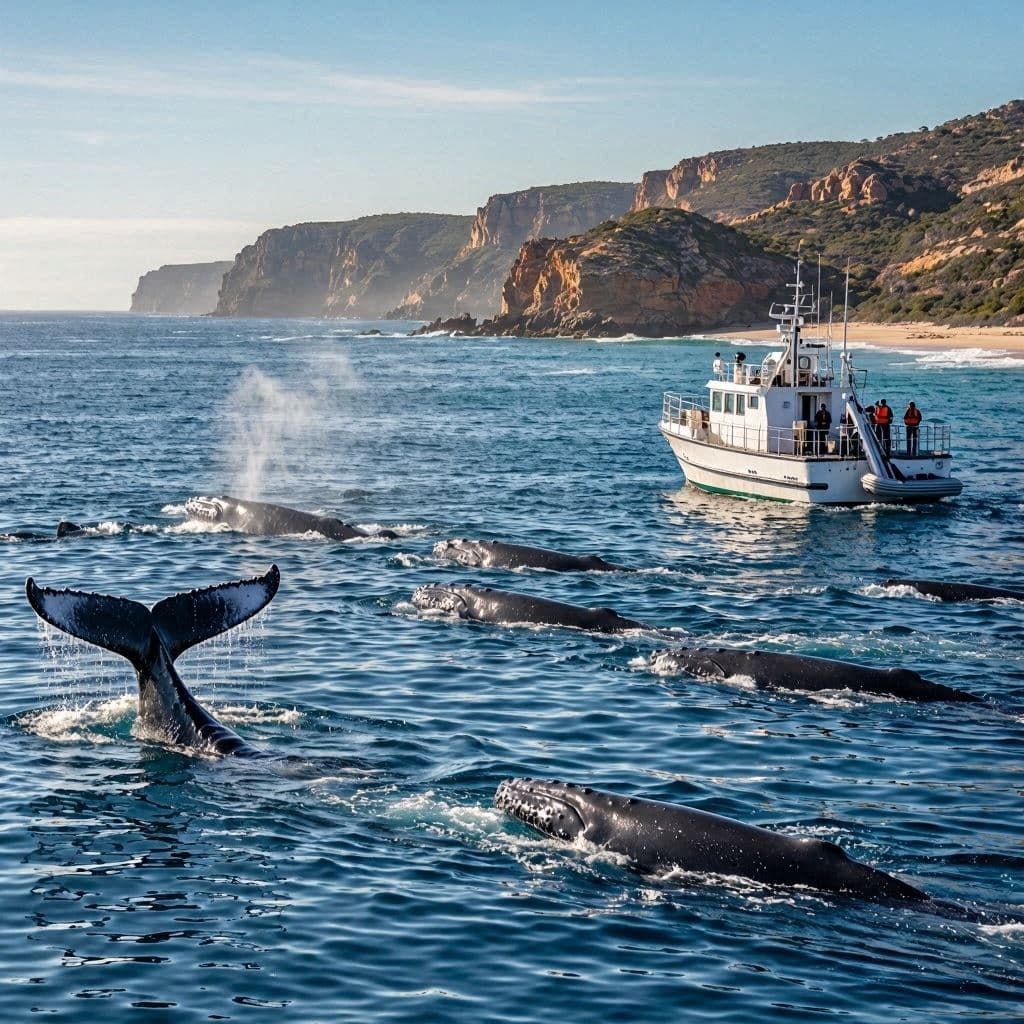
Researchers along Australia's southwest coastline are currently investigating a concerning trend: a significant decline in whale sightings during the annual migration season. This observation follows a recent whale census that recorded fewer migrating whales than in previous years, prompting marine scientists to delve deeper into the potential environmental factors at play.
The survey, conducted by a team of researchers and experienced volunteers, revealed that migrating whales were observed far less frequently than expected. While fluctuations in whale sightings are not uncommon, the magnitude of this year's decline has raised alarms among scientists, leading to a thorough examination of possible influences such as changing ocean temperatures, food availability, and shifting currents.
It is essential to note that researchers caution against jumping to conclusions regarding the health of whale populations based solely on this year's findings. Migration patterns are complex and can be influenced by a variety of factors, including weather conditions that affect the routes whales take during their lengthy journeys. As such, scientists are taking a measured approach, emphasizing the need for continued observation and data collection.
To better understand the current situation, marine biologists are comparing this year's observations with historical data collected over several decades. This long-term monitoring is vital for distinguishing between natural variations in whale populations and emerging trends that may signal a need for conservation efforts. As ocean ecosystems continue to evolve under the pressures of climate change, such data becomes increasingly valuable.
The southwest coast of Western Australia has long been recognized as a critical observation point for migrating whales. Each season, researchers and visitors flock to the coastline to witness the awe-inspiring migration that spans thousands of kilometers. Therefore, a noticeable reduction in sightings not only piques scientific interest but also captures the attention of the public.
In addition to examining the decline in sightings, scientists are investigating whether the distribution of prey has shifted farther offshore, potentially leading whales to travel beyond traditional observation areas. Advances in technology, including satellite monitoring, acoustic sensors, and aerial surveys, may provide insights into whether the whales have altered their migration routes or if there is a more concerning trend at play.
Conservation organizations emphasize the importance of ongoing monitoring before drawing any broader conclusions about whale populations. Understanding the health of these populations requires consistent scientific observation over multiple years, rather than relying on a single season's data. Researchers plan to continue their efforts throughout future migration cycles to gather more evidence.
Australia has made significant investments in whale conservation over the past few decades, resulting in the recovery of many whale populations following the cessation of commercial whaling. Thus, the current decline in sightings presents an important scientific question rather than a definitive indication of population loss.
For now, researchers remain focused on uncovering the reasons behind the unexpected census results. Their work exemplifies the careful patience that characterizes modern scientific inquiry, recognizing that protecting wildlife begins with understanding the subtle narratives that the natural world communicates.
Published by Banx Network. This article is part of the Banx decentralized media programme, powered by the BXE token on the XRP Ledger.




