At sea, history often moves quietly. Warships glide across open waters carrying sailors, orders, and sometimes the silent weight of geopolitical tension. From a distance, the ocean appears calm and indifferent, yet beneath its surface, decisions made thousands of miles away can ripple outward in unexpected ways.
In recent days, those ripples reached the waters of the Indian Ocean.
India confirmed that it allowed an Iranian warship to dock at one of its southern ports at nearly the same moment another Iranian naval vessel was destroyed by a United States submarine near Sri Lanka. The timing placed New Delhi in the delicate space between humanitarian assistance and the growing tensions surrounding the conflict involving Iran, the United States, and Israel.
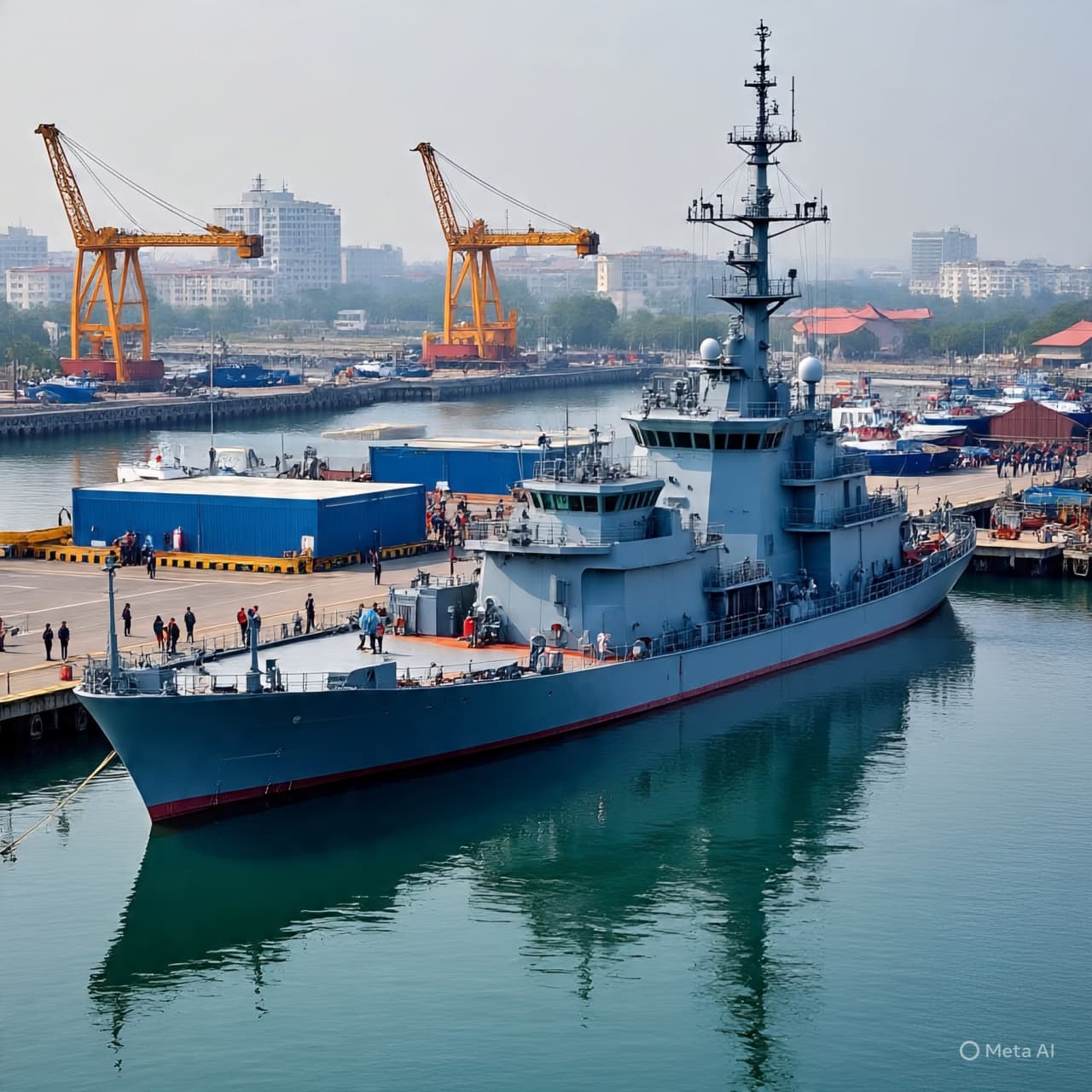
According to Indian officials, the Iranian amphibious vessel IRIS Lavan docked at the port of Kochi after Tehran made an urgent request. Authorities said the ship had developed technical issues and required assistance. The request was received on February 28, the same day hostilities involving Iran escalated, and approval was granted shortly afterward.
By the time the ship reached Kochi, the regional situation had already taken a dramatic turn.
On that same day, a U.S. submarine reportedly torpedoed the Iranian frigate IRIS Dena in waters off Sri Lanka’s southern coast. The vessel sank after the strike, leaving dozens of sailors dead and prompting rescue operations by Sri Lankan authorities. Reports indicate that at least 87 crew members were killed in the attack.
The Dena had been returning from a multinational naval exercise hosted by India when the incident occurred, adding another layer of complexity to an already sensitive situation.
India’s Foreign Minister, Subrahmanyam Jaishankar, later explained that allowing the Lavan to dock was guided by humanitarian considerations. Officials said the ship’s crew — numbering around 183 — were accommodated at naval facilities in Kochi while the vessel remained in port.
From New Delhi’s perspective, the decision was framed less as a political gesture and more as a response to a request for assistance at sea — a principle long recognized in maritime practice.
Yet the broader context surrounding the incident has drawn international attention.
The sinking of the Dena represents a rare naval engagement in modern times and signals how the conflict involving Iran and its adversaries has begun to extend beyond the Middle East into the wider maritime region. Analysts note that the Indian Ocean, often a corridor for trade and naval cooperation, now finds itself touched by the widening arc of geopolitical confrontation.
Meanwhile, Sri Lanka has also found itself unexpectedly drawn into the unfolding situation. Authorities there have assisted in rescue efforts following the sinking and have been handling surviving Iranian sailors recovered from the waters near its coast.
In addition, Sri Lankan officials have said another Iranian naval vessel in the region was being escorted toward a harbor while its crew was transferred to a naval facility near Colombo.
For India, the episode illustrates the careful balance it often tries to maintain in international affairs. As a country with longstanding relationships across multiple geopolitical camps, New Delhi frequently emphasizes neutrality and humanitarian considerations in moments of tension.
Allowing the Iranian ship to dock, officials suggested, reflected that approach.
At the same time, the episode serves as a reminder of how swiftly regional dynamics can shift. Naval exercises, diplomatic ties, and humanitarian gestures can all intersect unexpectedly when conflict expands beyond its original borders.
For the sailors aboard ships crossing the Indian Ocean, the horizon may still appear calm.
But the events of recent days suggest that even distant waters are no longer entirely removed from the currents of global conflict.
Indian officials have said the Iranian vessel remains at Kochi while authorities monitor the evolving situation. Sri Lanka continues to manage the aftermath of the sinking, and international observers are watching closely as tensions in the wider region unfold.
AI Image Disclaimer Images in this article are AI-generated illustrations, meant for concept only.
Source Check Credible mainstream / niche media covering this development:
Reuters Channel News Asia (CNA) The Guardian Hindustan Times NDTV
Published by Banx Network. This article is part of the Banx decentralized media programme, powered by the BXE token on the XRP Ledger.