
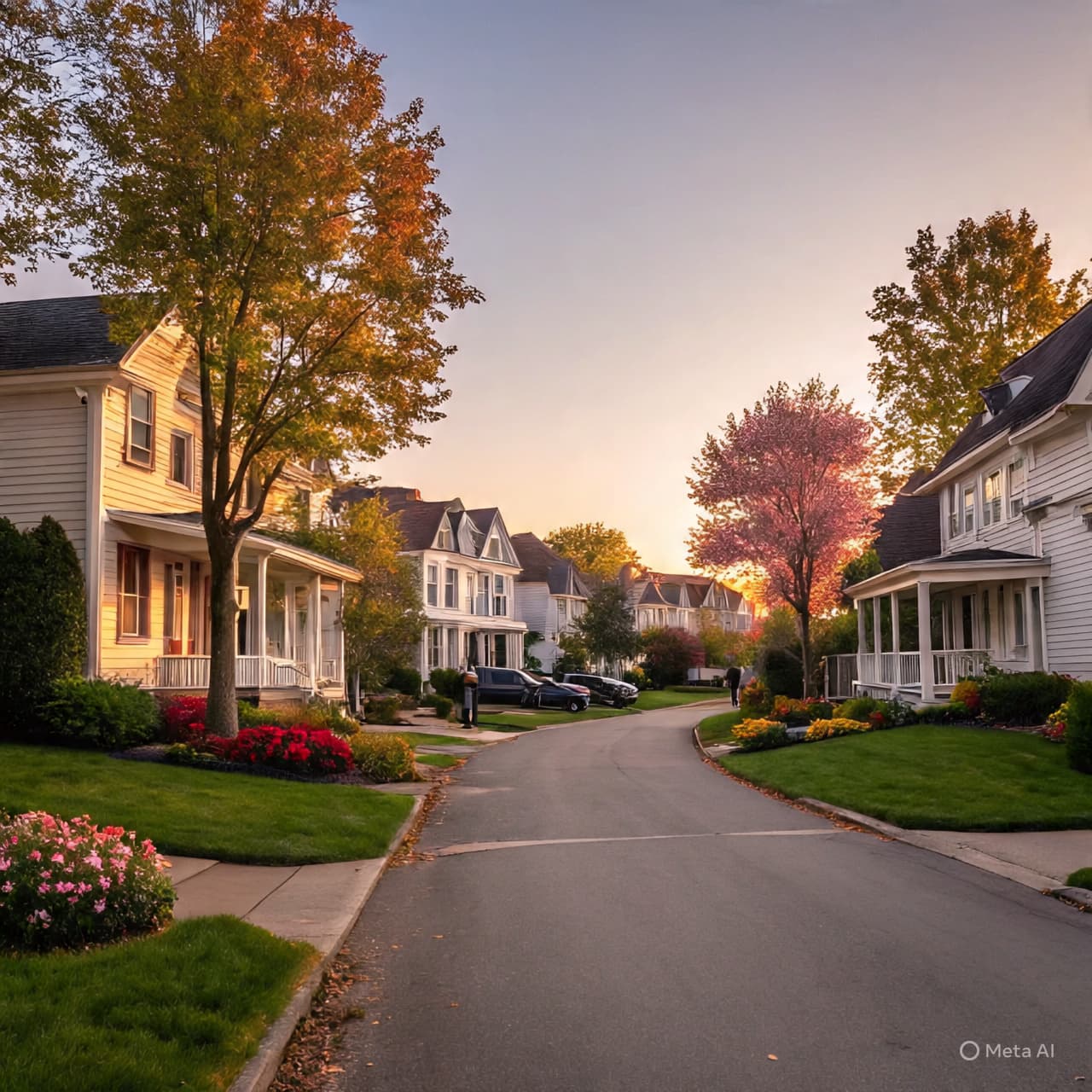
On quiet suburban streets across Canada, retirement once arrived like a well-marked season. There were gold watches, farewell cakes in office kitchens, and a sense—however fragile—that the numbers had aligned. The mortgage would be paid, the savings sufficient, the horizon open. These days, that horizon feels farther away, shimmering at a distance that seems to lengthen with each passing year.
In recent surveys, Canadians have said they believe they will need roughly $1.7 million to retire comfortably. The figure, striking in its scale, reflects more than ambition. It carries within it the weight of rising housing costs, longer life expectancies, healthcare uncertainties, and the steady erosion of purchasing power in an era shaped by inflation. Yet alongside that estimate sits a quieter admission: many doubt they will reach it.
The arithmetic of retirement has always been personal, but the broader climate has shifted. Inflation in recent years has pressed into grocery bills and utility statements. Interest rates, raised to cool overheated prices, have reshaped mortgages and borrowing costs. Investment markets, while resilient over long horizons, have delivered periods of volatility that test confidence. Against this backdrop, $1.7 million becomes less a luxury and more a psychological anchor—an attempt to quantify security in uncertain times.
Statistics Canada continues to track household net worth and savings rates, revealing a country where assets are unevenly distributed. Real estate has been a powerful engine of wealth for many homeowners, particularly in cities like Toronto and Vancouver, but it is an engine that runs differently for renters or younger Canadians entering the market at elevated prices. For some, home equity is central to retirement planning; for others, it remains out of reach.
The structure of Canada’s retirement system provides a layered foundation. The Canada Pension Plan offers income based on lifetime contributions, while Old Age Security provides a base benefit to eligible seniors. Workplace pensions, once common in certain industries, are less universal than in previous decades, increasingly replaced by defined-contribution plans that shift investment risk to individuals. Registered Retirement Savings Plans and Tax-Free Savings Accounts add flexibility, but they also require discipline and surplus income to fill.
Financial planners often suggest benchmarks—saving a percentage of annual income, aiming for a retirement nest egg that replaces 60 to 70 percent of pre-retirement earnings. Yet the $1.7 million figure, cited in surveys conducted by major financial institutions, suggests that many Canadians are adjusting those benchmarks upward, factoring in longevity that can stretch into the late eighties or nineties. A longer life, while a gift, requires deeper reserves.
At the same time, doubt lingers. Surveys indicate a significant gap between what Canadians believe they need and what they have saved. Younger generations, balancing student debt and high housing costs, express particular skepticism about reaching their goals. Even among older cohorts approaching retirement, concerns about market downturns and healthcare expenses temper optimism.
There is, however, a quieter narrative beneath the headline number. Retirement need not be a single, abrupt crossing. Many Canadians envision phased retirements—part-time work, consulting, or entrepreneurial ventures that extend income streams beyond traditional timelines. Others adjust expectations, planning simpler lifestyles, relocating to more affordable regions, or leaning on community networks rather than solely on capital.
Public policy continues to evolve around these realities. Adjustments to CPP contribution rates and benefits aim to strengthen long-term sustainability. Debates over housing supply, healthcare funding, and eldercare infrastructure intersect indirectly with retirement planning. The conversation is not only about personal savings but about the social architecture that supports aging populations.
As dusk settles on neighborhoods from Halifax to Calgary, the question of $1.7 million lingers like a distant lighthouse—visible, guiding, but perhaps not the only marker of safe harbor. Retirement, once imagined as a fixed destination, now feels more like a spectrum, shaped by markets, policy, health, and personal resilience.
The surveys may quantify aspiration and anxiety in equal measure. Canadians say they need $1.7 million. Many doubt they will arrive there. Between those two statements lies a country recalibrating its expectations, quietly rewriting what it means to step away from work and toward whatever comes next.
AI Image Disclaimer Visuals are AI-generated and serve as conceptual representations.
Sources (names only) Statistics Canada Bank of Canada Canada Pension Plan Investment Board Royal Bank of Canada Fidelity Canada
Published by Banx Network. This article is part of the Banx decentralized media programme, powered by the BXE token on the XRP Ledger.



