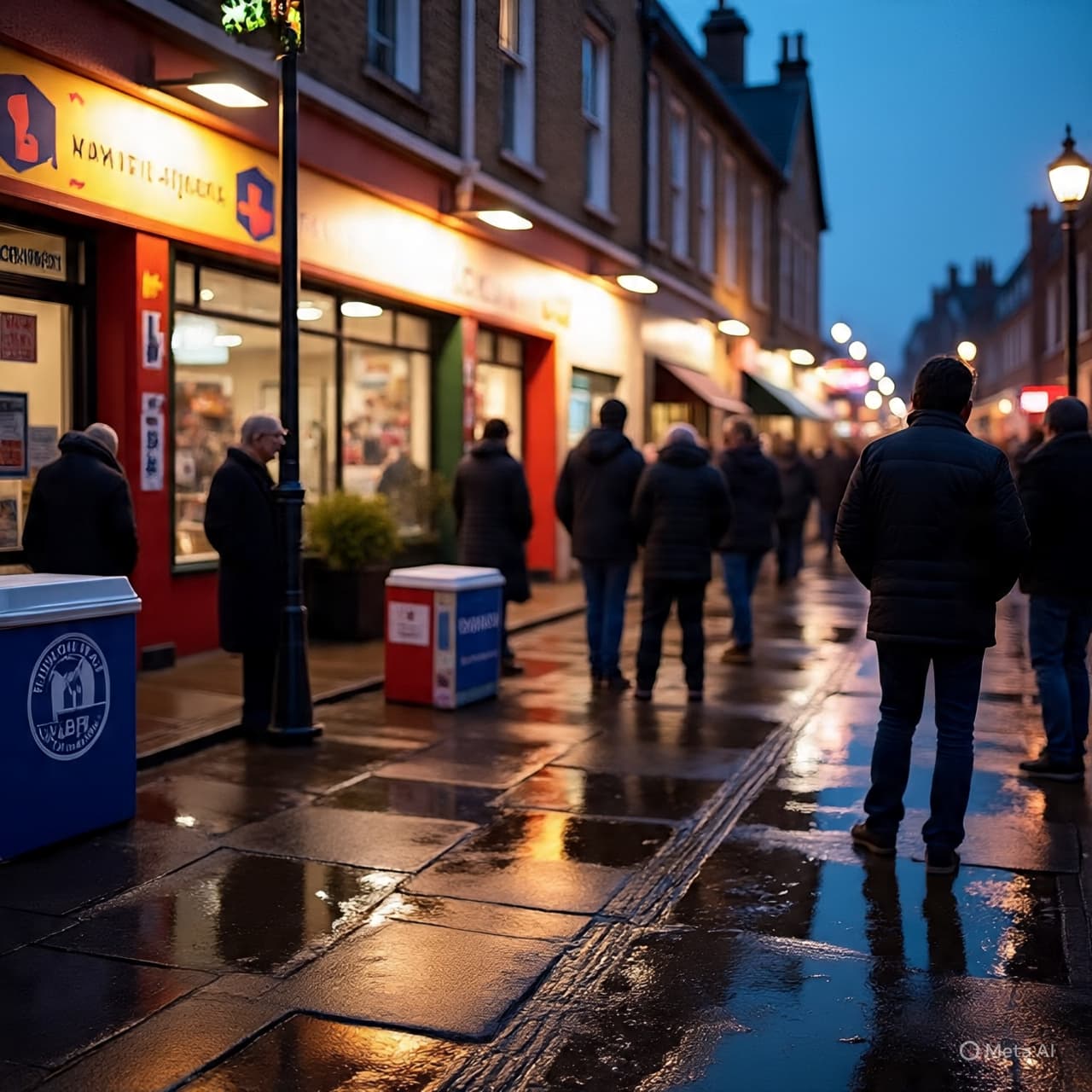
The rain over Greater Manchester had not yet decided whether to stay or leave when the ballots were counted in Gorton and Denton. Streets still carried the quiet fatigue of winter, the kind that settles into brickwork and bus stops alike. Yet inside community halls and counting rooms, something had shifted — not loudly, not theatrically, but with the steady clarity of a new season edging forward.
For decades, this constituency had rested comfortably within Labour’s embrace. Red posters, red histories, red assumptions. Generations of voters here had aligned with the party almost as instinct — a continuity woven into family conversations and factory floors. But political loyalties, like weather patterns, can change slowly before they change suddenly.
On Thursday night, the change became visible.
The Green Party secured its first-ever Westminster by-election victory, winning the Gorton and Denton seat and marking a moment that feels both local and nationally symbolic. The result overturned what had long been considered safe territory for Labour. Reform UK placed second, pushing Labour into third — a ranking few would have predicted not long ago.
The win represents more than a single parliamentary seat. It signals a recalibration within an electorate often described as foundational to Labour’s identity. Gorton and Denton, shaped by working-class history and multicultural communities, has long been associated with traditional center-left politics. Yet voters here appeared willing to look beyond established patterns.
Turnout figures reflected engaged participation, and campaign themes centered on cost-of-living pressures, local services, housing concerns, and environmental policy. The Green Party’s message, rooted in community presence and grassroots organizing, resonated in a district where day-to-day economic realities weigh heavily on households. Conversations during the campaign reportedly focused less on ideology and more on tangible local change — repairs, services, representation.
For the Greens, this marks a structural milestone. The party has previously built representation at the local government level and in the House of Commons through general elections, but never before had it captured a seat in a Westminster by-election. The symbolism of that achievement — in the north of England, in a former Labour stronghold — will likely shape strategic calculations in future contests.
For Labour, the outcome invites reflection. Political landscapes evolve, sometimes gradually, sometimes in abrupt pivots. By-elections often act as pressure gauges — revealing frustrations, signaling restlessness, testing assumptions. Whether this result represents an isolated shift or a broader realignment remains to be seen. But it undeniably disrupts the notion of permanence.
Beyond party strategy and parliamentary arithmetic lies something quieter: the expression of a constituency reconsidering its direction. In towns like Gorton and Denton, politics is rarely abstract. It is felt in bus routes, school funding, rents, grocery bills, and green spaces. Voters here were not casting ballots for spectacle; they were choosing what they felt best aligned with their present concerns.
As the count concluded and declarations were made, there was no thunderclap — just applause, conversations, and the ordinary return of night across Manchester’s rooftops. Yet within that ordinariness rests a historic footnote: a first for the Green Party at a Westminster by-election, and a reminder that even long-held political ground can shift.
In the coming weeks, party leaders across the spectrum will interpret the numbers, test narratives, and weigh implications. But for now, Gorton and Denton stands as a small constituency carrying a larger echo — proof that democratic landscapes are never entirely fixed, and that change, when it comes, often arrives quietly.
Published by Banx Network. This article is part of the Banx decentralized media programme, powered by the BXE token on the XRP Ledger.