
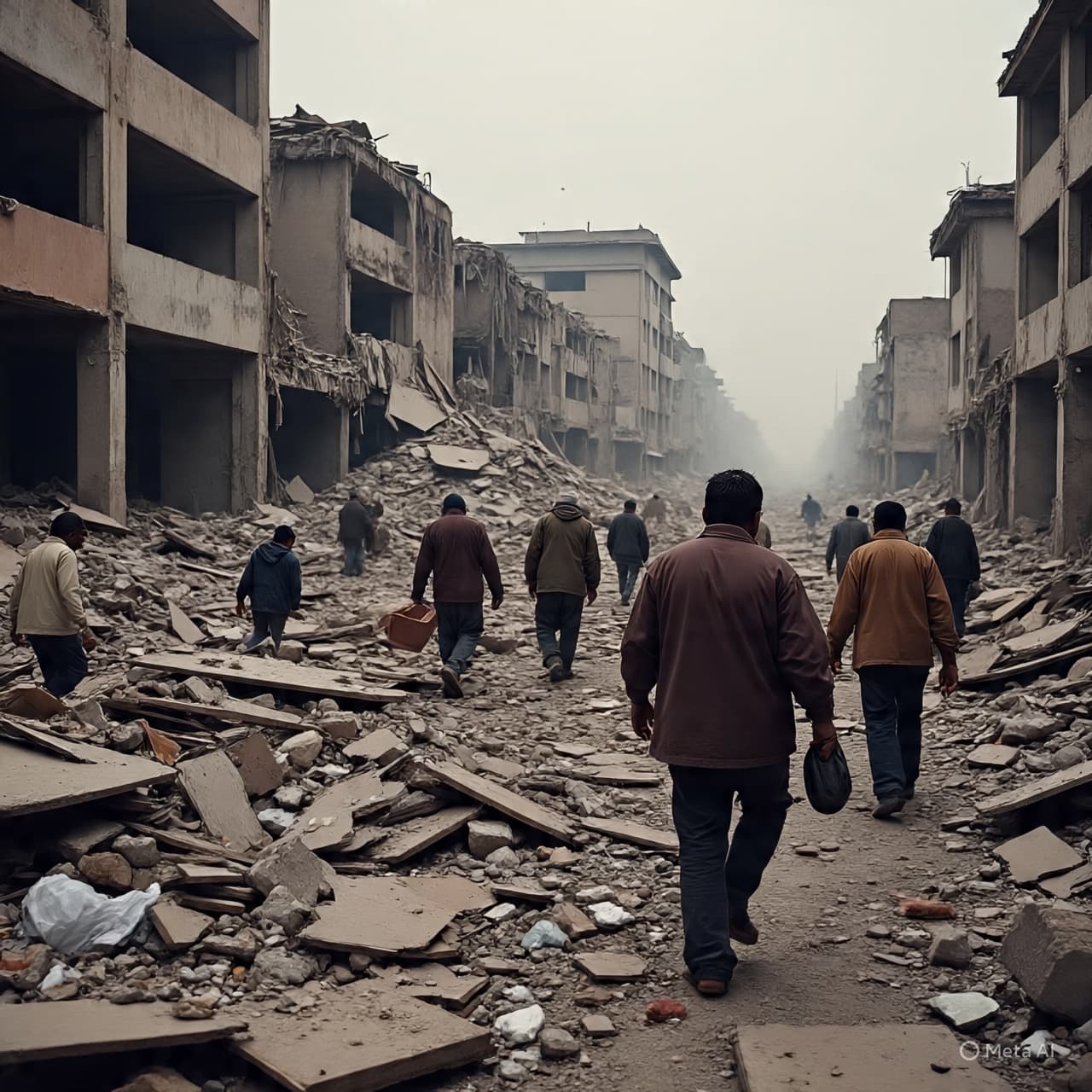
There are moments in history when the noise of events grows so loud that it begins to drown out the quieter truths beneath it. War, in its vast machinery, often speaks in the language of strategy, territory, and power. Yet somewhere between the headlines and the maps, there are lives that flicker like small candles in a widening wind—noticed briefly, then overshadowed by the next development. In the Middle East, where conflict has long traced its shifting lines, the human cost risks becoming a distant echo rather than the central story it truly is.
Across cities reduced to fragments and landscapes marked by uncertainty, the rhythm of daily life has been profoundly altered. Families who once measured time by ordinary routines now count days by moments of safety. The scale of displacement continues to grow, as communities are uprooted not just from their homes but from the continuity of their lives. It is not only buildings that collapse under the weight of conflict, but also the invisible structures of trust, stability, and belonging.
Hospitals, once places of healing, have struggled under immense strain, becoming symbols of both resilience and fragility. Schools, which carry the quiet promise of tomorrow, have seen their classrooms interrupted or erased. In these spaces, the cost of war is not abstract—it is immediate, personal, and enduring. Each statistic, often presented in neat columns, carries within it a multitude of stories that resist being simplified.
And yet, in the broader narrative, attention frequently turns toward political calculations and military developments. The language of diplomacy and defense can unintentionally create distance, as though the human experience exists on a parallel track rather than at the very heart of the matter. It is here that the imbalance quietly takes shape: the visible urgency of strategy overshadowing the less visible, but no less urgent, reality of human suffering.
There is also a lingering complexity in how the world engages with such conflicts. Images and accounts circulate rapidly, yet their abundance can lead to a certain fatigue—a soft dimming of empathy over time. What begins as a moment of global focus can gradually settle into the background, as if repetition itself lessens the weight of what is being witnessed. The risk is not indifference by intent, but rather a gradual normalization of hardship.
Still, within this landscape, there are threads of resilience that persist. Communities find ways to support one another, even when resources are scarce. Individuals continue to rebuild, however modestly, holding onto fragments of normalcy. These acts, though often understated, reflect a quiet determination that endures beyond the immediate visibility of conflict.
As the situation continues to evolve, the human dimension remains an essential part of understanding its full impact. Reports and updates provide necessary information, but they do not fully capture the depth of lived experience. Recognizing this gap may not resolve the complexities of the conflict, but it can help ensure that the human cost does not fade into abstraction.
In the end, the story of the Middle East war is not only one of geopolitics or shifting alliances. It is also a story of individuals navigating extraordinary circumstances, of lives interrupted and reshaped. As attention moves forward, the hope remains that these human realities continue to be acknowledged alongside the broader developments, offering a more complete picture of what is unfolding.
AI Image Disclaimer
Illustrations were produced with AI and serve as conceptual depictions.
Source Check (Pre-Writing) Credible coverage of the Middle East war’s human cost appears in:
Reuters
BBC News
Al Jazeera
The New York Times
The Guardian
Published by Banx Network. This article is part of the Banx decentralized media programme, powered by the BXE token on the XRP Ledger.


