
Key Highlights
- The human cost of war often gets overshadowed by political narratives.
- Daily life in conflict zones is marked by uncertainty and displacement.
- Hospitals and schools struggle under the strain of ongoing violence.
The noise of war can often drown out the quieter truths that lie beneath its surface. In the Middle East, where conflict has become a persistent backdrop, the human cost risks being reduced to mere statistics, overshadowed by the more prominent narratives of strategy and power. As headlines shift and military developments unfold, the lives of ordinary people caught in the crossfire flicker like candles in a storm—briefly illuminated before being snuffed out by the next wave of news.
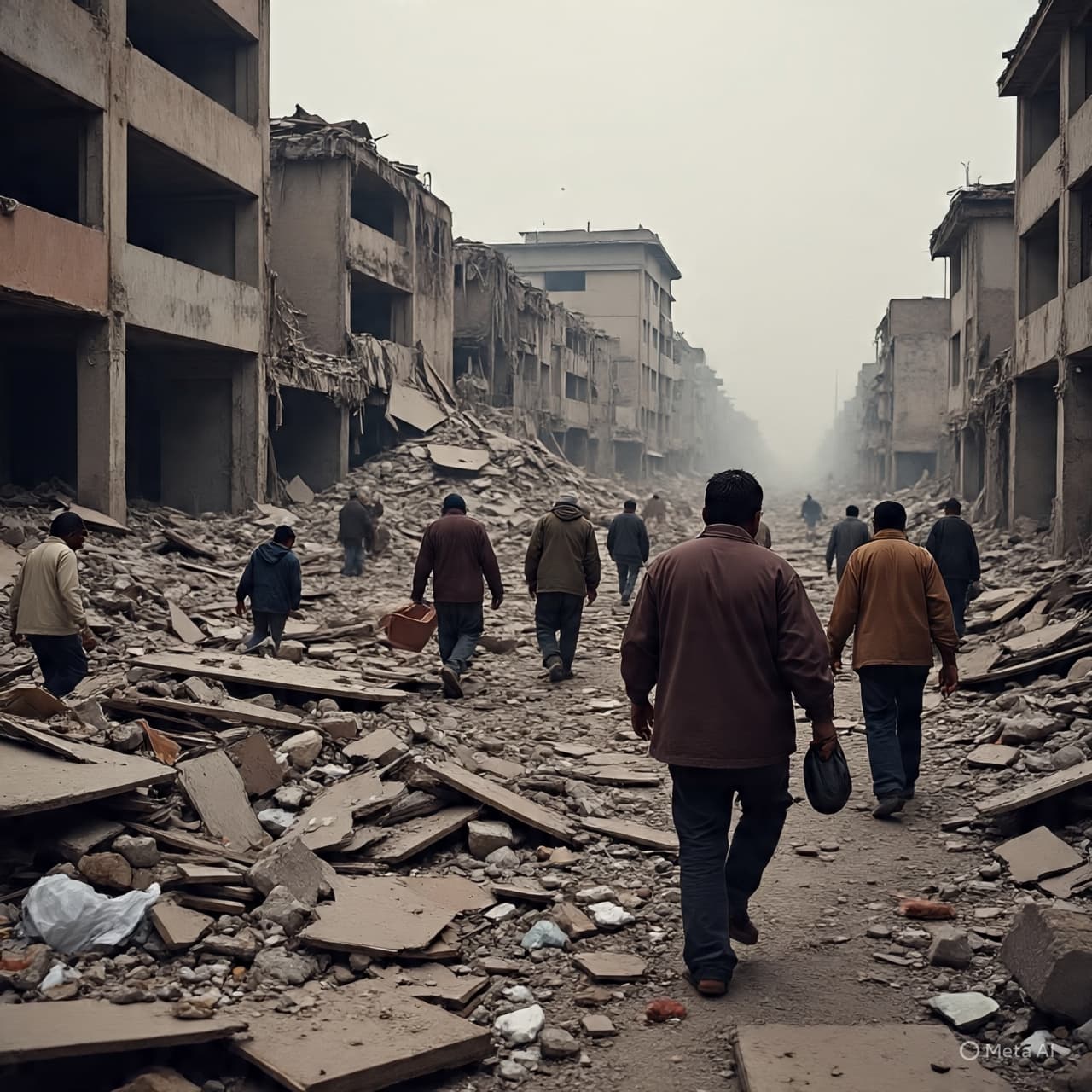
In cities that have been reduced to rubble and landscapes marked by uncertainty, the rhythm of daily life has been profoundly altered. Families who once measured time by ordinary routines now count days by moments of safety. The scale of displacement continues to grow, uprooting communities not just from their homes but from the very fabric of their lives. It is not only buildings that collapse under the weight of conflict, but also the invisible structures of trust, stability, and belonging that hold societies together.
Hospitals, once sanctuaries of healing, have become overwhelmed by the influx of casualties, symbolizing both resilience and fragility. Schools, which carry the promise of a brighter future, have seen their classrooms interrupted or entirely erased. In these spaces, the cost of war is not abstract—it is immediate, personal, and enduring. Each statistic, often presented in neat columns, carries within it a multitude of stories that resist simplification.
Yet, in the broader narrative, attention frequently shifts toward political calculations and military developments. The language of diplomacy and defense can create a distance, as though the human experience exists on a parallel track rather than at the heart of the matter. This imbalance quietly takes shape: the visible urgency of strategy overshadowing the less visible, but equally urgent, reality of human suffering.
There is also a lingering complexity in how the world engages with such conflicts. Images and accounts circulate rapidly, yet their abundance can lead to a certain fatigue—a soft dimming of empathy over time. What begins as a moment of global focus can gradually settle into the background, as if repetition itself lessens the weight of what is being witnessed. The risk is not indifference by intent, but rather a gradual normalization of hardship that can dull the collective conscience.
Still, within this landscape of despair, threads of resilience persist. Communities find ways to support one another, even when resources are scarce. Individuals continue to rebuild, however modestly, holding onto fragments of normalcy. These acts, though often understated, reflect a quiet determination that endures beyond the immediate visibility of conflict.
As the situation continues to evolve, the human dimension remains essential to understanding its full impact. Reports and updates provide necessary information, but they do not fully capture the depth of lived experience. Recognizing this gap may not resolve the complexities of the conflict, but it can help ensure that the human cost does not fade into abstraction.
Ultimately, the story of the Middle East war is not solely one of geopolitics or shifting alliances. It is also a narrative of individuals navigating extraordinary circumstances, of lives interrupted and reshaped. As attention moves forward, the hope remains that these human realities continue to be acknowledged alongside broader developments, offering a more complete picture of what is unfolding in this tumultuous region.
Published by Banx Network. This article is part of the Banx decentralized media programme, powered by the BXE token on the XRP Ledger.



