

Key Highlights
- Recent military actions have escalated tensions in the Middle East.
- Tehran, Beirut, and Tel Aviv are experiencing heightened conflict-related activities.
- International calls for restraint are growing amid fears of escalation.
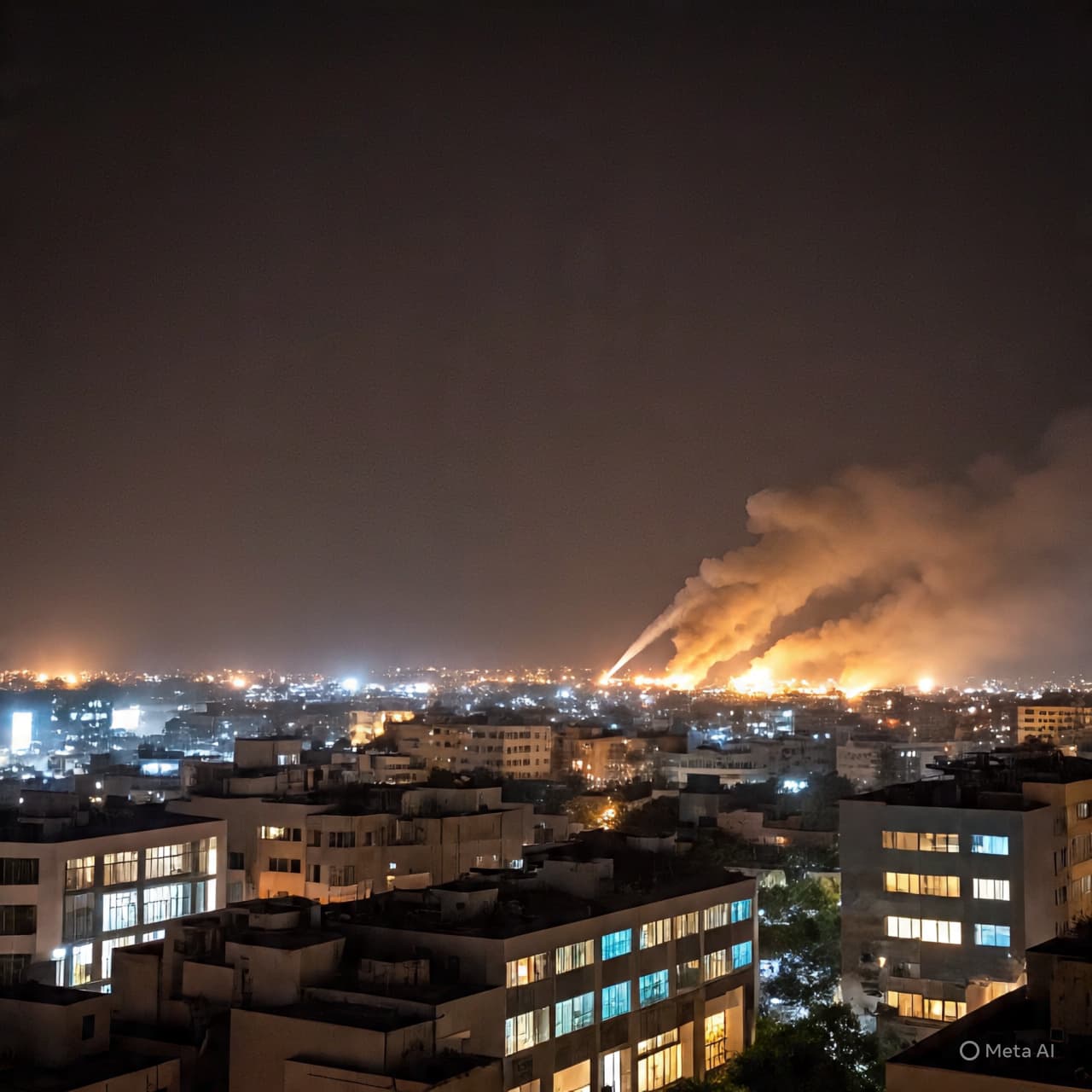
In recent days, the night skies over Tehran, Beirut, and Tel Aviv have been punctuated by the sounds of conflict, as military actions intensify across the Middle East. The echoes of explosions and missile alerts have disrupted the rhythm of daily life, reminding residents of the fragile peace that often hangs by a thread in this volatile region.
Reports indicate that Tehran has been the site of significant military activity, with Iranian authorities confirming explosions linked to aerial strikes targeting military infrastructure. While details remain sparse, these developments are widely interpreted as part of a broader confrontation involving Israel and Iranian-aligned forces, which have been engaged in a shadow war for years.
To the west, Beirut has also found itself in the crosshairs of renewed military tension. Israeli strikes have reportedly targeted positions associated with Hezbollah, the Iran-backed group that has long posed a security challenge for Israel. For many residents, the sounds of aircraft and distant blasts evoke memories of past conflicts, stirring fears that history may be repeating itself.
Meanwhile, Tel Aviv has not been spared from the turmoil. The city has experienced missile alerts and defensive responses as Israeli defense systems work to intercept perceived threats linked to Iranian forces. The familiar sound of sirens has once again become a stark reminder of the precarious balance between everyday life and the looming specter of conflict.
Analysts note that these exchanges reflect a long-standing rivalry that often manifests in dramatic and visible ways. The ongoing confrontation between Israel and Iran encompasses a range of tactics, including cyber operations, covert actions, and proxy warfare. However, the current escalation has brought the conflict into sharper focus, raising concerns about the potential for wider regional implications.
As diplomatic voices from the international community call for restraint, the risks of escalation loom large. Each military action carries the potential to widen the conflict, drawing in additional countries and alliances. The situation remains fluid, with the possibility of further developments in the coming days.
For the people living in these cities, the experience of conflict is often less about geopolitics and more about the day-to-day struggle to maintain normalcy. Despite the chaos, shops remain open, public transport continues to operate, and life persists, albeit under the shadow of uncertainty. The distant rumble of military activity serves as a constant reminder of how quickly the atmosphere can shift from calm to chaos.
As the world watches, the region stands at a critical juncture. The echoes of conflict have not yet faded, and the direction of future developments remains uncertain. In the days ahead, attention will likely remain focused on Tehran, Beirut, and Tel Aviv, as observers seek to gauge the scale of military actions and the potential for diplomatic solutions to avert a deeper crisis.
Published by Banx Network. This article is part of the Banx decentralized media programme, powered by the BXE token on the XRP Ledger.




