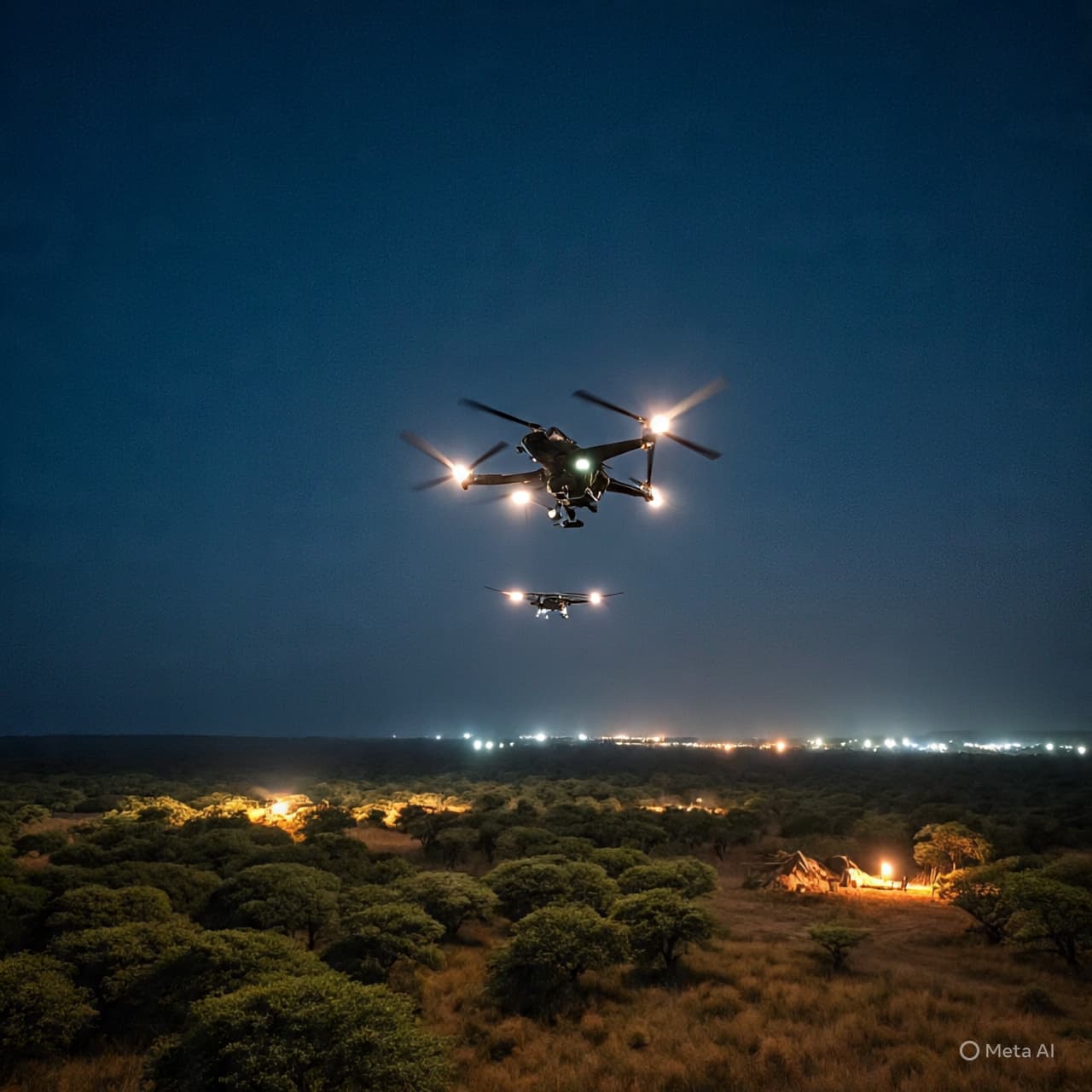
In the stillness after Christmas, when many around the world were lighting candles and offering prayers, the distant skies over north-west Nigeria glowed with a very different light. In the hush of the Gulf of Guinea night, precision-guided munitions streaked toward forested terrain, a stark reminder that conflicts often resume when the world’s attention wanders. The echoes of these strikes lie not just in the rumble overhead but in the tangled currents of local violence and global policy that brought them there. It was in this quiet swirl of motives and memories that the question emerged: why is ISIS again drawing the watchful eyes of Washington toward Nigeria?
For years, Nigeria has lived with layers of unrest. Armed groups have carved out pockets of control in its vast countryside, from the arid stretches of the Sahel to the scrublands of Sokoto state. Among these factions are affiliates of the Islamic State, including the so-called Lakurawa group and elements linked to the Islamic State Sahel Province, whose presence alongside others like Boko Haram has complicated an already volatile security picture.
In late December 2025, the United States carried out airstrikes against suspected Islamic State militants in northwest Nigeria, saying the action followed attacks that President Donald Trump described as targeting Christians. American and Nigerian officials framed the operation as a counterterrorism measure coordinated between the two nations. Nigerian authorities emphasized respect for their sovereignty and highlighted the shared goal of disrupting extremist threats that transcend borders and beliefs.
Yet beneath this official narrative lies a more layered reality. Analysts note that violence in Nigeria is not neatly partitioned by religion, and communities of all faiths have suffered in years of insurgency, banditry, and clashes over land and resources. In this complex landscape, groups with ties to global jihadist movements often exploit socio-economic grievances and local disputes, enabling them to embed themselves deeper into the fabric of insecurity across the region.
The renewed focus on ISIS in Nigeria also reflects broader concerns about the shifting geography of extremist activity. As fighters and operatives have migrated south from the Sahel, areas once considered relatively stable have witnessed an uptick in raids and ambushes, drawing attention from international partners wary of destabilization.
For the United States, the operation underscores a continued commitment to combating transnational extremist networks that have eluded complete defeat in other theatres. Officials have described the strikes as part of a broader posture to counter Islamic State affiliates wherever they emerge, affirming that these groups have not been vanquished despite setbacks elsewhere.
Back in Nigeria, the government welcomed international support while underscoring the need to safeguard civilian lives and maintain national agency over its defence strategies. Calls from some Nigerian leaders for expanded operations against entrenched insurgent strongholds in the north-east further illustrate the evolving dialogue between domestic priorities and international cooperation.
As dawn breaks over the winding banks of the Sokoto river, the impact of these strikes will continue to unfold in quiet villages, bustling cities, and in corridors far from Nigeria’s landscapes. And while headlines may focus on geopolitical strategy, the deeper story remains tied to the daily struggle of communities seeking peace amidst enduring uncertainty.
AI Image Disclaimer (Rotated Wording) “Visuals are created with AI tools and are not real photographs.”
Sources Used Axios Reuters PBS NewsHour The Guardian CBS News AP News
Published by Banx Network. This article is part of the Banx decentralized media programme, powered by the BXE token on the XRP Ledger.