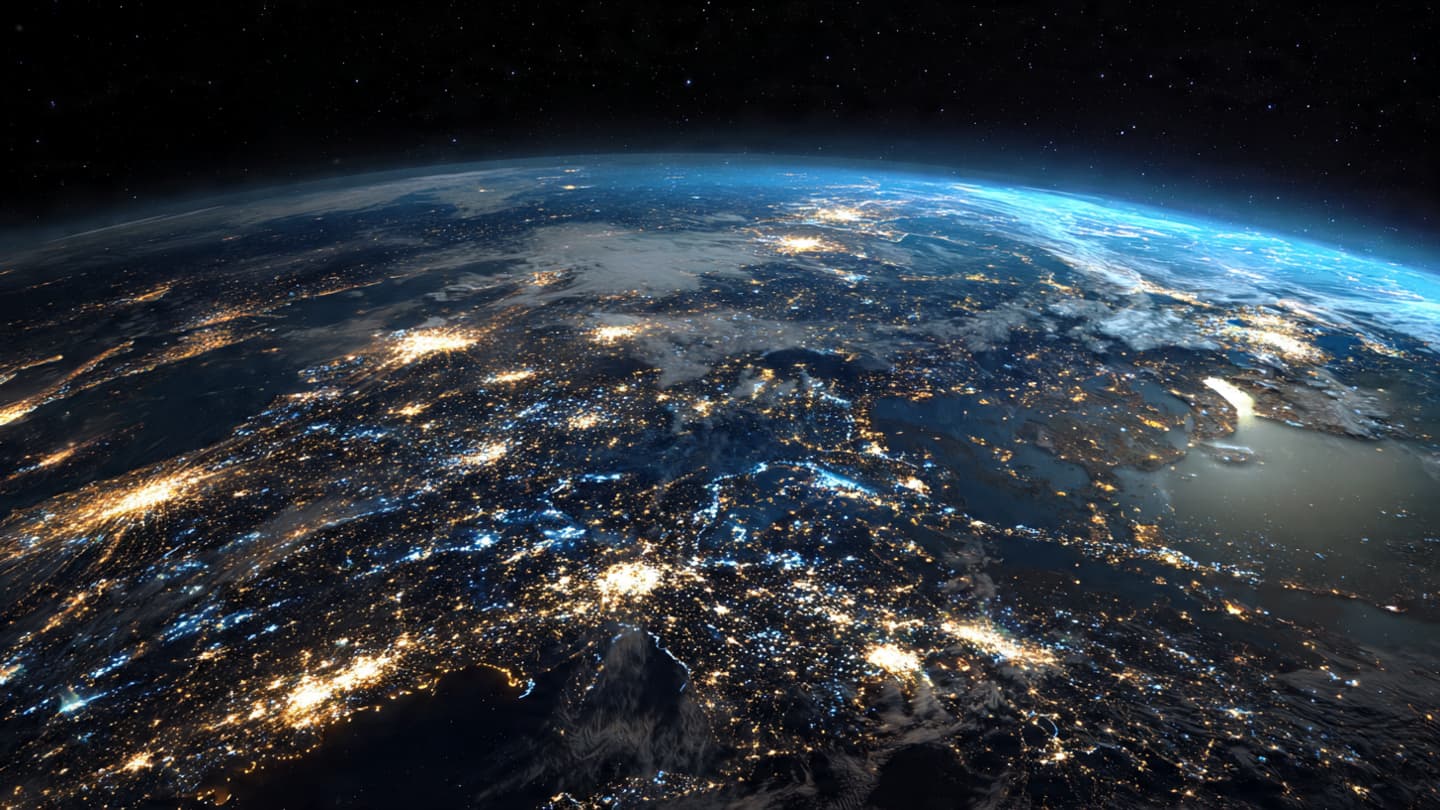
From space, Earth presents itself as a living mosaic of light and shadow, where patterns shift with human activity and natural change. Over time, these patterns reveal subtle stories about how the planet is used, inhabited, and illuminated.
NASA imagery has shown that Earth’s overall brightness at night is increasing, with certain regions becoming notably more luminous. The findings are based on long-term satellite observations that track artificial lighting across the globe.
The increase in brightness is largely attributed to expanding urban areas and growing infrastructure. As cities develop, lighting networks extend outward, altering the visual landscape seen from orbit.
Researchers use this data to study patterns of human activity, including population distribution and economic development. Nighttime light can serve as an indirect indicator of growth and change.
However, increased brightness also raises concerns about light pollution. Excessive artificial lighting can affect ecosystems, disrupt wildlife behavior, and influence human health.
The imagery highlights regional variations, with some areas showing significant growth in illumination while others remain relatively stable. These differences reflect varying rates of development and policy approaches.
Efforts to manage light pollution include improved lighting design and regulations aimed at reducing unnecessary illumination. Such measures seek to balance visibility and environmental impact.
The growing glow of Earth is therefore both a sign of progress and a subject of ongoing study, reflecting the complex relationship between development and sustainability.
As observations continue, the changing brightness of the planet offers a unique perspective on how human presence shapes the night.
AI Image Disclaimer: The images used are AI-generated visual interpretations inspired by satellite observations.
Sources: NASA, Nature, Reuters, BBC
Published by Banx Network. This article is part of the Banx decentralized media programme, powered by the BXE token on the XRP Ledger.