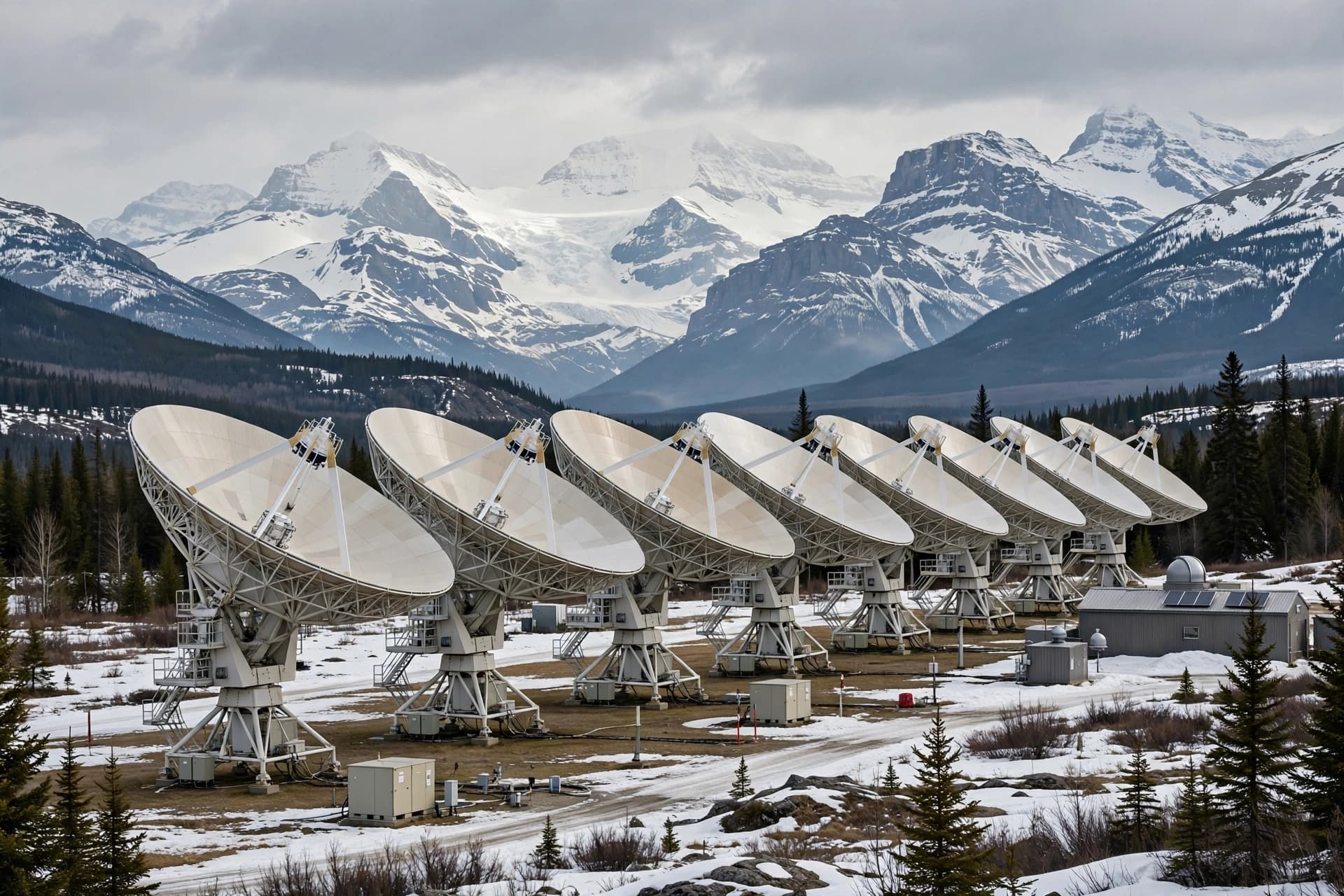
In the foothills of the Rocky Mountains, where sky and land often seem to hold long conversations, a quiet institution has spent decades listening. It has listened to clouds as they gather, to winds as they shift, to the slow and restless language of a warming planet. Now, that listening post itself faces disruption, as the Trump administration moves to dismantle one of the nation’s premier weather and climate research centers.
The National Center for Atmospheric Research, based in Boulder, Colorado, has long served as a shared compass for scientists, forecasters, and policymakers. Funded by the National Science Foundation, it houses advanced climate models, supercomputing power, and research teams whose work underpins daily weather forecasts and long-term climate projections. Under the administration’s plan, the center would be broken apart, with some functions reassigned to other agencies or locations and others potentially eliminated.
Administration officials describe the move as a restructuring rather than a shutdown. They argue that certain research efforts have drifted beyond the center’s original mission and that redistributing responsibilities could restore focus and efficiency. In public statements, officials have framed the decision as part of a broader effort to reassess federal research priorities.
For scientists who work at or alongside the center, the announcement landed less like a reorganization and more like a fracture. NCAR’s strength, they say, lies not only in its individual programs but in their proximity — meteorologists, climate modelers, chemists, and computer scientists sharing data, ideas, and tools under one roof. Separating those pieces risks slowing the exchange that allows forecasts to improve and warnings to arrive sooner.
The implications extend beyond academic debate. NCAR’s research feeds directly into hurricane tracking, wildfire modeling, drought outlooks, and flood prediction. Emergency managers, farmers, airlines, and energy companies rely on the accuracy sharpened by its work. Critics of the plan worry that dispersing the center’s capabilities could weaken the nation’s ability to anticipate extreme weather at a time when such events are growing more frequent and costly.
Lawmakers from Colorado and beyond have raised concerns, urging the administration to reconsider. Some note that NCAR has historically enjoyed bipartisan support, valued less for ideology than for its practical contributions to public safety and economic planning. Others warn that the move could diminish U.S. leadership in atmospheric science, ceding ground to international competitors.
The administration has not yet released a detailed timeline or full blueprint for how the breakup would unfold. Questions remain about staffing, funding continuity, and whether relocated programs would retain the same level of collaboration and independence. For now, uncertainty hangs over the campus, settling into offices where research once moved with steady patience.
As the debate continues, the center’s work goes on — forecasts are run, data streams in, storms are studied as they form far from shore. Whether this listening post will continue to operate as a unified voice, or as scattered echoes across agencies, remains unresolved. What is clear is that the decision marks a significant shift in how the United States approaches the science of understanding its skies.
AI IMAGE DISCLAIMER Visuals are created with AI tools and are not real photographs.
Verified media sources (names only):
Associated Press The Washington Post Los Angeles Times ABC News The Colorado Sun
Published by Banx Network. This article is part of the Banx decentralized media programme, powered by the BXE token on the XRP Ledger.