The sea has always carried the quiet weight of the world’s commerce. Across the narrow waters of the Persian Gulf, tankers drift like patient giants, carrying the lifeblood of modern economies from shore to shore. For decades, the Strait of Hormuz has functioned as a fragile artery of global trade, where geography itself seems to whisper that stability matters. Yet in moments of tension, even calm waters can begin to feel uncertain.
In recent days, the horizon around the strait has grown more crowded—not only with ships, but with words. U.S. President Donald Trump has called on other nations to help secure the waterway, urging countries that rely heavily on Gulf oil shipments to send naval forces and assist in keeping the passage open. The request reflects rising concern that disruptions around the strait could ripple far beyond the region, touching energy markets and shipping routes across the globe.
The urgency stems from escalating tensions with Iran. Tehran has been accused of actions that threaten maritime traffic in the strait, including the possible use of mines, drones, and missile capabilities that could obstruct ships moving through the narrow channel. The passage normally carries roughly one-fifth of the world’s oil supply, making any disruption not merely a regional concern but a global one.
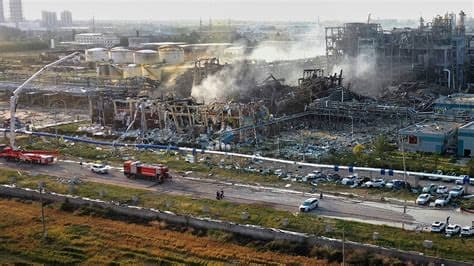
At the center of the recent military narrative lies Kharg Island, an island long regarded as the heart of Iran’s oil export infrastructure. U.S. forces carried out a major strike there earlier in March, targeting military facilities linked to maritime threats and the disruption of shipping lanes. American officials said the operation focused on military infrastructure rather than energy facilities, though the symbolic significance of the location was unmistakable.
Following the operation, Trump signaled that additional strikes on the island could remain an option if tensions continue. In interviews and public remarks, he suggested that further action might be considered should Iran persist in blocking or threatening traffic through the strait. The language, direct and sometimes blunt, reflected the administration’s effort to pressure Tehran while also urging international partners to share responsibility for securing the waterway.
Yet the response from other countries has been cautious. Some governments have expressed concern about the risks of further escalation in the region. Others have emphasized diplomacy or de-escalation, signaling hesitation about committing naval forces to what could become a wider confrontation. The delicate balance reflects a familiar tension in international security: protecting critical trade routes while avoiding a spiral that might deepen the conflict.
Meanwhile, markets have been watching closely. Energy traders reacted quickly to the unfolding situation, with oil prices rising as fears grew that shipping through the strait could be disrupted. Even the possibility of prolonged instability in the Gulf is enough to stir uncertainty, reminding the world how closely economic stability is tied to the quiet passage of ships through narrow waters.
For now, the Strait of Hormuz remains both a channel and a symbol. It is a place where geography compresses global interests into a thin ribbon of sea, and where every movement—military, diplomatic, or rhetorical—can echo far beyond the Gulf. The coming days may determine whether those waters return to routine or continue to reflect the uneasy tides of geopolitics.
AI Image Disclaimer Illustrations were produced with AI and serve as conceptual depictions rather than real photographs.
Source Check Credible sources detected:
Reuters PBS NewsHour / Associated Press The Guardian Bloomberg Al Jazeera
Published by Banx Network. This article is part of the Banx decentralized media programme, powered by the BXE token on the XRP Ledger.