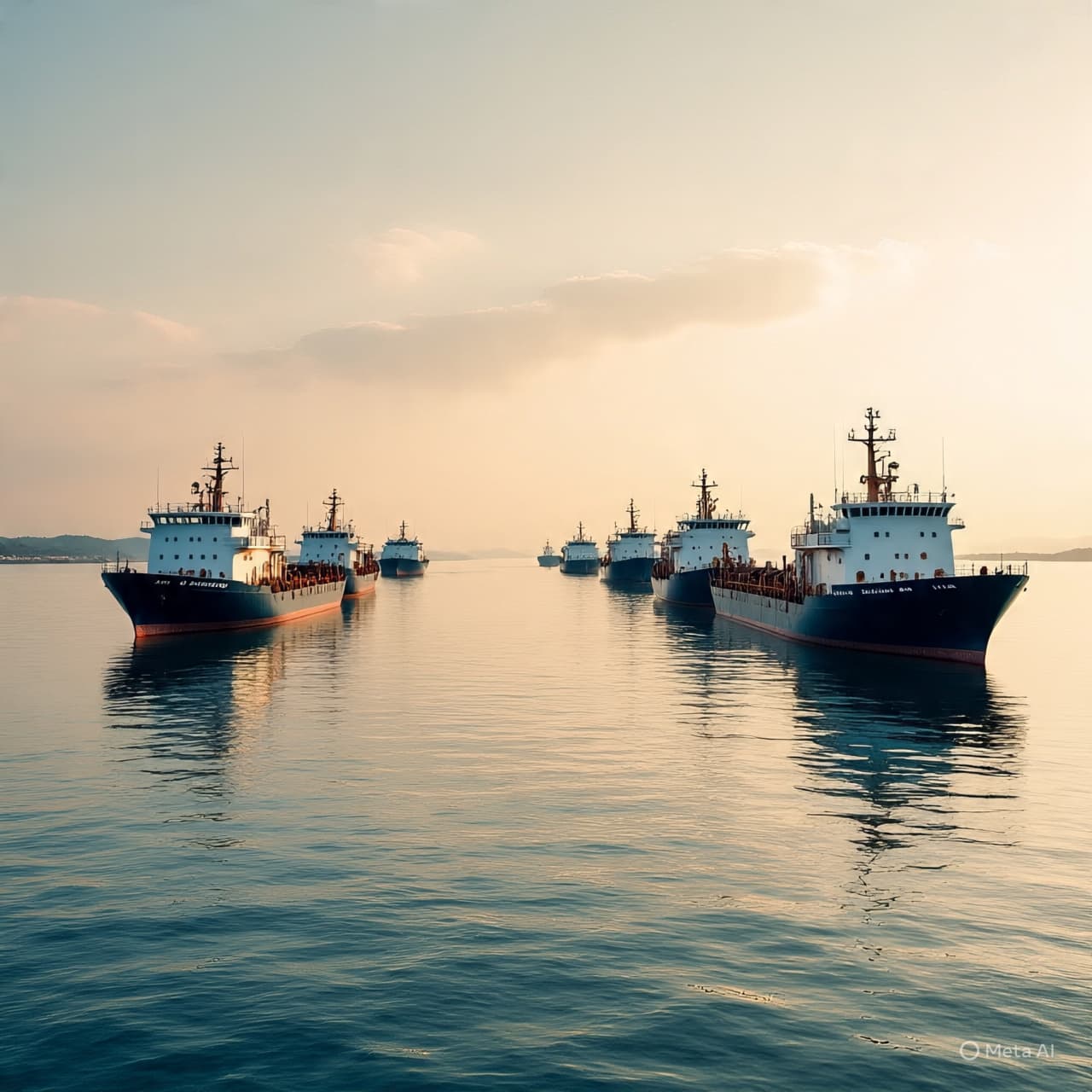
The sea has always carried more than ships. It carries intention, suspicion, and sometimes the quiet weight of power. In the narrow stretch of water known as the Strait of Hormuz, where currents weave between coastlines like threads through a needle, the world’s energy and uncertainty move side by side. Here, every vessel is not only a traveler but a question.
Recent signals from Iran suggest that the waters may not be entirely closed, but neither are they fully open. The country has indicated that “non-hostile vessels” may pass through the strait, provided they align with certain expectations and avoid entanglement in actions perceived as adversarial. This phrasing, at once permissive and conditional, turns a global shipping lane into something more delicate—a passage shaped not only by geography, but by interpretation.
The Strait of Hormuz is no ordinary corridor. Roughly one-fifth of the world’s oil supply flows through this narrow channel, making it less a regional waterway and more a global artery. In recent weeks, tensions have strained this artery. Reports of halted vessels, targeted ships, and heightened military oversight have turned routine transit into calculated risk.
Iran’s position appears to draw a line not across the water, but through identity. Ships associated with countries considered hostile—particularly those linked to ongoing conflict—may find themselves excluded from what international law would traditionally consider open passage. At the same time, vessels deemed neutral or compliant may continue their journey, though often under coordination with Iranian authorities.
This evolving approach has introduced a new rhythm to maritime movement. Instead of a steady flow, traffic slows, pauses, and reroutes. Insurance concerns rise, shipping companies hesitate, and global markets begin to listen more closely to each development. Even when a path exists, uncertainty travels alongside it.
Beyond the immediate logistics, there is a broader narrative unfolding. The idea of “non-hostility” is not easily measured on open water. It invites interpretation, negotiation, and sometimes disagreement. In such a space, the strait becomes more than a route—it becomes a reflection of shifting alliances and fragile boundaries.
Yet, despite the tension, there remains an indication—however measured—that passage is still possible. The waters have not fully closed; they have instead become selective, shaped by the currents of geopolitics as much as by tides.
As developments continue, the Strait of Hormuz stands in a quiet balance between openness and restriction, where each passing ship carries not just cargo, but the weight of a question still being answered.
AI Image Disclaimer Visuals are created with AI tools and are not real photographs.
Sources Reuters Al Jazeera BBC News The New York Times Bloomberg
Published by Banx Network. This article is part of the Banx decentralized media programme, powered by the BXE token on the XRP Ledger.