
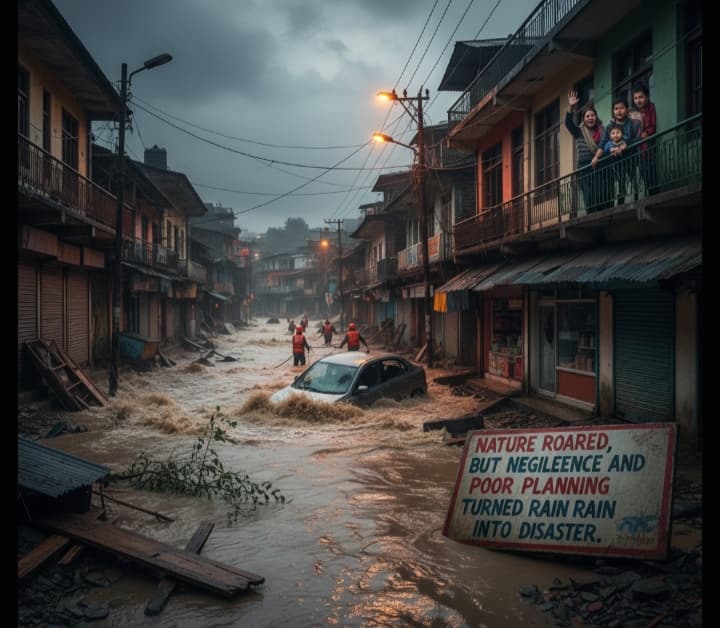
Key Highlights
- Uttarakhand's flash floods have caused significant destruction, with at least three people feared trapped.
- The floods are attributed to a combination of natural and human factors, including climate change and poor infrastructure.
- Experts call for urgent reforms in building codes and disaster preparedness to prevent future tragedies.
The Himalayan state of Uttarakhand, in northern India, woke up to chaos this week. Nestled along the Himalayas and bordered by Tibet (China) and Nepal, the state is known for its sacred rivers, temples, and fragile mountain towns. However, this week, streets transformed into rivers, markets were submerged in mud and debris, and at least three individuals are feared trapped beneath collapsed structures. This tragic event, while shocking, is not entirely unexpected; it underscores a deeper issue of negligence and lack of preparedness.
Flash floods in the Himalayas are not freak accidents. They are the predictable outcome of three converging forces: a fragile landscape constantly battered by intense monsoons, unchecked construction on riverbanks and floodplains, and climate change, which increases the likelihood of heavier cloudbursts and unpredictable rainfall. This disaster is a result of both natural forces and human negligence, highlighting the urgent need for systemic change.
Infrastructure in Uttarakhand is not merely a collection of buildings and roads; it represents the lifeblood of communities. A shop in Dehradun, the state capital, or a bridge in Chamoli is not just infrastructure; it embodies someone's life savings and their only means of accessing essential services like schools and hospitals. When these structures fail, families lose not just property but also their security, stability, and dignity. Rescue teams are working tirelessly, but they often find themselves racing against the disaster rather than being prepared for it.
In the aftermath of such disasters, governments typically promise relief packages and expedited operations. However, the focus must shift to prevention. Why are building codes still inadequate in flood-prone areas? Why are markets permitted to develop right next to rivers? Why do early warning systems fail to reach those who need them most? The answers exist, but the political will to act remains elusive.
Uttarakhand does not require sympathy; it demands foresight. Implementing stronger planning, stricter zoning laws, climate-resilient infrastructure, and community-based disaster drills are not luxuries—they are essential survival tools. If proactive measures are not taken now, every monsoon season will continue to produce the same grim headlines: lives lost, businesses destroyed, and lessons unlearned.
Disasters reveal uncomfortable truths. While nature may initiate the flood, it is our choices that determine how many lives are affected. The time for action is now, before the next storm arrives and the cycle of devastation repeats itself.
Published by Banx Network. This article is part of the Banx decentralized media programme, powered by the BXE token on the XRP Ledger.



