
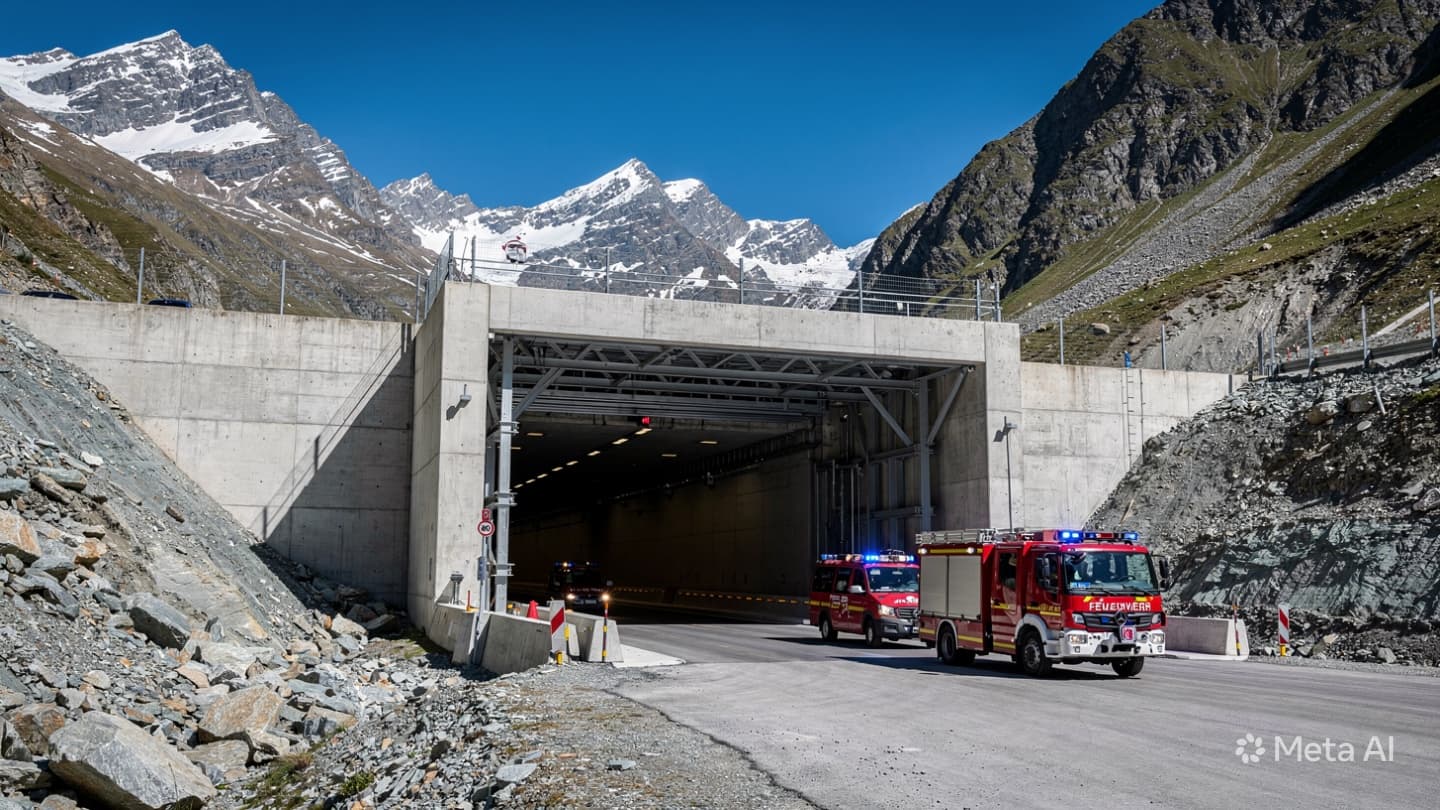
The interior of an Alpine tunnel project is a world of mechanical precision, operating deep within the ancient stone of the mountain. Here, far beneath the snow-covered peaks and green valleys of Austria, massive drilling rigs and structural shields shape a new path for transit. The environment is defined by the steady rumble of ventilation fans, the wet gleam of reinforced concrete, and the bright glare of utility floodlights. Specialized crews move through these subterranean corridors with a confidence built on modern engineering and strict safety protocols, navigating the deep spaces of the earth.
On this cool alpine morning, a veteran drilling crew was working at the active face of the deep excavation, advancing the pilot shaft through a complex geological zone. The heavy machinery was performing within its normal parameters, cutting steadily into the rock matrix to prepare for the installation of steel support arches. The air held the familiar scent of pulverized stone, hydraulic fluid, and damp earth, the rhythm of the shift proceeding exactly as planned. There was little indication that the immense pressure of the overlying mountain was about to find a weak point in the natural stone.
Without warning, a sudden shifts in the surrounding rock strata caused a catastrophic cave-in at the forward section of the drilling zone. A massive section of the tunnel roof collapsed under the immense weight, releasing hundreds of tons of granite and earth into the active workspace. The sound of the structural failure was a deep, low thud that vibrated through the entire mountain, instantly severing the main power and communication cables. In a matter of seconds, the illuminated engineering site was transformed into a dark, completely isolated chamber filled with displaced rock.
The immediate reaction at the surface terminal was a state of urgent alarm as the digital telemetry from the drilling face abruptly went dark. Mine rescue teams and technical experts rushed into the tunnel portal, their specialized utility vehicles descending into the smoky corridor. The air inside the shaft was thick with dust, reducing visibility to a few feet and making breathing difficult without breathing apparatus. As the rescue crews reached the edge of the collapse, they were confronted by a wall of unstable rock that blocked all access to the drilling rig.
A sophisticated rescue operation was organized within the hour, bringing specialized shoring equipment and seismic listening devices deep into the mountain. Rescuers worked in continuous shifts to stabilize the remaining tunnel roof, ensuring that further rockfalls would not endanger the recovery effort. The physical conditions were intense, with the constant threat of shifting stone requiring extreme caution with every piece of debris removed. The collective determination of the rescue teams was balanced by a sobering understanding of the immense force that had been unleashed.
As night fell over the mountain valley above, the staging area outside the tunnel portal remained brightly illuminated by emergency floodlights. The quiet alpine village nearby took on a somber tone as news of the subterranean accident spread through the close-knit community. Family members and fellow workers gathered in the briefing rooms, their silent vigil reflecting the heavy anxiety that hung over the entire engineering project. The contrast between the serene alpine landscape and the active crisis deep within the rock was profound.
Geological engineers and state mining inspectors began analyzing the structural data from the excavation logs to determine the cause of the sudden instability. They looked into the composition of the rock layer and whether undetected water pockets had contributed to the failure of the ceiling. The subsequent inquiry would review the subterranean structural support designs used throughout the regional transit project. Yet, for the recovery teams working in the dark, the technical assessments were secondary to the slow, heavy work of clearing the shaft.
By the early morning hours, the rescue teams completed the difficult task of reaching the central workspace, where they recovered the bodies of the drilling crew. The tunnel sat silent, its heavy machinery idle under the glare of temporary utility lights as the site was secured for forensic investigators. The construction project would eventually resume after extensive safety modifications and structural reinforcements were completed. However, the empty shaft within the granite would always carry a solemn memory, marked by the day the mountain closed its gates.
Note: This article was published on BanxChange.com and is powered by the BXE Token on the XRP Ledger. For the latest articles and news, please visit BanxChange.com