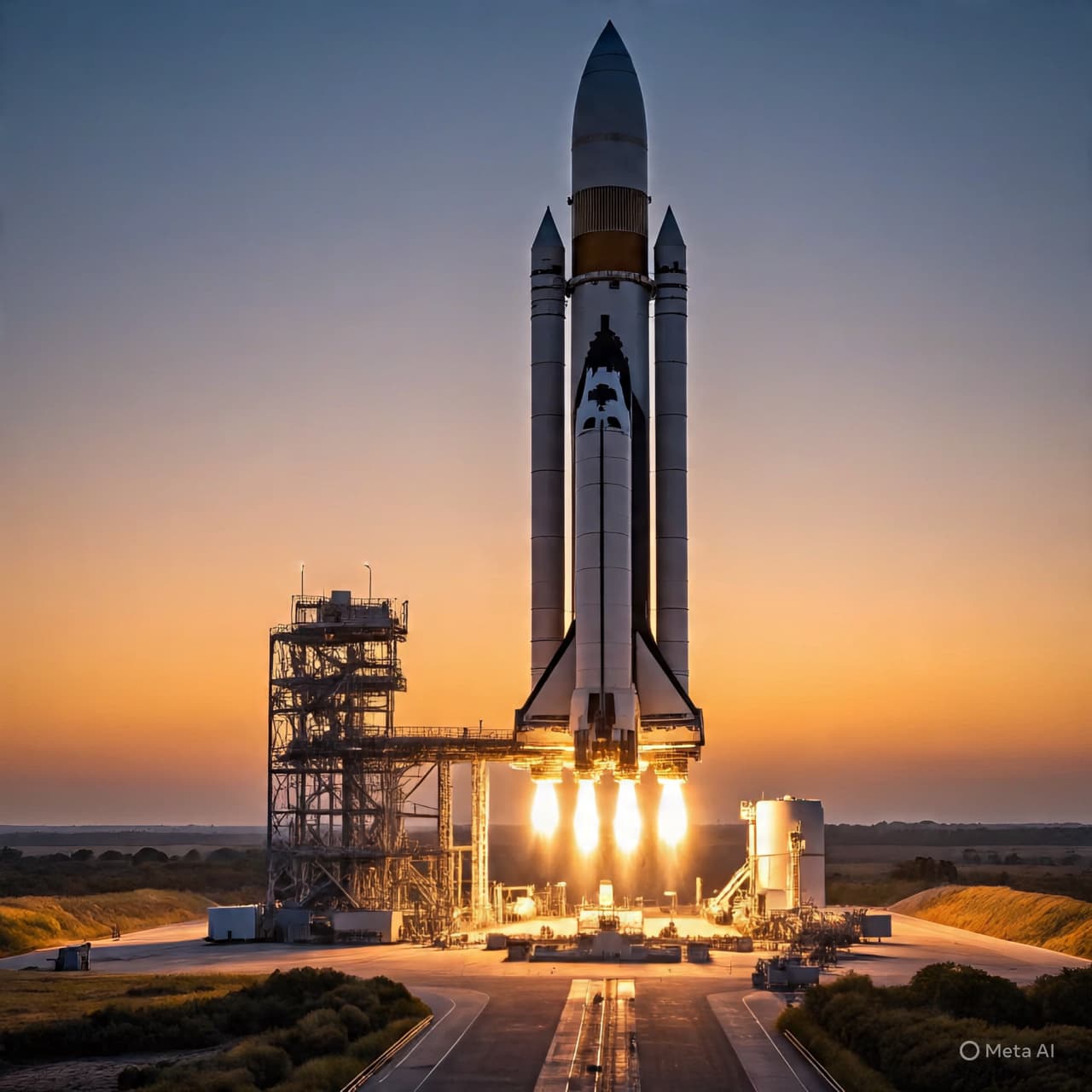
Sometimes history approaches quietly, like a tide rising under moonlight. For decades, the Moon has remained close enough to watch yet distant enough to remind humanity of how far we once traveled—and how long it has been since we tried again. In laboratories, mission control rooms, and vast assembly buildings along the Florida coast, engineers have spent years preparing for a moment that echoes the ambitions of another era.
Now that moment appears to be drawing near.
NASA says it remains on track for the launch of Artemis II, a mission that could send astronauts around the Moon as soon as April 1. If it proceeds as planned, the flight will mark humanity’s first crewed journey to the vicinity of the Moon in more than half a century, a symbolic bridge between the historic Apollo era and a new generation of lunar exploration.
The Artemis II mission is designed as a test flight, but one with profound meaning. Four astronauts will ride aboard NASA’s Orion spacecraft atop the towering Space Launch System rocket, embarking on a roughly ten-day voyage that loops around the far side of the Moon before returning to Earth.
Unlike the Apollo missions of the late twentieth century, Artemis II will not land on the lunar surface. Instead, it will test critical systems needed for future missions: navigation, life support, and the ability of the Orion capsule to safely carry humans far beyond Earth orbit.
Yet the path toward launch has not been entirely smooth.
Earlier preparations revealed technical challenges with the rocket, including issues involving hydrogen leaks and a helium flow system during testing. Engineers rolled the rocket back into NASA’s Vehicle Assembly Building to repair components and validate the fixes before attempting another launch window.
Following those repairs and a flight readiness review, NASA officials say teams are now working toward a new launch attempt in early April, with April 1 representing the first available opportunity within a short launch window.
Launch timing is not determined by engineering alone. The alignment of Earth, the Moon, and the spacecraft’s trajectory plays a crucial role in deciding when liftoff can occur. Small shifts in celestial geometry can mean waiting days or even weeks for the next viable window.
If the April attempt proceeds successfully, Artemis II would become the first human mission to travel toward the Moon since 1972, when the final Apollo astronauts returned home. The flight is also a stepping stone in NASA’s broader Artemis program, which aims to establish a sustained human presence on and around the Moon and eventually support missions deeper into space.
In that sense, Artemis II is less an ending than a beginning.
For the engineers, astronauts, and scientists preparing for launch, the mission represents a careful step forward—testing the technologies and experience needed for future lunar landings later in the decade.
And if the rocket does rise from the Florida coast in early April, it will carry more than four astronauts toward the Moon. It will carry the quiet hope that the path back to deep space is opening once again.
AI Image Disclaimer Graphics are AI-generated and intended for representation, not reality.
Source Check Credible coverage of the story exists. Examples include:
Associated Press The Guardian Space.com Ars Technica NBC News
Published by Banx Network. This article is part of the Banx decentralized media programme, powered by the BXE token on the XRP Ledger.