There are nights when the sky feels routine, a familiar ceiling of distant lights. And then there are nights when it seems to lean closer, asking us to look again. This Monday, the Full Worm Moon will rise in quiet brilliance, and by early Tuesday morning, it will slip into shadow and glow a deep, muted red. A single lunar cycle will offer both radiance and eclipse—brightness and ember—in less than a day.
The Full Worm Moon is the traditional name for March’s full moon, a title rooted in seasonal change. As winter loosens its hold across the Northern Hemisphere, the soil begins to soften, earthworms reappear, and the rhythms of spring stir just beneath the surface. The name carries a sense of thaw and return, even when the air still holds a chill.
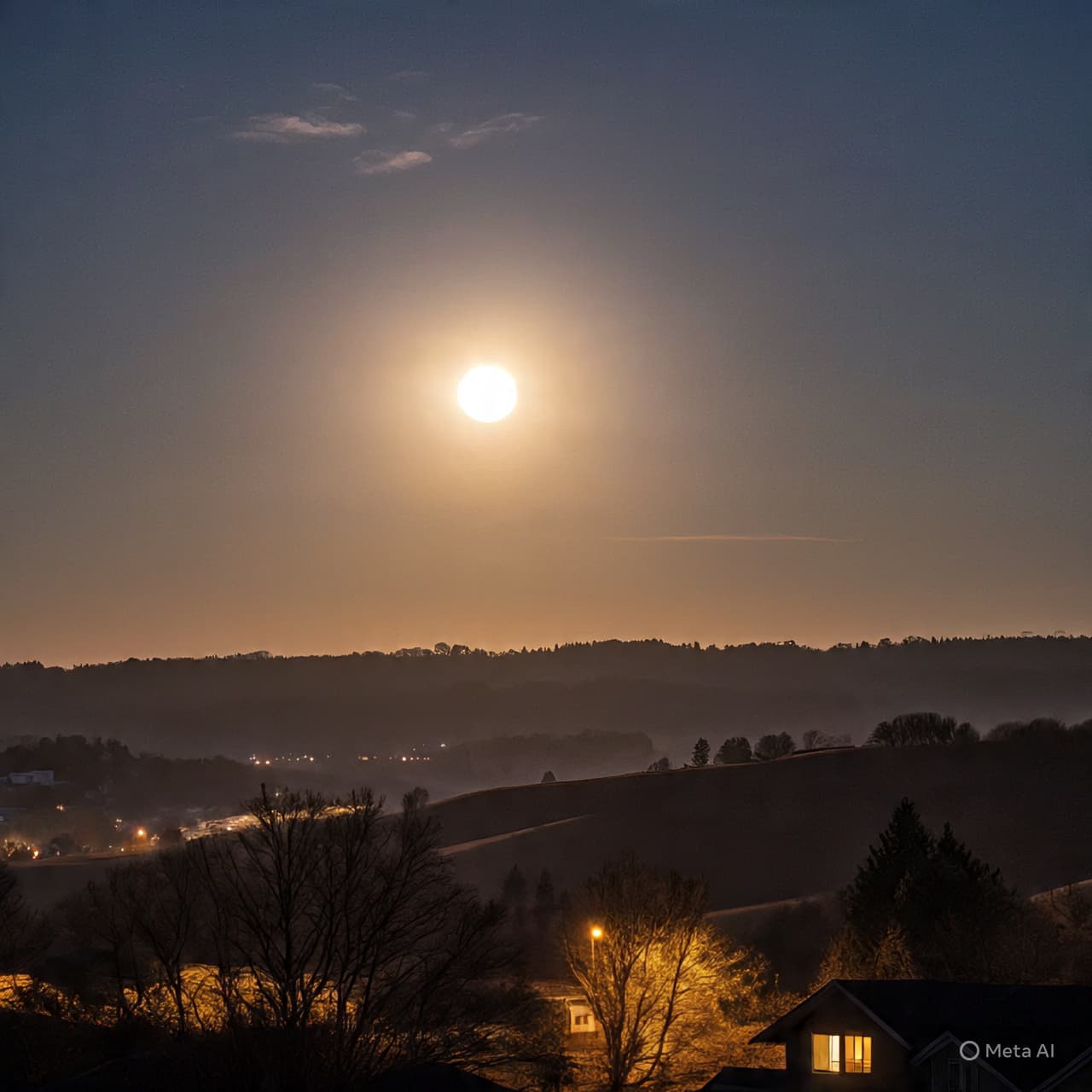
On Monday night, the moon will rise appearing full and luminous, reflecting sunlight with familiar clarity. To the casual observer, it may seem unchanged. Yet as Earth moves directly between the Sun and the Moon in the early hours of Tuesday morning, a total lunar eclipse will begin to unfold.
Unlike a solar eclipse, which demands careful eye protection and narrow geographic alignment, a lunar eclipse is generous. Anyone on the night side of Earth with clear skies can watch it safely with the naked eye. As Earth’s shadow creeps across the lunar surface, the bright disk gradually dims. Then, at totality, the Moon does not disappear. Instead, it turns coppery red.
The color is not dramatic in a theatrical sense but subtle and atmospheric. Sunlight passing through Earth’s atmosphere bends and scatters, filtering out shorter blue wavelengths and allowing longer red hues to reach the Moon. In effect, every sunrise and sunset on Earth at that moment is projected onto the lunar surface. The result is what many call a “blood moon,” though the phenomenon is entirely natural.
According to observations and eclipse modeling shared by NASA, totality during such events can last roughly an hour, depending on the geometry of alignment. The exact timing will vary by time zone, but for many in North and South America, the deepest red phase will occur before dawn Tuesday.
Weather, of course, remains the quiet variable. A clouded sky can soften or obscure the spectacle, while crisp, clear air can sharpen it. Observers in rural areas, away from city lights, may notice more detail in the shifting tones—rust, brick, and faint amber blending across the Moon’s surface.
There is a contemplative quality to a lunar eclipse. It unfolds slowly, almost patiently, asking viewers to linger. Unlike fleeting meteor streaks or sudden flares, this transformation happens over hours. The Moon, constant companion of Earth, briefly reveals the geometry of our planetary dance.
The pairing of the Worm Moon and a total eclipse feels symbolically aligned with the season. March marks transition: winter into spring, darkness into longer days. The Moon, first radiant and then shadowed, mirrors that balance between light and retreat.
By Tuesday morning, as Earth’s shadow moves on, the Moon will gradually regain its brightness. The red fades. The silver returns. What remains is the memory of a quiet shift overhead—a reminder that even the most familiar celestial body can surprise us when alignment is just right.
For those willing to step outside late Monday or wake early Tuesday, the sky offers a gentle spectacle: a full moon rising in pale gold, then deepening into red before dawn. It is not an event of urgency, but of presence—an invitation to look up and watch the slow choreography of shadow and light.
AI Image Disclaimer Images in this article are AI-generated illustrations, meant for concept only.
SOURCE CHECK
Credible mainstream and specialist sources covering this event include:
NASA Space.com The Associated Press BBC Sky & Telescope
Published by Banx Network. This article is part of the Banx decentralized media programme, powered by the BXE token on the XRP Ledger.