In the hush before midnight, imagine stepping outside into a soft twilight of possibilities. The sky unrolls like dark velvet, and above you the moon begins its slow ascent, not merely a pale disk but a grand visitor — swelling in the heavens, casting a gentle silver glow across rooftops and treetops. This is a week when the cosmos invites us to pause, to look up, and to remember how small we can feel beneath such grandeur.
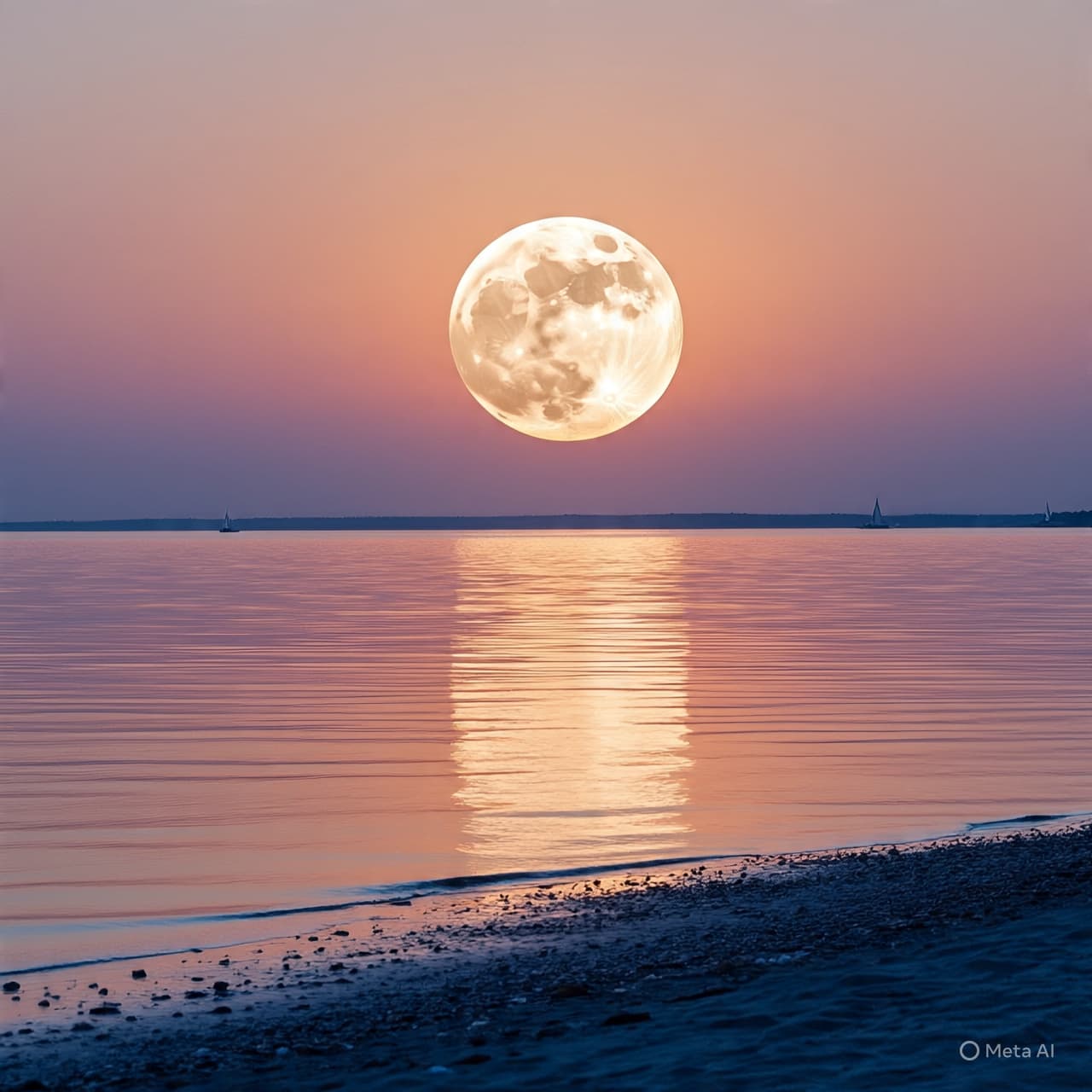
In the coming days, the full moon known as the Beaver Moon will appear at its greatest apparent size of the year, thanks to its orbit bringing it closer to Earth — a phenomenon sometimes called a supermoon. As our familiar lunar companion takes centre stage, our night sky is also hosting a subtler drama: multiple meteor showers, including the Taurid meteor shower and possibly the Leonid meteor shower, peaking in this window of time.
Because the moon will be unusually bright, these meteor showers won’t explode into hundreds of streaks per hour — rather, they will flicker like slow sparklers across the sky, best seen if you’re patient and away from bright lights. The Taurids are known especially for their fireballs — bright, slow-moving meteors that stand out even when the moon is shining.
So how to make the most of this gentle celestial performance? First, pick a location with a clear view of the horizon — an open field, a park, or just a balcony unhindered by tall buildings. Let your eyes adjust to the darkness for about 15-30 minutes, resisting the urge to look at bright screens. For the moon, watch at moonrise (often early evening) when it appears largest near the horizon — this is partly an optical trick, the so-called “moon illusion.” Meteor spotting is best done after the moon is high enough but when the sky is still dark; lie back, look up, and give your gaze breadth rather than staring at one fixed point.
From Indonesia, and other places in Southeast Asia, the sky-watching approach is much the same: choose a dark site away from city lights, check local moonrise time, and aim to stay out for at least an hour. If clouds cooperate, you may see the moon appear oversized, bright and full, while a chance meteor streaks faintly across the night. Because the moon’s light will wash out many of the fainter meteors, expect rates of perhaps a few per hour — but when you see one, it will still feel like a soft surprise in the quiet of the night.
This week offers a delicate balance of light and dark — a large moon casting silver shadows, and meteors painting fleeting lines of light across the inky canvas. It is not about a loud spectacle, but a whisper in the sky telling us that even familiar things — the moon and the stars — can surprise us, if we pause and look.
In the end, whether you see a bright meteor or simply bask in the glow of the oversized moon, the experience is the same: a moment of connection to the sky above. The night closes not with fanfare but with quiet gratitude — for being under the same sky, noticing the ordinary become a little extraordinary.
AI Image Disclaimer “Visuals are created with AI tools and are not real photographs.”
Sources FOX Weather AccuWeather The Weather Network Popular Science Forbes
Published by Banx Network. This article is part of the Banx decentralized media programme, powered by the BXE token on the XRP Ledger.